

Updated in 2026
Jersey City school districts are under constant pressure to deliver modern, technology-driven learning while operating within tightening budgets. Students expect fast, reliable access to digital tools, while administrators are expected to reduce waste, control spending, and clearly justify return on investment. Virtualization has emerged as a practical way to meet both demands.
Virtualization is no longer an enterprise-only IT concept. In education, virtual desktop infrastructure (VDI) and secure, centralized workspaces are helping Jersey City schools lower costs, simplify management, and improve reliability without sacrificing student or staff access.
Below is a clear look at where virtualization is driving real savings and why many districts are seeing measurable returns.
Why Virtualization Makes Financial Sense for Schools
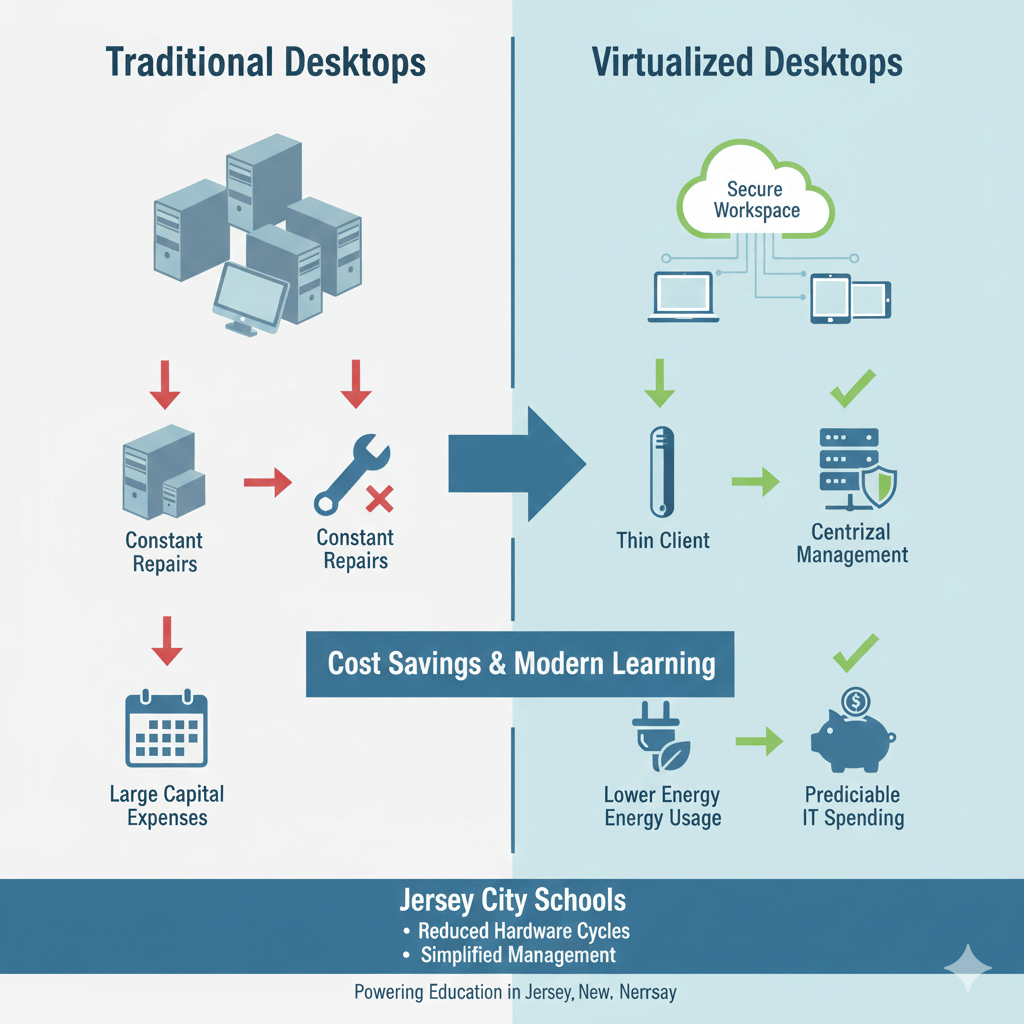
Traditional school IT environments rely on physical desktops, frequent hardware refresh cycles, and device-by-device management. Every few years, districts face large capital expenses just to keep classrooms functional. Software licensing, patching, and repairs add ongoing operational strain.
Virtualization changes that model. Desktops run on centralized servers or cloud platforms, while students and staff access them through lightweight devices or web portals. This reduces dependency on expensive endpoint hardware and simplifies management.
Key cost advantages include:
- Reduced hardware replacement cycles: Thin clients or repurposed older machines remain usable for far longer.
- Centralized management: Updates, patches, and configurations are handled once, not device by device.
- Lower energy usage: Thin clients consume significantly less power than traditional desktops, reducing long-term utility costs.
For many Jersey City schools, these savings free up budget for instructional programs, special education resources, and teacher development.
Real-World Results from a Jersey City School District
A middle school in the Greenville area transitioned from traditional desktops to a secure workspace built on VDI. While long-term savings were expected, the short-term results stood out.
Within six months, the district reported:
- A 30 percent reduction in IT support hours
- Hardware refresh delays of two full school years
- A 45 percent decrease in classroom downtime caused by device issues
By eliminating manual updates and reducing repair needs, the school redirected funding to STEM initiatives that had previously been postponed.
How Secure Workspaces Reduce Hidden IT Costs
Hardware is only part of the equation. Secure, virtualized workspaces also cut costs tied to downtime, security incidents, and manual troubleshooting.
Many Jersey City schools now rely on platforms that include:
- Zero-trust access controls
- Centralized identity and login management
- Real-time monitoring and audit logs
- Secure file access for students and staff
These features significantly reduce routine help desk tasks. Password resets, device reimaging, and access issues are often handled automatically, allowing small IT teams to support more users with fewer resources.
This mirrors broader secure workspace strategies being adopted across New Jersey, where districts are expected to do more with lean teams.
Predictable IT Spending for Better Budget Planning
Virtualized environments typically operate on subscription-based pricing. While this shifts spending from capital expenses to operational expenses, it brings consistency and predictability.
Instead of large, irregular hardware purchases, districts pay steady monthly costs that are easier to forecast and control. This predictability simplifies budget planning and reduces surprise expenses.
Many education-focused virtualization platforms also bundle compliance and security features, reducing the need for separate tools to meet FERPA and other data protection requirements.
Supporting Both Classrooms and Administration
Virtualization benefits extend beyond student learning. Administrative teams gain secure, reliable access to systems that handle payroll, records, reporting, and compliance.
With secure virtual desktops, administrators can:
- Access district systems remotely without exposing sensitive data
- Work in encrypted environments from approved devices
- Maintain continuity during weather closures or remote periods
The same infrastructure that supports digital classrooms also keeps back-office operations running smoothly.
What Jersey City Schools Should Evaluate Before Adopting Virtualization
Not all virtualization platforms deliver the same results. District IT leaders recommend evaluating:
- Availability of local or 24/7 technical support
- Compliance with state and federal education data standards
- Scalability for enrollment growth and remote access needs
- Integration with tools already in use, such as Google Workspace for Education or Microsoft 365
Choosing a platform that aligns with existing workflows reduces training time and speeds adoption.
Lessons from Other New Jersey Districts
School districts across New Jersey are reporting similar outcomes after adopting secure, virtualized environments: improved uptime, reduced data risk, and stronger ROI from technology investments. Even outside education, organizations in Jersey City have achieved comparable efficiencies using centralized, secure workspace models.
These lessons translate well to schools, particularly in areas like access control, cost predictability, and long-term planning.
Final Thoughts
Virtualization is helping Jersey City schools build IT environments that are leaner, more secure, and easier to manage. The value goes beyond cost reduction. It improves reliability, protects sensitive data, and allows limited budgets to stretch further.
As districts prepare for ongoing financial and technological challenges, secure virtual workspaces offer a clear, proven path forward. Schools that adopt virtualization now will be better positioned to meet both educational demands and budget realities in 2025 and beyond. n 2025 and beyond.

