

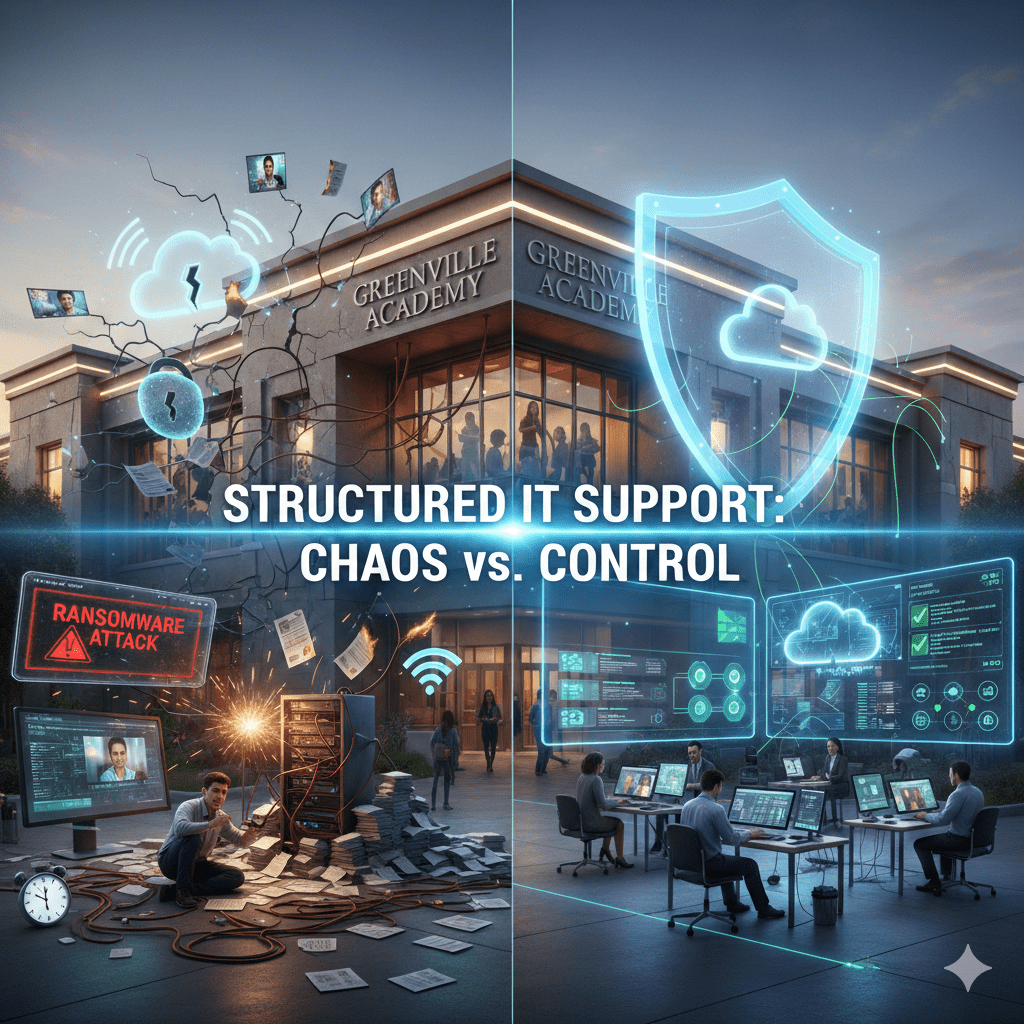
Greenville schools rely on technology for instruction, administration, testing, communication, and compliance reporting. Yet many operate with fragmented IT support models built around reactive troubleshooting instead of structured planning.
When classroom technology fails, learning stops. When security controls are weak, student data is exposed. When networks slow down during testing, instructional time is lost.
A structured IT support plan transforms school technology from a constant disruption into a stable foundation.
At Mindcore Technologies, we see the difference clearly. Schools with structured IT governance experience fewer disruptions, stronger security posture, and improved staff confidence.
The Growing Technology Demands On Greenville Schools
Modern K–12 and higher education environments depend heavily on digital systems.
Schools now manage:
- Student information systems
Platforms storing grades, attendance, and personal data require constant uptime and protection. - Cloud-based learning platforms
Instructional tools must perform reliably during peak usage. - 1:1 device programs
Hundreds or thousands of endpoints increase vulnerability exposure. - VoIP and communication systems
Reliable communication is essential for safety and operations. - State and federal compliance requirements
Regulations such as FERPA demand structured data protection.
Technology complexity has outpaced informal IT support models.
1. Cybersecurity Threats Target Schools Aggressively
Educational institutions are frequent ransomware targets.
The Problem
- Large volumes of student and staff data
Makes schools attractive for data extortion. - Limited security monitoring
Smaller IT teams struggle with continuous oversight. - High device turnover
Student devices often lack consistent patching.
Why Structured IT Plans Matter
- Centralized endpoint management
Ensures devices are patched and monitored consistently. - Network segmentation
Separates student devices from administrative systems to reduce lateral movement. - Continuous monitoring and alerting
Reduces attacker dwell time.
Structured security controls reduce breach impact.
2. Downtime Directly Impacts Instructional Time
Technology disruptions interrupt learning.
The Problem
- Unstable Wi-Fi during peak class periods
Digital lessons stall. - Server overload during online testing
Creates compliance and reporting issues. - Reactive troubleshooting delays
Teachers wait while systems are repaired.
Why Structured IT Plans Matter
- Capacity planning and network modernization
Prevents performance bottlenecks. - Proactive monitoring of infrastructure health
Identifies stress before failure. - Redundant connectivity planning
Reduces outages caused by ISP failures.
Reliability supports consistent instruction.
3. Compliance And Data Governance Requirements Are Increasing
Educational institutions must safeguard sensitive data.
The Problem
- Unclear access control policies
Staff may have unnecessary permissions. - Inconsistent logging and monitoring
Audit trails may be incomplete. - Vendor risk exposure
Third-party education platforms introduce external risk.
Why Structured IT Plans Matter
- Role-based access controls
Limits exposure to sensitive student information. - Centralized logging and audit readiness
Improves compliance posture. - Vendor risk assessments
Validates third-party security standards.
Governance must be intentional.
4. Limited Internal IT Staff Face Overload
Many Greenville schools operate with small IT teams.
The Problem
- High ticket volumes
Classroom support consumes daily capacity. - Little time for strategic planning
Infrastructure modernization gets delayed. - After-hours security blind spots
Monitoring gaps increase risk.
Why Structured IT Plans Matter
- Defined service level agreements
Clarifies response expectations. - Escalation procedures for critical issues
Reduces confusion during incidents. - Co-managed support options
Extends internal capacity without replacing staff.
Capacity reinforcement improves sustainability.
5. Long-Term Budget Planning Requires IT Roadmapping
Educational budgets must be predictable.
The Problem
- Unexpected hardware replacement costs
Aging equipment fails without warning. - Unplanned licensing increases
Cloud costs grow without tracking. - No multi-year technology plan
Reactive spending strains budgets.
Why Structured IT Plans Matter
- Lifecycle management planning
Schedules hardware refresh cycles predictably. - Cloud governance oversight
Controls subscription sprawl. - Multi-year infrastructure roadmaps
Aligns IT investments with district goals.
Strategic planning improves financial stability.
What A Structured IT Support Plan Should Include
Greenville schools benefit from formalized support structures.
A comprehensive plan includes:
- 24/7 infrastructure monitoring
Ensures early detection of performance or security issues. - Centralized endpoint management
Standardizes patching and protection across devices. - Network segmentation strategy
Separates administrative, instructional, and guest networks. - Backup and disaster recovery testing
Protects student records and operational systems. - Documented incident response procedures
Clarifies action steps during cyber events.
Structure reduces uncertainty.
How Mindcore Technologies Supports Greenville Schools
Mindcore helps schools implement structured IT support by:
- Conducting technology risk assessments tailored to educational environments.
- Designing segmented, scalable network architecture.
- Implementing centralized endpoint and device management systems.
- Providing continuous monitoring and threat detection.
- Developing long-term IT roadmaps aligned with district objectives.
- Supporting compliance readiness through structured governance models.
Educational technology must be both reliable and secure.
Final Takeaway
Greenville schools depend on stable, secure technology to support instruction, protect student data, and meet compliance standards. Reactive IT models create instability, security exposure, and budget unpredictability.
Structured IT support plans introduce governance, monitoring, capacity planning, and strategic alignment. Schools that adopt structured oversight reduce downtime, strengthen security posture, and improve classroom continuity.

