Updated in 2026
Cloud computing continues to reshape how businesses operate, and for good reason. Organizations that adopt cloud technologies consistently report higher productivity, lower operating costs, faster time to market, and improved scalability.
According to research from the Cloud Security Alliance:
- 33 percent of organizations take an aggressive approach to migrating to cloud services
- 86 percent of companies allocate at least part of their IT budget to cloud services
- 79 percent of organizations with IT leadership receive regular requests from end users to add more cloud applications for file sharing, collaboration, communication, and content management
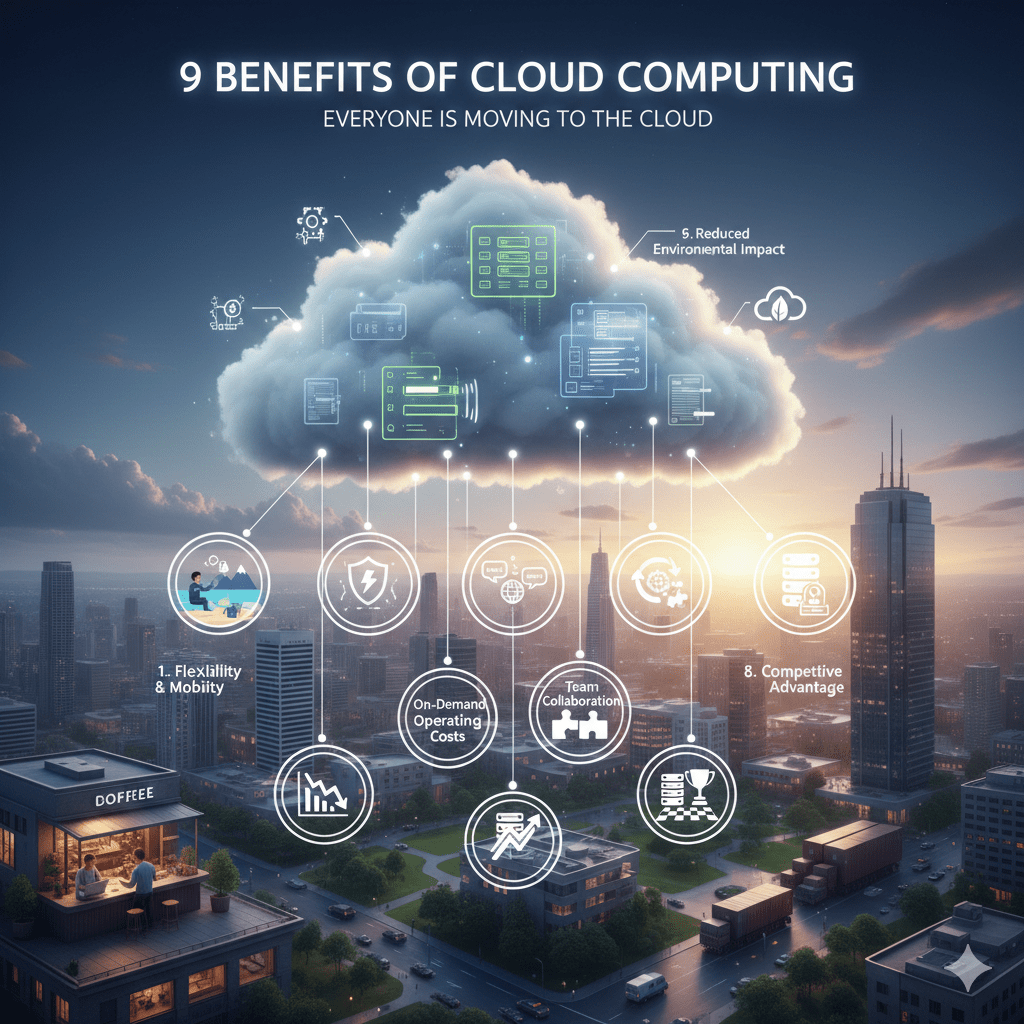
These numbers highlight how central cloud computing has become to modern business operations. Below are nine key benefits driving organizations to migrate to the cloud.
1. Greater Flexibility and Mobility
Cloud computing gives organizations far greater flexibility in how and where work gets done. Employees can securely access files and business applications from laptops, tablets, or smartphones, regardless of location.
Data is no longer tied to a single machine or office, enabling faster workflows, improved availability, and higher individual productivity.
2. Improved IT Security
While some organizations still believe cloud environments are less secure, real-world data suggests the opposite. Studies show security often improves after migrating to the cloud.
Research by RapidScale found that 94 percent of businesses experienced better security after moving to the cloud, and 91 percent said it made meeting compliance requirements easier.
Cloud providers protect data through encryption, continuous monitoring, and dedicated security teams whose sole responsibility is safeguarding infrastructure and sensitive information.
3. Time-Saving, On-Demand Services
Cloud platforms operate on a self-service, on-demand model. New services, storage, or computing power can be provisioned instantly without purchasing hardware or installing software.
This allows organizations to respond quickly to changing business needs without long deployment cycles.
4. Lower Operating Costs
Cloud computing reduces capital expenses by eliminating the need for on-site servers and hardware. Businesses pay only for the resources they use and can scale up or down as demand changes.
In addition, cloud providers handle maintenance, updates, backups, and infrastructure management. This significantly reduces internal IT labor costs and frees resources for growth-focused initiatives.
5. Improved Team Collaboration
Cloud-based platforms make collaboration easier, especially for remote and hybrid teams. Employees can access, edit, and share files in real time from anywhere.
Business owners and managers also benefit by staying connected to teams, clients, and vendors while traveling, with full visibility into operations through cloud-based applications.
6. Automatic Updates and Easier Integration
With cloud computing, software updates and patches are handled automatically by the provider. This reduces downtime, eliminates manual update cycles, and keeps systems current.
Cloud platforms also support easier integration through APIs, allowing businesses to connect compatible applications without costly custom development.
7. Business Continuity and Disaster Resilience
Cloud environments protect data against hardware failure, natural disasters, and system outages. Because data is stored off-site and replicated across environments, it remains accessible even when local systems fail.
This ensures minimal downtime and preserves business continuity during unexpected events.
8. Increased Competitive Advantage
Cloud computing levels the playing field between small, mid-sized, and enterprise organizations. Businesses can access powerful tools and infrastructure that were once financially out of reach.
Dell reports that companies investing in modern technology experience up to 53 percent faster revenue growth than competitors. Cloud adoption allows organizations to innovate and scale without excessive upfront costs.
9. Reduced Environmental Impact
Cloud infrastructure is more energy-efficient than traditional on-premises systems. Shared resources, virtualization, and optimized data centers reduce power consumption, hardware waste, and emissions from commuting.
Fewer physical servers and paper-based processes also contribute to a smaller environmental footprint.
Everyone Is Moving to the Cloud
Cloud computing addresses many common business challenges by reducing costs, improving security, increasing productivity, and enabling growth. For organizations looking to modernize their operations, the cloud is no longer optional, it is foundational.