Healthcare cybersecurity is failing in a very specific way. It is not collapsing because teams lack tools. It is failing because traditional perimeter security was never designed for cloud-based clinical systems, remote staff, or persistent compliance pressure.
Ransomware groups know this. So do auditors.
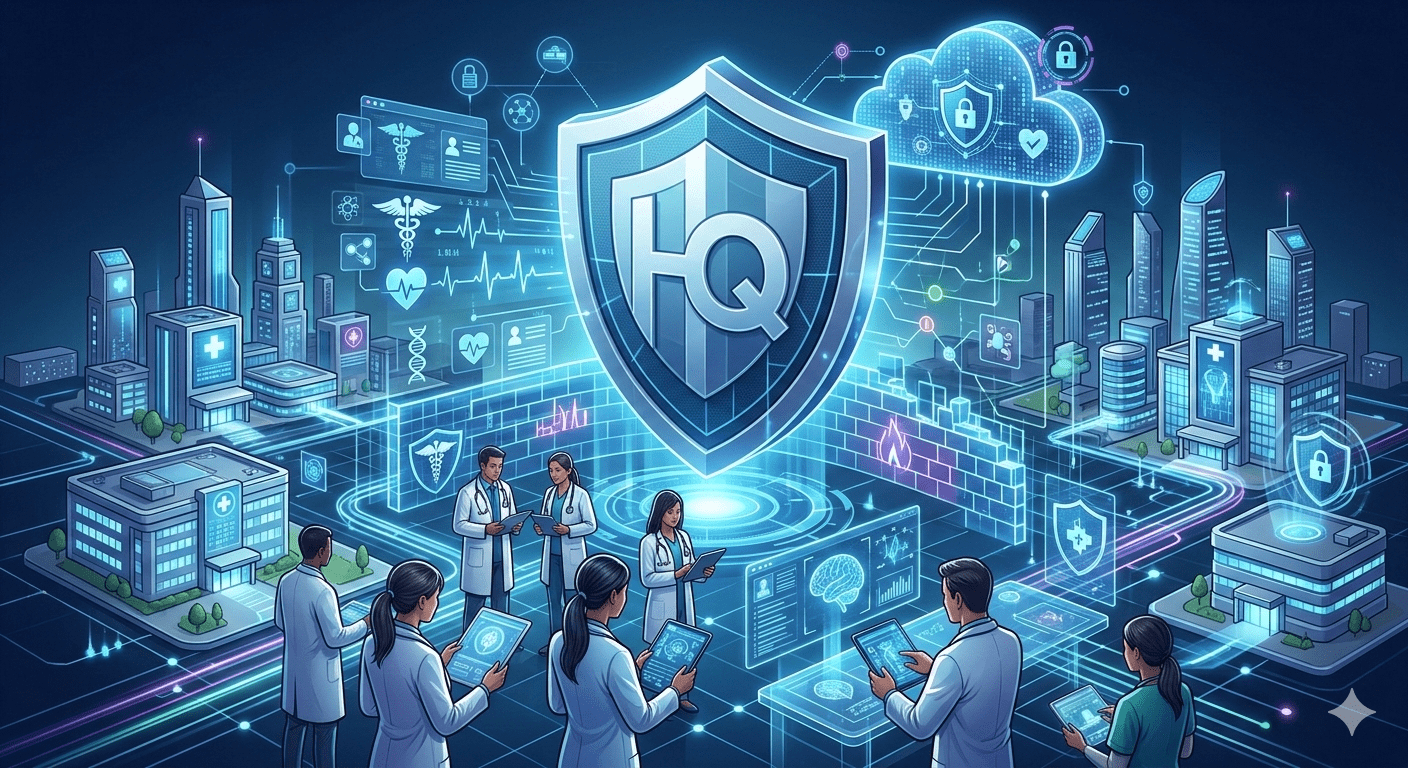
At Mindcore Technologies, nearly every healthcare incident we see traces back to the same structural problem: access is extended broadly, visibility is limited, and security assumes trust instead of enforcing it. ShieldHQ Powered by Dispersive® Stealth Networking exists to change that model entirely.
Why Traditional Healthcare Security Models Are Breaking
Healthcare environments now depend on:
- Cloud-hosted EHR and practice management platforms
- Remote clinicians and administrative staff
- Third-party vendors and billing partners
- Always-on access to sensitive patient data
Legacy security models rely on:
- VPNs that extend the network
- Static credentials
- Long-lived sessions
- Flat access once connected
That combination creates an attack surface attackers routinely exploit.
The Hard Reality We See in Healthcare Breaches
Most healthcare breaches today do not start with zero-day exploits.
They start with:
- Stolen credentials from infostealers
- Session hijacking through phishing
- VPN access reused by attackers
- Excessive access that was never reviewed
Once inside, attackers move laterally, access PHI, and trigger ransomware or data extortion.
Security tools detect activity late because the access itself was legitimate.
Why Healthcare Needs a Different Security Model
Healthcare environments have unique constraints:
- Downtime impacts patient care
- Compliance demands provable controls
- Data access must be tightly scoped
- Vendors and clinicians need flexibility without risk
Security cannot rely on “trusted users” or “trusted networks.” It must verify every session, every time, with full visibility.
That is where ShieldHQ changes the architecture.
What ShieldHQ Changes at the Architectural Level
ShieldHQ is not another security tool layered onto an existing environment. It is a secure workspace model that changes how access is delivered.
Instead of extending the network outward, ShieldHQ:
- Creates a controlled workspace around sensitive systems
- Keeps data inside the secure environment
- Enforces identity-driven, session-based access
- Eliminates VPN reliance entirely
Users interact with applications without direct network access.
Why VPN-Based Access Is a Healthcare Liability
VPNs introduce multiple risks in healthcare:
- They extend internal networks to unmanaged endpoints
- They rely on static credentials and sessions
- They provide broad access once connected
- They complicate audit trails
Once VPN credentials are stolen, attackers inherit trusted access.
ShieldHQ removes this attack surface by design.
Zero-Trust Access That Works for Clinical Environments
ShieldHQ enforces zero-trust principles in a way healthcare teams can actually operate:
- Identity-based access instead of network trust
- Per-session verification instead of permanent connections
- Application-level access instead of network exposure
- Centralized governance and logging
Every session is validated. Every action is observable.
Why Audit Readiness Is Built In, Not Added Later
HIPAA and healthcare compliance require:
- Proof of access control
- Clear audit trails
- Evidence of least privilege
- Ability to show who accessed PHI and when
ShieldHQ records:
- Session activity
- Access attempts
- User behavior
- Application usage
This turns audits from panic-driven exercises into structured reviews.
How ShieldHQ Limits Breach Impact
Even when credentials are compromised:
- Attackers cannot move laterally
- Data never leaves the secure workspace
- Sessions can be terminated instantly
- Access is limited to explicitly approved resources
This dramatically reduces blast radius and breach severity.
Why Healthcare Organizations Are Moving Toward Secure Workspaces
Healthcare leaders are recognizing that:
- More tools do not equal better security
- Trust-based access models are outdated
- Compliance pressure will increase, not decrease
- Remote work is permanent
Secure workspace models align security with how healthcare actually operates today.
How Mindcore Technologies Deploys ShieldHQ for Healthcare
Mindcore designs and deploys ShieldHQ environments specifically for healthcare by:
- Mapping clinical and administrative workflows
- Defining role-based access to PHI
- Eliminating VPN and flat network exposure
- Enforcing device and session controls
- Providing centralized monitoring and governance
- Aligning controls with HIPAA and regulatory expectations
The focus is not disruption. It is secure continuity of care.
What the Future of Healthcare Cybersecurity Looks Like
The future is not perimeter-based security.
It is:
- Identity-driven access
- Session-based verification
- Data containment by default
- Continuous visibility
- Audit readiness as a baseline
ShieldHQ reflects where healthcare security is heading, not where it has been.
A Reality Check for Healthcare Leaders
Your environment is at risk if:
- VPN access is still required
- Sessions persist indefinitely
- PHI is reachable from unmanaged devices
- Access reviews are manual or rare
- Audits rely on screenshots and assumptions
These are architectural issues, not awareness issues.
Final Takeaway
Healthcare cybersecurity is evolving because it has to. The combination of cloud systems, remote care, compliance pressure, and sophisticated attackers has exposed the limits of traditional security models.
ShieldHQ Powered by Dispersive® Stealth Networking represents a shift toward secure workspaces that enforce zero trust without sacrificing usability. For healthcare organizations, this is not a future consideration. It is an operational necessity.