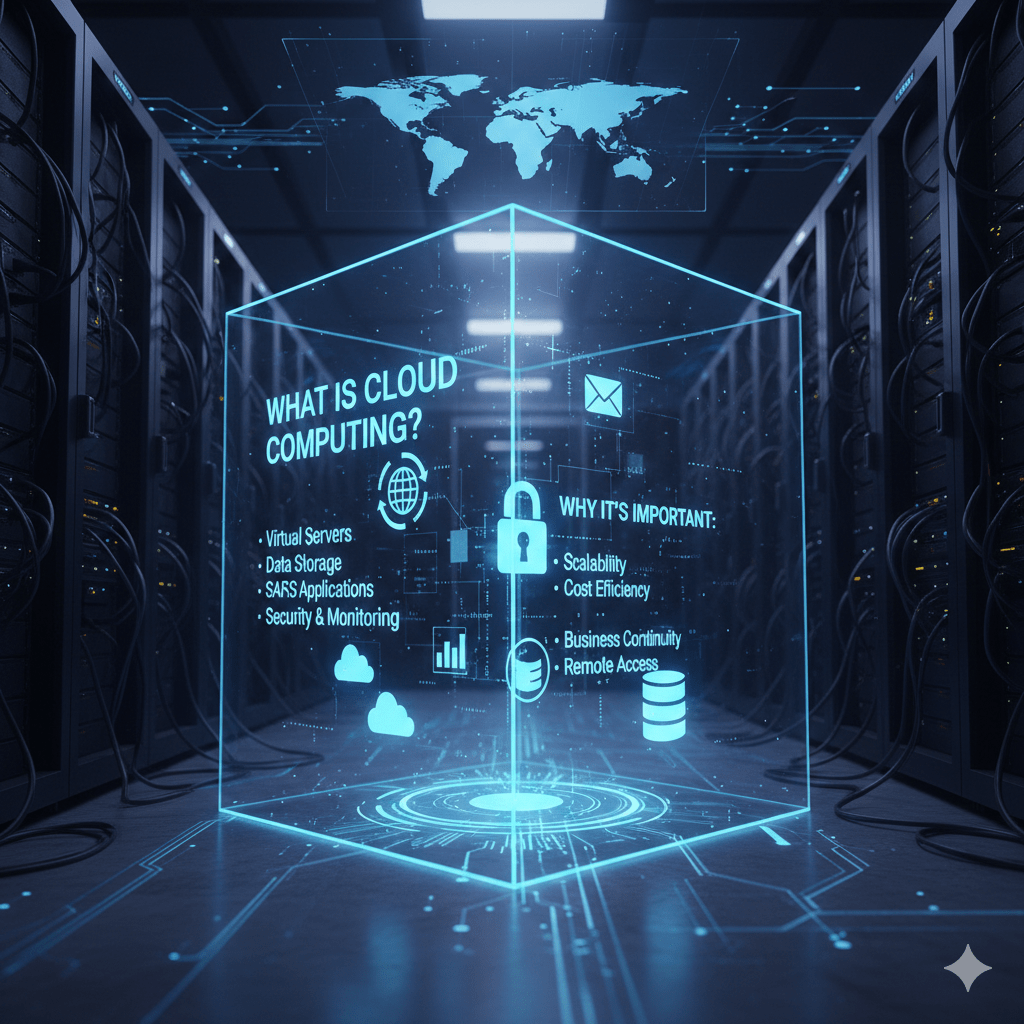
Cloud computing is not just storing files online. It is the delivery of computing resources, including servers, storage, applications, and security services, over the internet instead of hosting them on local hardware.
For businesses, cloud computing shifts IT from hardware ownership to service consumption. That changes how companies scale, secure data, manage costs, and maintain uptime.
At Mindcore Technologies, we treat cloud adoption as an architectural decision. Done properly, it improves resilience and agility. Done casually, it introduces cost sprawl and security exposure.
What Is Cloud Computing?
Cloud computing allows businesses to access computing resources through a provider’s infrastructure instead of maintaining physical servers in their own office.
Instead of buying and managing hardware, companies rent:
- Virtual Servers
Cloud-hosted machines that run business applications without physical server ownership. - Data Storage
Scalable storage that expands or contracts based on usage needs. - Software Applications (SaaS)
Platforms such as email, collaboration tools, and CRM systems delivered through a browser. - Backup and Disaster Recovery Services
Cloud-based protection that replicates and restores data if systems fail. - Security and Monitoring Tools
Cloud-delivered firewalls, identity management, and threat detection systems.
Cloud computing replaces capital investment with operational flexibility.
Types Of Cloud Computing Services
Understanding service models helps businesses align cloud use with goals.
Infrastructure as a Service (IaaS)
- Provides virtual servers, networking, and storage.
- Gives businesses control over operating systems and applications.
- Requires internal management and configuration oversight.
Best for companies needing flexibility without owning hardware.
Platform as a Service (PaaS)
- Offers development environments and tools in the cloud.
- Eliminates server management for application development.
- Speeds up deployment cycles for software teams.
Best for businesses building custom applications.
Software as a Service (SaaS)
- Delivers complete applications via subscription.
- Removes need for installation or maintenance.
- Updates are managed by the provider.
Best for collaboration, email, CRM, and productivity platforms.
Why Cloud Computing Is Important For Businesses
Cloud computing changes operational strategy, not just technology.
1. Scalability Without Hardware Constraints
- Businesses can increase resources instantly during growth periods.
- Seasonal demand can be managed without permanent hardware purchases.
- New locations can be deployed without building server rooms.
Scalability becomes administrative instead of physical.
2. Improved Business Continuity
- Cloud providers operate across redundant data centers.
- Data replication protects against local disasters.
- Failover environments can be activated quickly.
Cloud architecture reduces single-point-of-failure risk.
3. Predictable Cost Structures
- Subscription-based pricing replaces large capital expenditures.
- Businesses pay for what they use instead of overprovisioning hardware.
- Maintenance and hardware replacement costs are reduced.
Cost control improves when usage is monitored properly.
4. Remote And Hybrid Workforce Enablement
- Employees can securely access applications from anywhere.
- Collaboration tools operate in centralized cloud environments.
- Remote onboarding becomes faster and simpler.
Cloud platforms support workforce mobility.
5. Centralized Security Management
- Identity-based access control improves user management.
- Cloud providers invest heavily in infrastructure security.
- Logging and monitoring tools provide visibility into usage patterns.
Security improves when identity and configuration are controlled properly.
6. Faster Innovation And Deployment
- New services can be deployed in minutes, not weeks.
- Development environments can scale instantly.
- Businesses can test new initiatives without purchasing hardware.
Cloud accelerates experimentation and modernization.
Common Cloud Misconceptions
Many businesses misunderstand cloud responsibility.
“The Cloud Is Automatically Secure”
- Cloud infrastructure may be secure, but misconfiguration creates exposure.
- Weak identity controls can still lead to breaches.
- Shared responsibility models require internal governance.
Security depends on configuration discipline.
“Moving To The Cloud Reduces IT Oversight”
- Cloud environments require monitoring and governance.
- Cost sprawl occurs without usage tracking.
- Identity management becomes even more critical.
Cloud changes management responsibility, it does not eliminate it.
Risks Businesses Must Address In The Cloud
Cloud computing introduces new considerations.
- Identity Mismanagement
Over-permissioned accounts increase breach impact. - Data Exposure Through Misconfiguration
Improper storage settings can make data publicly accessible. - Vendor Dependency
Relying heavily on one provider requires contingency planning. - Cost Overruns
Poor governance leads to uncontrolled consumption.
Cloud strategy must include governance and monitoring.
How Mindcore Technologies Helps Businesses Leverage Cloud Properly
Mindcore supports cloud adoption by:
- Conducting infrastructure readiness assessments to identify migration suitability.
- Designing secure cloud architecture aligned with compliance requirements.
- Implementing identity-driven access controls to reduce exposure.
- Monitoring cloud environments to prevent misconfiguration and cost sprawl.
- Building disaster recovery strategies that align with business continuity objectives.
Cloud modernization requires structured design, not simple migration.
Final Takeaway
Cloud computing delivers computing resources over the internet, replacing physical hardware ownership with scalable, service-based infrastructure. It improves flexibility, resilience, and innovation when governed properly.
However, cloud success depends on identity control, configuration discipline, cost management, and architectural planning. Businesses that approach cloud strategically gain competitive advantage. Those that migrate without governance introduce new risks.