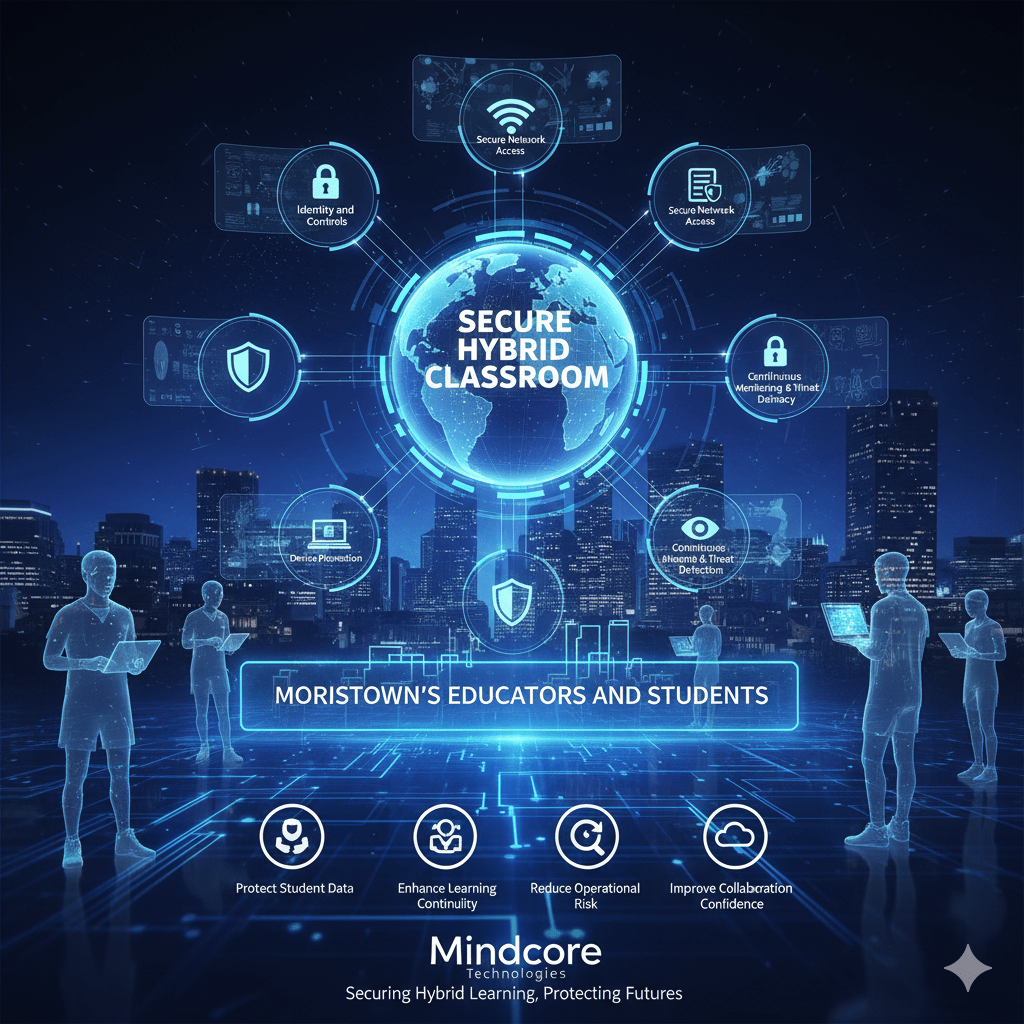
Secure Hybrid Classrooms for Morristown’s Educators and Students
Hybrid learning — a blend of in-person and remote instruction — is now a permanent part of education. But hybrid classrooms also widen the attack surface. Schools manage sensitive student data, testing systems, learning platforms, and communications across networks and devices. Without built-in security and reliable infrastructure, classrooms become vulnerable to interruptions, breaches, and compliance gaps. Secure hybrid classrooms mean safe, uninterrupted learning supported by strong technology and risk controls.
Below is a practical guide for educators and IT leaders in Morristown on securing hybrid learning environments with measurable outcomes.
What “Secure Hybrid Classroom” Means
A secure hybrid classroom balances access, learning continuity, and protection by:
- Ensuring safe access to educational systems from anywhere
- Protecting student and staff data
- Monitoring activity for threats
- Maintaining uptime and performance
- Supporting compliance with educational privacy standards
Security supports learning outcomes, not just tools.
Core Elements of Secure Hybrid Learning
1. Identity and Access Controls
Students and staff access systems from laptops, tablets, and phones. Strong identity controls — such as multi-factor authentication (MFA) and role-based access — ensure only authorized users reach sensitive educational apps and data.
2. Secure Network Access
Hybrid classrooms must protect against man-in-the-middle attacks and insecure public Wi-Fi. Secure remote access, encrypted connections, and zero-trust principles validate users and devices before granting access to school resources.
3. Device Protection
Endpoints must not be entry points for malware or exploits. Modern endpoint protection and regular patching keep classroom devices safe and compliant.
4. Data Encryption and Privacy Controls
Student records, grades, and communications must be encrypted at rest and in transit. Encryption limits exposure if a device or connection is compromised.
5. Continuous Monitoring and Threat Detection
Security teams must correlate signals across identity, devices, and networks to spot anomalies quickly. Early detection reduces dwell time and prevents widespread disruption.
6. Backup and Recovery Planning
Accidental deletions, ransomware, or outages should not pause instruction. Reliable backup and tested recovery ensure lessons continue even after incidents.
Why These Measures Matter
Protect Student Data
Education records are sensitive and often regulated. Strong controls ensure compliance and trust.
Enhance Learning Continuity
Downtime during lessons disrupts instruction and frustration spreads quickly among students and parents.
Reduce Operational Risk
Security gaps can lead to unplanned outages, reputational damage, and regulatory exposure.
Improve Collaboration Confidence
Students and educators can work confidently when collaboration tools are secure and reliable.
How Mindcore Technologies Helps Morristown Schools
Mindcore Technologies helps educators secure hybrid classrooms with technology and governance that support learning, not hinder it:
Identity and Access Management
Adaptive authentication and least-privilege policies ensure only authorized users access educational systems.
Secure Remote Access
Encrypted connections and zero-trust access protect devices connecting from home or remote locations.
Endpoint and Network Security
Continuous monitoring and threat protection reduce risk from malware, credentials abuse, and lateral movement.
Data Encryption and Privacy Controls
Mindcore ensures sensitive student and staff data is encrypted and managed within compliance frameworks.
Backups and Continuity Planning
Reliable backups and tested restore processes keep instruction running even after disruptions.
Training for Users
Students and staff receive practical awareness training so they recognize phishing, suspicious activity, and secure practices.
Mindcore’s services preserve educational continuity while enforcing security and governance that align with privacy expectations.
What Your School Should Do Next
- Enable adaptive identity controls for all classroom systems.
- Implement secure remote access with encryption and zero trust.
- Ensure devices are patched and protected with modern endpoint security.
- Encrypt data at rest and in motion for privacy and compliance.
- Monitor activity continuously for early threat detection.
- Test backups and recovery plans regularly.
These steps build a secure hybrid classroom that supports education outcomes and reduces risk.
Final Thought
Hybrid learning environments bring flexibility and opportunity — but only if they are secure, resilient, and manageable. A secure classroom protects data, supports continuity, and enables educators and students to focus on learning. With structured implementation and expert support from Mindcore Technologies, schools in Morristown can build hybrid learning platforms that are both safe and effective — ensuring students learn without interruption and educators teach with confidence.