

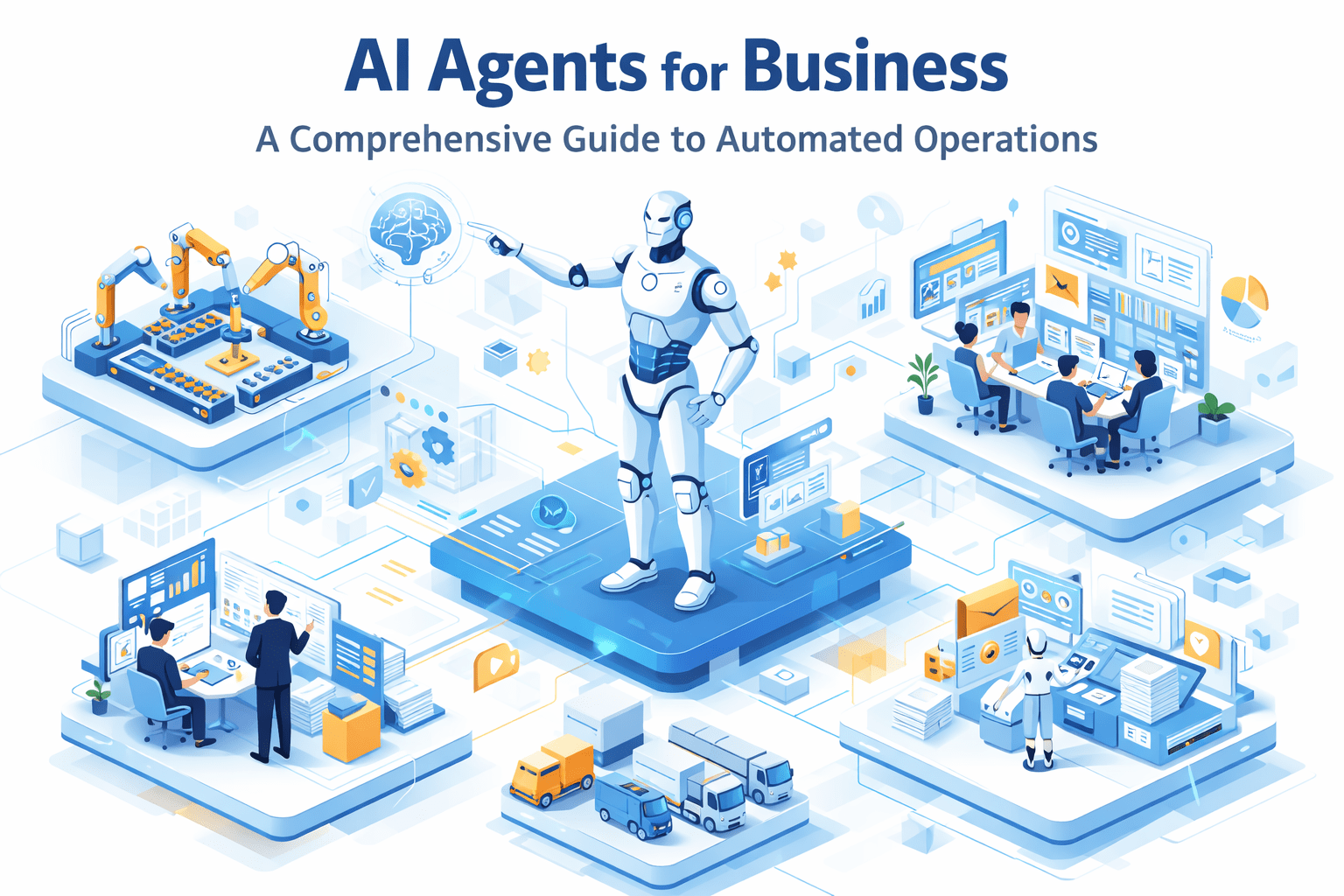
Enterprise automation has evolved beyond scripted workflows and robotic process automation. AI agents represent a new operational layer capable of decision-support, cross-system orchestration, and adaptive task execution. When deployed correctly, AI agents become digital operators embedded within enterprise infrastructure.
The strategic foundation for enterprise AI adoption is outlined in The Complete Guide to AI Agents for Enterprise Business Operations, where AI agents are positioned as infrastructure rather than isolated productivity tools.
AI agents transform operations when they are integrated structurally, not experimentally.
What Makes AI Agents Different from Traditional Automation?
Traditional automation relies on static rule-based execution. AI agents add contextual intelligence.
AI agents can:
• Interpret structured and unstructured inputs
• Execute multi-step workflows autonomously
• Integrate with enterprise ERP, CRM, HRIS, and BI platforms
• Trigger actions based on conditional logic
• Continuously improve through interaction patterns
Selection frameworks for these capabilities are explored in How to Choose the Right AI Agents for Your Enterprise Organization.
Core Enterprise Use Cases for AI Agents
AI agents deliver operational value in multiple domains.
1. Cross-Platform Data Aggregation
• Consolidate data from ERP, CRM, HRIS, and financial systems
Accelerate executive reporting cycles.
• Normalize inconsistent data formats
Improve dashboard accuracy.
• Trigger alerts based on KPI thresholds
Support real-time decision-making.
2. Workflow Orchestration Across Departments
• Automate approval chains
Reduce administrative delays.
• Trigger HR onboarding processes
Coordinate cross-department tasks.
• Route compliance documentation automatically
Simplify audit preparation.
Workflow scalability considerations are discussed in AI Agent Solutions for Enterprises: Comparing Options and Finding the Best Fit.
3. Compliance Monitoring and Documentation
• Monitor access control anomalies
Strengthen internal governance.
• Generate automated compliance reports
Reduce audit fatigue.
• Track regulatory policy updates
Improve policy alignment.
Security governance integration is reinforced in Enterprise AI Compliance: Securing AI Agents in Corporate Environments.
4. Operational Risk Detection
• Flag unusual financial transactions
Detect anomalies early.
• Identify inconsistent system usage patterns
Reduce misuse exposure.
• Monitor API activity logs
Strengthen integration oversight.
Risk mitigation aligns with integration challenges described in Top AI Integration Challenges Facing Enterprise Organizations Today.
5. Knowledge Retrieval and Internal Decision Support
• Retrieve policy documentation instantly
Reduce internal search friction.
• Surface historical performance metrics
Improve executive clarity.
• Provide contextual summaries for leadership review
Accelerate board reporting preparation.
Strategic alignment for these use cases is explored in How to Build AI-Powered Enterprise Operations Strategy.
Architectural Requirements for Enterprise AI Agents
AI agents must operate within secure enterprise boundaries.
Core requirements include:
• Role-based access control enforcement
• API permission restriction and monitoring
• Encrypted communication channels
• Centralized logging integration
• Real-time anomaly detection monitoring
• Governance-aligned reporting dashboards
Provider evaluation frameworks for these safeguards are detailed in AI Agent Providers: What Business Leaders Should Look for in Partners.
Integration Sequencing for Enterprise Operations
AI deployment should follow structured sequencing:
• Map workflows before automation
• Validate data classification and sensitivity levels
• Restrict API permissions before enabling agents
• Enable centralized monitoring prior to scaling
• Integrate executive dashboards early
Implementation sequencing is expanded in The Ultimate AI Agent Implementation Checklist for Business Executives.
Enterprise-Level Benefits of Structured AI Operations
When AI agents are deployed strategically, enterprises experience:
• Reduced manual operational workload
• Faster reporting cycles
• Lower administrative friction
• Improved compliance documentation accuracy
• Enhanced decision-making speed
• Scalable automation across departments
AI becomes operational infrastructure rather than experimentation.
Common Operational Mistakes in AI Deployment
• Deploying AI agents without workflow mapping
• Granting excessive system permissions
• Failing to monitor AI agent activity
• Ignoring compliance documentation requirements
• Scaling pilots without governance structure
• Treating AI agents as isolated productivity tools
These missteps increase enterprise risk.
Key Takeaways
AI agents for business operations represent a transformative operational layer capable of autonomous workflow orchestration, cross-platform data aggregation, compliance monitoring, and decision-support acceleration. Successful enterprise deployment requires structured workflow mapping, secure API governance, centralized monitoring integration, and strategic alignment with organizational objectives. When embedded into enterprise architecture with disciplined oversight, AI agents become scalable infrastructure that enhances efficiency, strengthens compliance posture, and supports sustainable operational growth.

