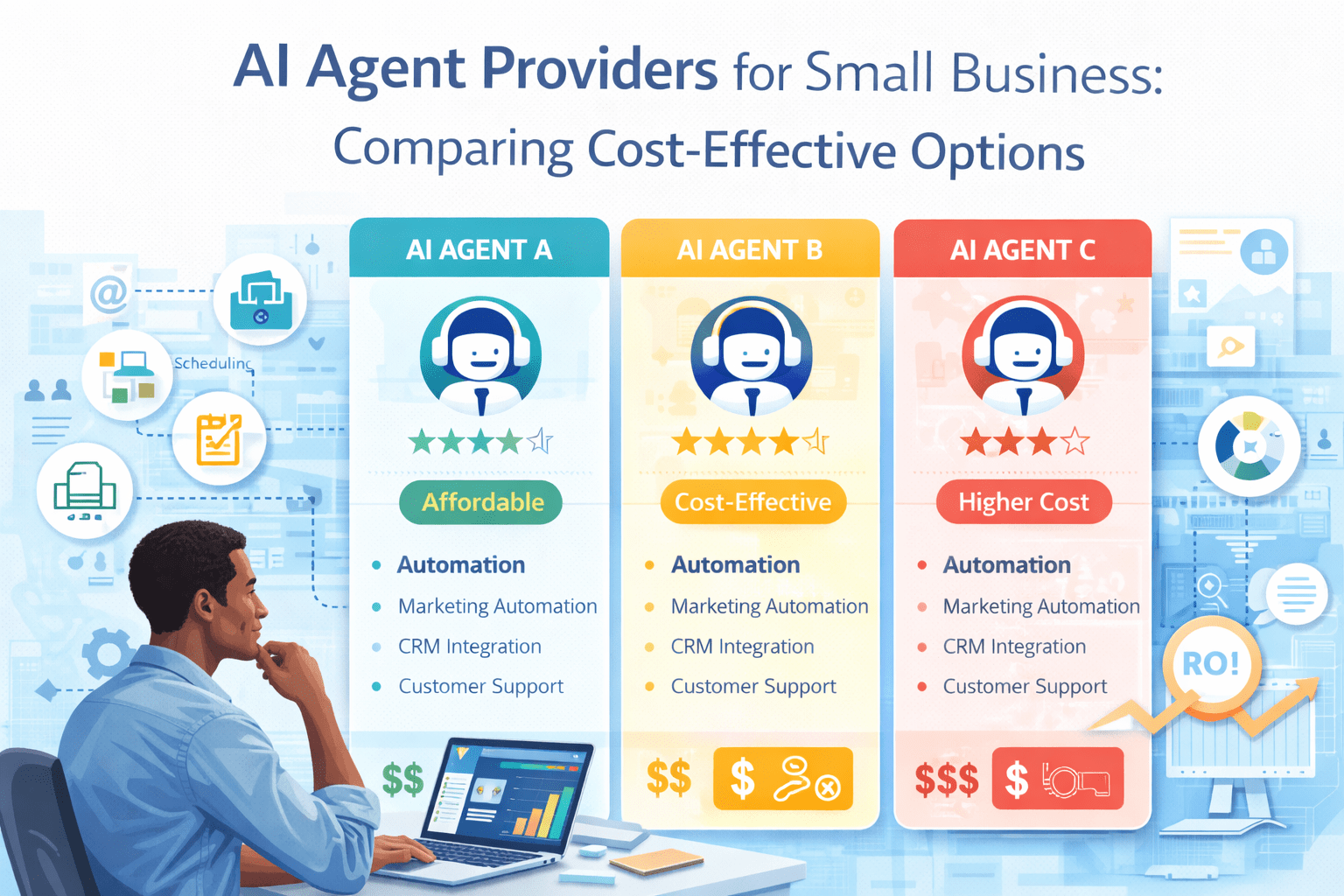
Not all AI agent providers are designed for small businesses. Many platforms are built for enterprise complexity and carry pricing structures, integration requirements, and feature sets that exceed local business needs. Choosing the right provider requires balancing affordability, simplicity, scalability, and integration compatibility.
The broader automation framework is outlined in AI Agents for Local Businesses: Small Business Automation Guide, where AI is positioned as a practical operational multiplier for small teams.
Cost-effective does not mean low-quality. It means aligned with operational reality.
What Small Businesses Should Look for in an AI Provider
Evaluation should focus on practical criteria.
Key factors include:
• Simple onboarding process
Minimize setup delays.
• Clear pricing structure
Avoid hidden fees and usage surprises.
• Compatibility with common small business tools
Ensure smooth integration with accounting, CRM, and scheduling platforms.
• Scalable pricing tiers
Support growth without tool replacement.
Cost evaluation strategies are expanded in How Local Businesses Choose Affordable AI Agent Solutions.
Category 1: Subscription-Based AI Platforms
These platforms offer plug-and-play automation.
Advantages:
• Lower upfront cost
• Quick setup
• Pre-built templates
Limitations:
• Limited customization
• Restricted API flexibility
• Scaling may require tier upgrades
DIY trade-offs are discussed in AI Automation for Small Business: Professional vs. DIY Approaches.
Category 2: Automation Platform Builders
These tools allow workflow customization.
Advantages:
• Greater flexibility
• Multi-tool integration capability
• Conditional logic support
Limitations:
• Steeper learning curve
• Configuration complexity
• Potential need for professional guidance
Integration challenges are examined in Local Business AI Integration: Overcoming Common Implementation Challenges.
Category 3: Managed AI Service Providers
These providers offer guided implementation and optimization.
Advantages:
• Structured deployment
• Integration validation
• Ongoing monitoring support
• Scalability planning
Limitations:
• Higher initial investment
• May exceed needs of very small operations
Deployment sequencing guidance is detailed in AI Agent Implementation for Local Businesses: Step-by-Step Guide.
Comparing True Cost Structures
Small businesses must look beyond subscription price.
Review:
• Monthly base fee
Confirm predictable budgeting.
• Usage-based charges
Avoid unexpected billing spikes.
• Add-on integration fees
Clarify total ownership cost.
• Support and onboarding fees
Prevent hidden service expenses.
ROI tracking discipline is explained in Small Business AI ROI: Measuring Success with Limited Budgets.
Scalability Considerations
Choose providers that allow gradual expansion.
Verify:
• Multi-workflow support
Avoid tool replacement during growth.
• API flexibility
Enable future integrations.
• Reporting dashboard access
Maintain operational visibility.
Strategic scaling is outlined in Local Business AI Strategy: Starting Small and Scaling Up.
Red Flags in Provider Selection
• Vague pricing transparency
• No integration documentation
• Poor customer support access
• Limited compatibility with common small business tools
• No exportable reporting data
Affordable automation requires clarity.
Key Takeaways
AI agent providers for small businesses should be evaluated based on onboarding simplicity, transparent pricing, integration compatibility, scalability flexibility, and measurable ROI alignment. Comparing subscription tools, automation builders, and managed service providers allows local businesses to select solutions that match operational complexity without overspending. When provider selection is disciplined and aligned with workflow.