

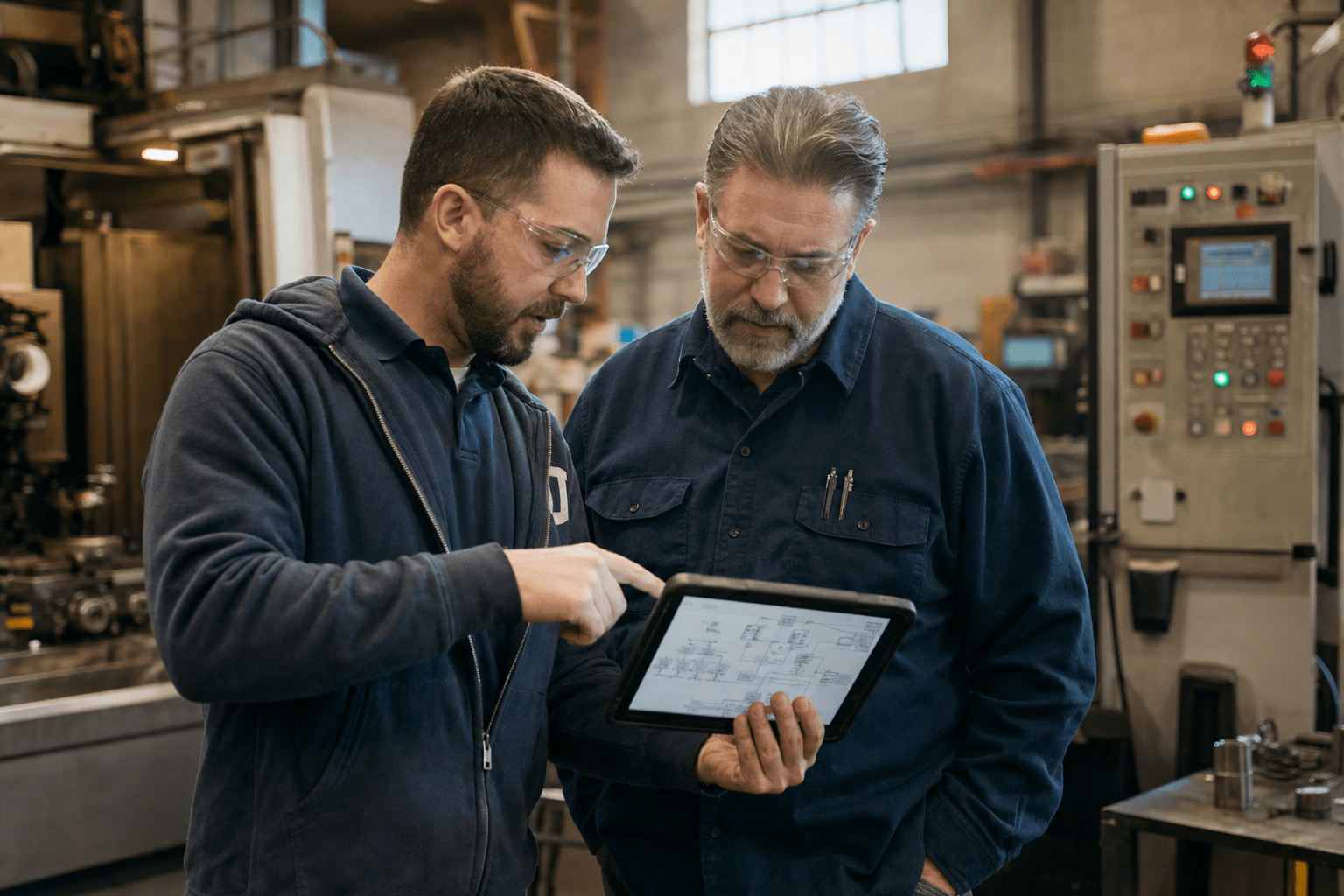
Manufacturers in New Jersey carry a risk profile that generic IT security programs miss. A single ransomware event can stop a production line, freeze shipments, and expose the proprietary designs that make a plant competitive. Choosing the right partner means finding a Cybersecurity Company New Jersey that protects both the back office and the plant floor, understands state and federal compliance pressure, and can respond fast when a line is down. This guide walks through what separates a strong manufacturing security partner from a general IT shop, the questions to ask before you sign, and how to shortlist providers so your evaluation is grounded in your actual operation.
Five things every manufacturer should check first
- Whether the firm secures operational technology (PLCs, SCADA, HMIs) and not just office laptops and email.
- How fast they respond when a line stops, and whether that response time is written into the contract.
- Their track record with your compliance obligations, from CMMC for defense suppliers to customer security questionnaires.
- Whether they segment the plant network so an office breach cannot reach production controls.
- How they handle legacy machines that cannot be patched or taken offline during a shift.
Why manufacturers need a Cybersecurity Company New Jersey that is built for the plant floor
Manufacturers run two very different technology worlds on one site, and attackers exploit the seam between them. The office side runs email, ERP, and file shares. The plant side runs machine controllers, sensors, and human-machine interfaces that were often installed years ago and rarely updated. When both sit on the same flat network, a phished office password can reach a controller that runs a press or a mixing line. That is the gap a manufacturing-focused partner closes first.
General IT providers tend to treat every device the same way, pushing patches and reboots on a schedule. That approach breaks a factory. A controller cannot reboot mid-shift, and many run software the vendor no longer supports. A partner who works with plants knows how to protect a machine that cannot be patched, using network isolation and monitoring instead of forced updates.
The cost of downtime is different in manufacturing
When an office is hit with ransomware, staff lose access to files for a few hours. When a plant is hit, the line stops, orders slip, and contracts with penalty clauses come due. The right partner prices their response around that reality and commits to recovery times that match how much an idle line costs you per hour.
Intellectual property is the target, not just the data
Attackers going after manufacturers often want product designs, tooling specs, and process recipes. That kind of theft is quiet and can go undetected for months. A strong provider watches for slow data exfiltration, not only the loud encryption event, so stolen designs get caught before they reach a competitor or a foreign buyer.
What separates a strong Cybersecurity Company New Jersey from a generic IT shop
The best cybersecurity companies for manufacturers in New Jersey share a set of traits you can test for during evaluation. They start with an assessment of your IT and OT environment before recommending any product. They can name specific manufacturing clients and describe how they handled a line-down incident. And they speak the language of compliance frameworks that your customers and regulators expect.
Look for a provider that offers round-the-clock monitoring backed by real people, not just an automated alert queue. A factory does not run nine to five, and neither do attackers. When an alert fires at 2 a.m. during a night shift, someone needs to act on it before the line is affected.
Network segmentation as the baseline
Segmentation separates the plant network from the office network so a breach in one cannot spread to the other. A capable partner designs these boundaries around how your plant actually operates, keeping controllers isolated while still letting your team pull the production data they need. Ask any candidate to walk you through how they would segment your specific floor layout.
Compliance that matches your customers
Many New Jersey manufacturers supply the defense, aerospace, and medical device industries, which means they inherit strict security requirements from their customers. A partner who handles cybersecurity compliance can map your obligations, prepare you for audits, and answer the security questionnaires that increasingly gate new contracts. If a provider cannot explain CMMC or NIST expectations in plain terms, keep looking.
A real incident response plan provided by a Cybersecurity Company New Jersey
Ask what happens in the first hour after a breach. A strong provider has a written playbook, a named contact, and a rehearsed process for isolating affected systems while keeping unaffected lines running. A vague answer here is a red flag, because the first hour decides whether an incident is a scare or a shutdown.
How to build your shortlist and evaluate providers
Start by listing your actual risk points: which machines cannot be patched, which data would hurt most if stolen, and which compliance deadlines are coming. Then measure each candidate against that list rather than against a generic feature checklist. A firm that already supports manufacturers near you, such as those offering local New Jersey IT support, can reach your site quickly when hands-on work is needed.
Request references from manufacturing clients of similar size and ask those references one direct question: what happened the last time something broke, and how did the provider respond. Reference calls reveal more than any sales deck.
Questions to ask in the first meeting
Ask how they would inventory your OT devices, how they monitor equipment that cannot run standard security software, and how they would prove their protection is working month over month. A partner who reports on outcomes, not just tickets closed, gives you something you can take to leadership.
Mindcore works as a guide for New Jersey manufacturers building this kind of program, mapping the IT and OT boundary first and layering cybersecurity services around how your plant actually runs. If you want to see how other regulated industries approach the same problem, our breakdown of cybersecurity companies for law firms in New Jersey shows how the evaluation criteria shift by sector.
Match the engagement model to your team
Some manufacturers have an internal IT person who needs backup on security. Others have no dedicated staff at all. The right structure differs in each case. A co-managed model extends your existing team while keeping your internal person in control of day-to-day decisions, and a fully managed model hands the whole function to the provider so your staff can focus on production. Be clear about which you want before proposals arrive, because a co-managed quote and a fully managed quote are not comparable side by side. Spelling out the model up front also tells you which providers listen, since a firm that pushes its standard package regardless of what you asked for will do the same after you sign.
Common security gaps found on New Jersey plant floors
Most manufacturing plants share a short list of weaknesses that a good partner will find in the first assessment. Knowing these gaps ahead of time lets you judge whether a provider is thorough or just running a generic scan. The strongest firms will point to these issues without being prompted, because they have seen the same pattern across dozens of factories.
Flat networks are the most common problem, where every device from the front desk PC to the line controller shares one address space with nothing between them. Shared administrator passwords are a close second, often the same credential used across every machine so a single leak opens the whole floor. Remote access for machine vendors is another quiet risk, since equipment suppliers frequently keep a permanent connection into a controller for support and that connection rarely gets monitored.
Aging equipment that cannot be replaced
Manufacturers run machines that stay in service for fifteen or twenty years, long after the software that controls them stops receiving updates. Replacing a working line to satisfy a security checklist is not realistic. A capable partner protects these machines by wrapping them in monitoring and isolation, so the outdated software never touches the wider network and any unusual behavior triggers an alert before it spreads. Ask a candidate how they would protect a controller running software the vendor abandoned years ago, and listen for a concrete method rather than a recommendation to simply upgrade.
Backups that were never tested against ransomware
Many plants back up their data but have never tried to restore a full line from those backups under pressure. A backup that cannot be restored quickly is not protection, it is a false sense of safety. A strong provider tests restores on a schedule and keeps at least one copy offline so ransomware cannot reach it. During evaluation, ask when the candidate last ran a full restore test for a manufacturing client and how long that restore took.
Frequently Asked Questions
What makes manufacturing cybersecurity different from standard business IT security?
Manufacturing environments combine office IT with operational technology like machine controllers and sensors. These OT systems often cannot be patched or rebooted during production, so they need isolation and monitoring rather than the standard patch-and-reboot approach. A provider who ignores the plant floor leaves your most costly assets exposed.
How quickly should a provider respond when a production line goes down?
Response time should be written into your contract and tied to how much an idle line costs per hour. Many manufacturers require a committed one-hour response for line-down events. Ask any candidate to state their guaranteed response time in writing rather than describing a best effort.
Do New Jersey manufacturers need to meet specific compliance requirements?
Many do, especially those supplying the defense, aerospace, or medical device sectors, where customers pass down frameworks like CMMC and NIST. Even manufacturers without a federal contract increasingly face security questionnaires from customers before winning new business. A capable partner maps these obligations and prepares you for audits.
Can a general IT provider handle manufacturing security?
Some can, but only if they have real plant-floor experience. General IT firms often apply office security methods that break production equipment. Look for named manufacturing references and a clear process for protecting machines that cannot be patched or taken offline mid-shift.
What is network segmentation and why does it matter for factories?
Segmentation separates the plant network from the office network so a breach on one side cannot spread to the other. For manufacturers it is the single most important control, because it stops a phished office login from reaching the controllers that run your lines.
Protect your plant with a Cybersecurity Company New Jersey that knows the floor
Your production line, your designs, and your customer contracts all depend on security that understands how a factory actually runs. The right New Jersey partner starts with your real risk points, protects the equipment you cannot take offline, and commits to a response time you can hold them to. Book a free strategy call with Mindcore and we will map your IT and OT boundary and show you where the gaps are.

