

A hospice data breach disclosed this fall shows how much patient information sits with the companies that run back-office operations for home health and hospice agencies. AngMar Management Services, a Mansfield, Texas firm that manages home health and hospice operations, reported that an intruder accessed its systems around July 18, 2026, two days before staff detected it. The incident affected 35,916 Texas residents, and the exposed files included names, Social Security numbers, insurance details, diagnoses, prescription information and medical history. The Interlock ransomware group later listed the company on its leak site and claimed 710 GB of stolen data. For agency owners and administrators, the useful question is not what happened in Texas. It is whether your own nurses could keep caring for patients, and whether you could answer families quickly, if your management or billing partner went dark tomorrow.
Overview: Five Lessons for Home Health and Hospice Leaders
Our healthcare team supports agencies whose clinicians work from cars, patient homes and facility rooms, and this incident reinforces five lessons we already share with them.
- Back-office firms hold the most sensitive record set you have. Hospice charts include terminal diagnoses, controlled substance orders and family contacts, all in one place.
- Field care stops when the system stops. A nurse who cannot see a medication profile or the on-call schedule loses time with patients in pain.
- Detection speed matters, and two days is good. Many intrusions run for weeks. The lesson is to make sure someone is watching for the signs.
- Notification in hospice is unusually delicate. Many affected patients have died, so letters reach grieving families who may not expect them.
- Contracts do not substitute for evidence. A signed agreement says your partner will protect data; only testing and reporting show that it does.
Why a Hospice Data Breach Hits Harder Than Most
A hospice data breach is more damaging than many health data incidents because the records describe people at the end of life and the families who care for them. Exposed data can fuel fraud against estates and add distress at an already painful time.
The Data Hospice Programs Keep
Hospice records combine clinical, financial and family information. Plans of care, medication orders including controlled substances, comfort-kit contents, bereavement contacts and Medicare election paperwork often sit together.
One view is that this concentration is necessary: an interdisciplinary team needs the full picture to coordinate nursing, aide, social work and chaplain visits. The opposing view is that bereavement and family contact data rarely need to sit beside clinical notes and could live in a separate system with tighter access.
Both have merit. We encourage agencies to map where each category lives and ask whether every system really needs every field. Our healthcare industry team uses that map as the starting point for every hospice risk review.
Why Management Companies Are Targets
Management services firms often run billing, scheduling, payroll and IT for several agencies. To an attacker, one intrusion reaches many organizations’ data at once.
Agencies choose these partners for good reasons: shared expertise, lower overhead and better systems than a small agency could build alone. The trade-off is concentration risk, which our article on third-party risk reduction in healthcare networks covers in depth.
Ending a management relationship is rarely the right reaction. Asking for proof of segmentation, monitoring and recovery testing usually is.
What Ransomware Groups Do With Hospice Data
Groups like Interlock combine encryption with data theft and then publish stolen files when victims do not pay. Health data sells well because it supports insurance fraud and identity theft.
Some argue that paying limits publication. In practice, payment buys a promise from criminals, and stolen data frequently resurfaces. Our ransomware response team advises clients to plan on the assumption that exfiltrated data will eventually be exposed.
How Field Care Keeps Running During a Hospice Data Breach
Keeping visits on track during an outage is the part of hospice data breach planning that most agencies underinvest in, because it sits between clinical operations and IT. A ransomware event at a partner can lock your EHR, scheduling and telephony at once.
Downtime Medication and Visit Lists
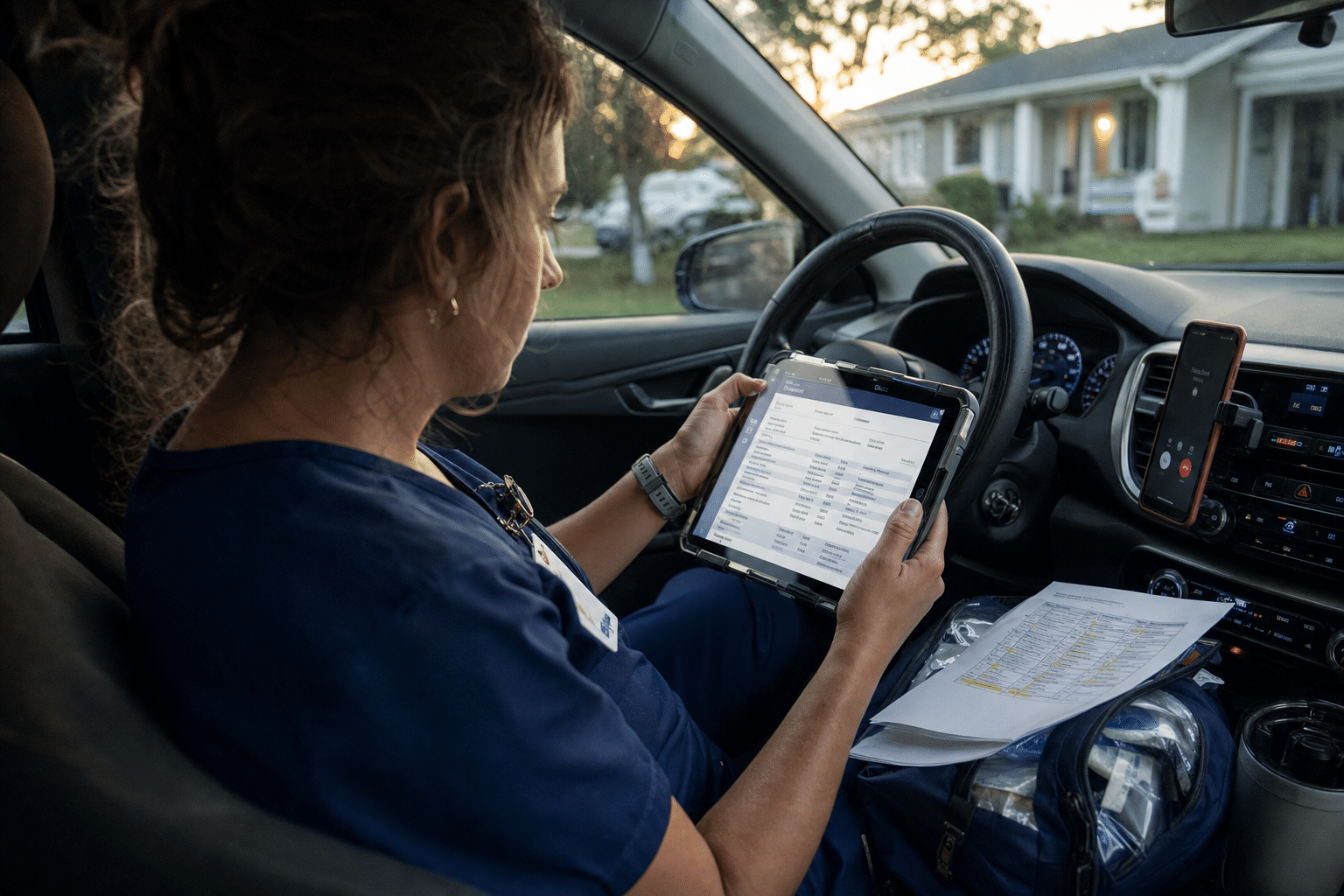
Every field clinician should be able to reach a current medication profile, allergy list, code status and visit schedule for their caseload without the main system. Many agencies print or securely export these daily.
The objection is privacy: a printed list in a car is a small data risk of its own. The counterpoint is patient safety, since a nurse without a medication list at a bedside creates a far larger risk. We recommend encrypted offline exports on managed devices over paper where possible, refreshed every shift.
On-Call and After-Hours Coverage
Hospice on-call lines handle symptom crises at night and on weekends. If the phone system or answering service depends on the same infrastructure, families may not reach a nurse when it matters most.
Test the failover path: who answers if the main line is down, and how does that person see the patient’s plan of care? Write the answer into the downtime procedure and run it as a tabletop exercise twice a year.
Managed Devices in the Field
Tablets and laptops carried by nurses and aides are both a lifeline and an exposure. If they sync from a compromised server, they can spread the problem.
Mobile device management lets an agency push the offline downtime package, revoke access quickly and wipe a lost device. Agencies sometimes see it as overhead for a small fleet. After an incident, it is usually the control they wish they had deployed first.
What to Ask Your Management or Billing Partner
Questions for your management partner should focus on evidence that a breach of this kind would be contained quickly and recovered from, not on whether the contract mentions security. Ask once a year and whenever the partner changes systems.
Segmentation Between Client Agencies
Ask whether each agency’s data is separated so that an intrusion into one client environment cannot reach the others. Request a description of how access is controlled between them.
Partners may answer that a shared platform is what keeps costs low. That is true, and shared software can still enforce separation through tenant design and access controls. A clear explanation is a good sign; a vague one is a reason for a deeper IT risk assessment.
Detection and Response Commitments
Ask how intrusions are detected, who watches alerts after hours, and how quickly you will be told. In this case, detection took about two days, which is faster than many incidents we see.
Push for a written notification timeline to your agency, separate from the regulatory deadline for patients. You need time to activate downtime procedures and prepare family communications.
Recovery Testing
Ask when backups were last restored in a test, how long a full recovery took, and whether backups are isolated from the production network. Our guide to ransomware recovery and its HIPAA implications lists the evidence to request.
How to Notify Families With Care
Hospice breach notification requires accuracy and compassion, because many letters go to the estates or families of patients who have died. HIPAA sets the legal requirements; tone and timing are up to you.
Working With the Responsible Party
Usually the management company sends notices on behalf of its clients, but your agency’s name and reputation are attached. Agree in advance who drafts letters, who reviews them, and who staffs the call center.
Preparing Staff for Calls
Bereavement coordinators and social workers will hear from families first. Give them a short script, a clear escalation path and accurate facts about what data was involved.
Some agencies prefer to route every call to the vendor’s hotline. Others keep the conversation in-house to preserve trust. We lean toward a warm handoff: your staff answers, acknowledges, and connects the family to the detailed resources.
Frequently Asked Questions
What data was exposed in the AngMar hospice data breach?
The company reported names, addresses, dates of birth, Social Security numbers, patient and medical record numbers, insurance details, dates of service, diagnoses, provider names, prescriptions and medical history. It affected 35,916 Texas residents.
Is my agency responsible if our management company is breached?
Under HIPAA, both the agency as a covered entity and the management company as a business associate carry obligations. Your agreement should define who notifies patients, and your agency should verify the partner’s safeguards rather than relying on the contract alone.
How quickly must patients be notified after a breach?
HIPAA requires notification without unreasonable delay and no later than 60 days after discovery, with additional notice to HHS and, for large breaches, the media. State laws may add requirements.
What should field nurses do if the EHR is unavailable?
Follow the agency’s downtime procedure: use the current offline medication and visit lists, call the on-call coordinator through the backup line, and document on approved downtime forms for later entry.
How can a small agency reduce ransomware risk?
Start with multifactor authentication, managed devices, tested offline backups and a written downtime plan. Our healthcare ransomware defense guide covers six gaps clinics commonly leave open.
Who Is Behind This Guidance
Mindcore Technologies supports home health, hospice and other care providers with security assessments, managed devices, secure workspace platforms for healthcare and ransomware response. This article reflects what we see when we help agencies prepare field operations for outages and review their partners’ safeguards. Your clinical leaders decide how care is delivered; our role is to make sure the systems behind that care keep working and protect patient privacy. Mindcore is led by CEO Matt Rosenthal, who focuses on helping healthcare organizations build security programs that hold up under real pressure.
Protect Field Care With a Free Strategy Call
A breach of this kind at a back-office partner tests two things at once: whether your patients’ most sensitive information was protected, and whether your nurses can keep caring for them while systems are down. Map where each kind of hospice data lives, give field staff an encrypted offline downtime package, test the on-call failover path, and ask your management partner for evidence of segmentation, monitoring and recovery testing. Prepare a compassionate notification plan before you need it. If you would like help reviewing your agency’s readiness or your partners’ safeguards, book a free strategy call with our healthcare security team. We will walk through your field operations and partner arrangements and leave you with a practical plan your staff can put in place.

