

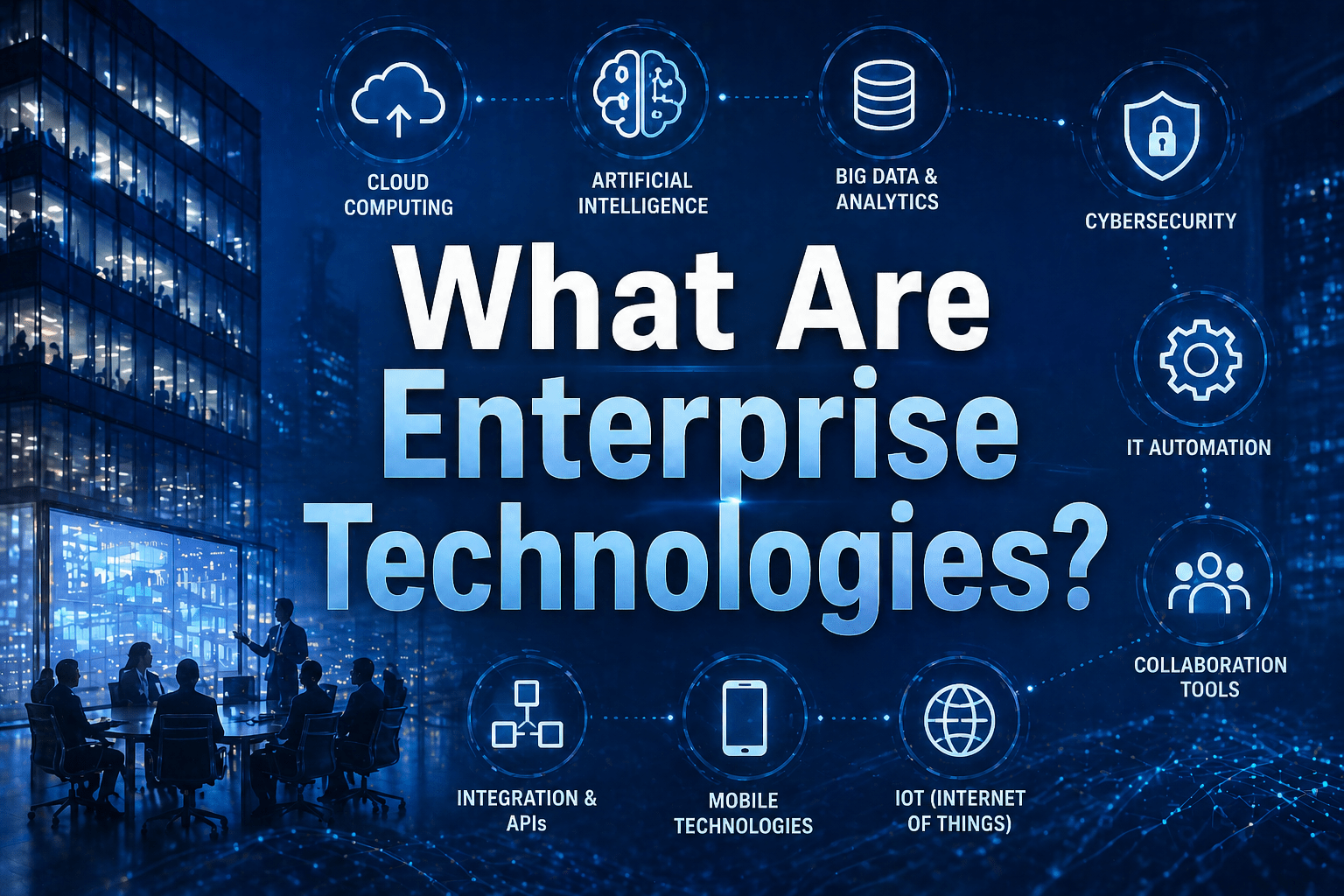
Enterprise technologies are the collective set of information technology platforms, systems, tools, and infrastructure that an organization deploys to support its operations, people, and processes at scale. The plural form — technologies, rather than technology — reflects the reality that enterprise IT is never a single system. It is an ecosystem of interconnected platforms that must work together to deliver the organization’s full operational capability.
A mature enterprise technology stack typically includes infrastructure (servers, network, cloud), productivity and collaboration platforms, security systems, business applications, data management tools, and integration middleware. Each category addresses a different organizational need; the collective capability of the stack determines how effectively the organization can operate and grow.
For businesses working with managed IT services providers, the enterprise technology stack is the environment those services manage and protect.
Categories of Enterprise Technologies
Infrastructure Technologies
The foundational layer: servers, storage, networking equipment, data centers, and cloud infrastructure (Azure, AWS, Google Cloud). Infrastructure technologies determine the performance, availability, and scalability of everything built on top of them.
Productivity and Collaboration Technologies
The tools that enable organizational work: Microsoft 365 (email, documents, Teams), Google Workspace, video conferencing, intranet platforms, and project management tools. These are the most visible enterprise technologies to most employees — the tools they use every day.
Security Technologies
The systems that protect the environment: firewalls, endpoint security (EDR), email security, identity and access management, SIEM, and cybersecurity compliance tools. Security technologies are the protective layer over the entire enterprise stack.
Business Application Technologies
The applications that run core business processes: ERP (enterprise resource planning), CRM (customer relationship management), accounting systems, HRMS, and industry-specific applications. NetSuite is an example of an enterprise ERP platform that Mindcore deploys and manages for clients.
Data Management Technologies
Databases, data warehouses, business intelligence platforms, and analytics tools that capture, store, and enable insight from organizational data.
Integration Technologies
Middleware, APIs, and integration platforms that enable different enterprise systems to exchange data — preventing the silos that develop when systems operate without connections.
Why Enterprise Technologies Must Work Together
The value of individual enterprise technologies is multiplied by integration. An ERP system that does not connect to the accounting platform requires manual data entry between them. A CRM that does not connect to email requires manual activity logging. Each integration gap creates operational friction and data inconsistency.
Enterprise technology strategy requires both selecting the right individual platforms and designing the integration architecture that connects them. IT consulting services that address integration planning alongside platform selection produce better long-term outcomes than those that evaluate platforms in isolation.
Final Takeaway
Enterprise technologies are the interconnected collection of IT systems that enable an organization to operate. Their individual capabilities matter; their collective integration matters more. Enterprise technology strategy addresses both.
Enterprise Technology Management From Mindcore Technologies
Mindcore’s managed IT services manage the full enterprise technology stack — infrastructure, productivity platforms, security systems, and business applications — for organizations that need expert management without building large internal IT teams.
Talk to Mindcore Technologies About Managing Your Enterprise Technology Stack

