

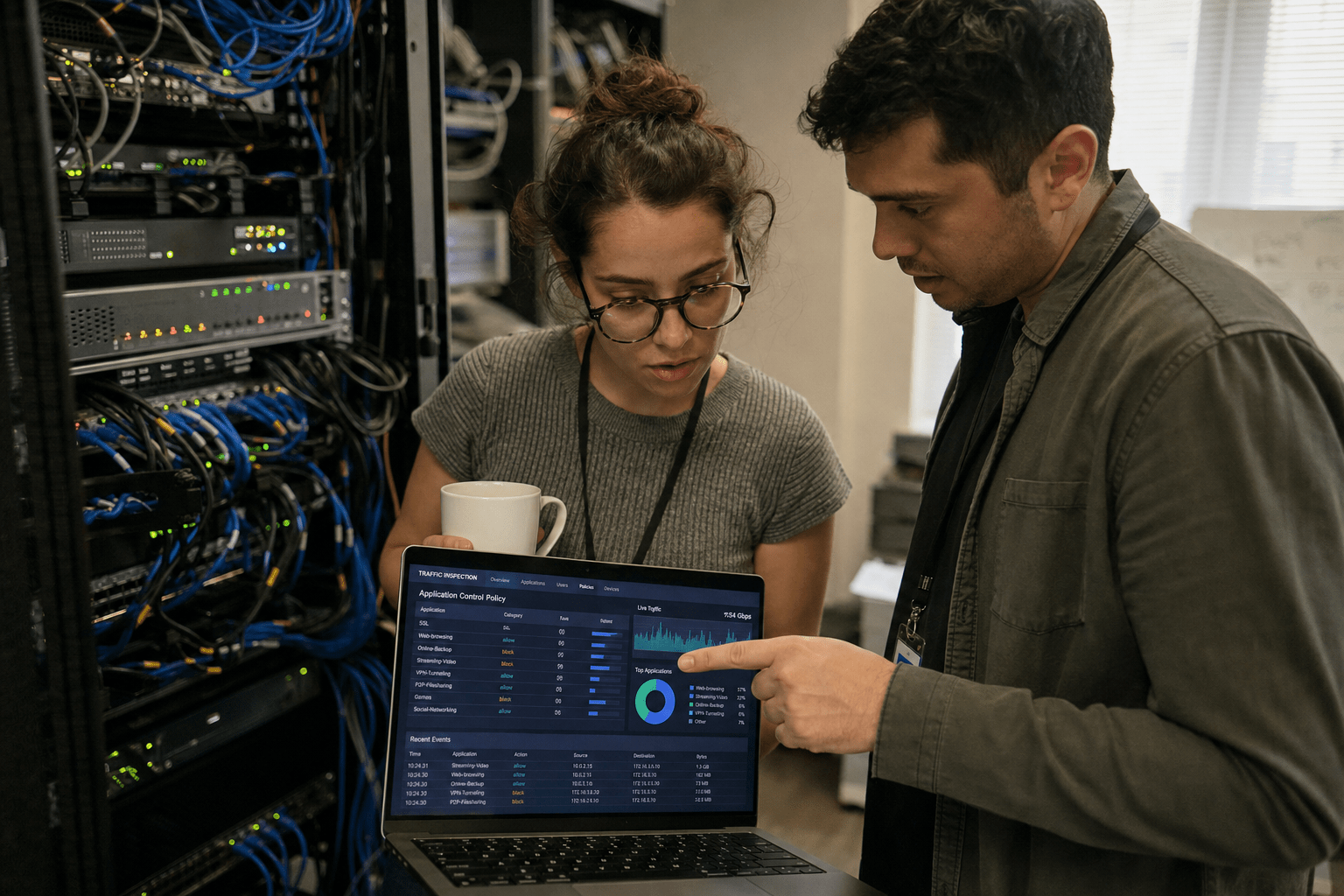
A next-generation firewall is a network security device that inspects traffic by application, user, and content, which is exactly what defines What Is a Next Generation Firewall in modern cybersecurity. An older firewall reads the outside of a packet and asks where it came from. A next-generation firewall reads the inside and asks what it really is. That shift from focusing on the source to analyzing content demonstrates What Is a Next Generation Firewall, capable of detecting threats that traditional firewalls miss. By combining application control, deep packet inspection, and intrusion prevention, this next-generation firewall embodies What Is a Next Generation Firewall, providing a single, cohesive security policy.
Five Things to Know About a Next-Generation Firewall
Before you compare products or quotes, anchor on a few facts that hold true no matter which vendor you look at. These keep you from overpaying for features you will not turn on and from mistaking a rebranded old firewall for the real thing.
- It inspects up to the application layer. A traditional firewall stops at ports and protocols. A next-generation firewall reads layer seven, so it can tell a video call apart from a file transfer even when both use the same port.
- It knows the user, not just the IP. Policies follow the person through directory integration, so access rules make sense even when someone moves between the office, home, and a phone.
- Intrusion prevention is built in. An intrusion prevention system rides inline and can drop a known exploit mid-connection instead of just logging it after the fact.
- It reads the payload, not only the header. Deep packet inspection opens the contents of traffic to catch malware and policy violations that header-only filtering misses.
- It only stays smart if it is fed. Threat intelligence, signatures, and policies need regular updates. An unmanaged next-generation firewall slowly drifts back toward acting like the old one it replaced.
How a Next-Generation Firewall Differs From a Traditional Firewall
The core difference is depth: a traditional firewall judges traffic by where it comes from, while a next-generation firewall judges it by what it actually carries. A classic firewall performs stateful inspection at the network and transport layers. It tracks connections and applies static rules based on source, destination, port, and protocol. That was enough when business traffic ran on a small set of predictable ports and threats looked different from normal use. It is not enough now, because most traffic rides web ports and encrypted sessions, and attackers deliberately blend in with the crowd.
A next-generation firewall extends inspection to the application layer, which is key to understanding What Is a Next Generation Firewall for businesses dealing with encrypted traffic. It can see that traffic on port 443 is a specific cloud app rather than assume anything on that port is safe web browsing. It ties that visibility to identity, so a rule can say a given team may use one application but not another. And it inspects the payload itself through deep packet inspection, opening packet contents to find malware or data leaving where it should not.
The move from where to what
Picture two guards at a door. The first checks the return address on every envelope and lets anything in from an approved sender. The second opens the envelope, reads what is inside, and confirms the person carrying it is who they claim to be. The first guard is a traditional firewall. The second is a next-generation firewall. The addresses still matter, but they are no longer the whole story.
Why old rules stop working
Ports used to map cleanly to purpose, so blocking a port blocked a behavior. Today hundreds of applications share the same handful of ports, and much of that traffic is encrypted. A port-based rule can no longer tell a sanctioned business tool from a risky one when both look identical from the outside. That gap is exactly where a next-generation firewall earns its place.
What a Next-Generation Firewall Actually Does
A next-generation firewall combines several security jobs that businesses used to buy and manage separately, and it applies them to the same stream of traffic at once. That consolidation is where much of the value sits, because one device enforcing one policy is far easier to run correctly than four tools with four consoles.
The common capabilities you will see across vendors include application awareness and control, an integrated intrusion prevention system, deep packet inspection, and cloud-delivered threat intelligence that keeps the device current on new attacks. Many also inspect encrypted traffic, so threats hiding inside secure sessions do not get a free pass. Some pair with sandboxing that detonates a suspicious file in isolation before it ever reaches an endpoint.
Application awareness and control
Because it identifies the actual application behind a connection, a next-generation firewall lets you write policy in plain business terms. You can permit a collaboration platform, throttle streaming during work hours, and block a file-sharing app your compliance policy forbids, all without guessing at ports. The same capability underpins tools like next-gen antivirus, which shifts protection from static signatures to behavior.
Intrusion prevention and threat intelligence
The built-in intrusion prevention system watches for known exploit patterns and blocks them inline. Paired with threat intelligence that updates continuously, the device recognizes attacks discovered elsewhere in the world before they reach you. This is the same layered thinking behind modern endpoint tools such as next-gen cybersecurity platforms that watch behavior rather than wait for a match.
Choosing and Running One for Your Business
Buying a next-generation firewall is the easy part; keeping it effective is the work that separates real protection from a false sense of it. The effectiveness of a next-generation firewall relies on disciplined policy enforcement and regular updates, which is central to What Is a Next Generation Firewall in practice. A box installed once and forgotten quietly loses ground as new applications appear and old signatures go stale.
Start by sizing the device to your real throughput, including the overhead of decrypting and inspecting encrypted traffic, which is heavier than raw pass-through. Then invest in the rule set. A tight policy built around your actual applications and users delivers most of the benefit; a wide-open policy wastes the hardware. Turn on the features you will actually maintain, and skip the ones no one will watch. Finally, decide who owns updates, log review, and tuning, because those are ongoing jobs, not a one-time setup.
This is where a partner matters. As the guide, Mindcore helps you scope, configure, and run the firewall so it keeps pace with your traffic and your threats, whether through managed firewall services or as part of a broader defense approach like ShieldHQ. You stay in control of the business decisions; we handle the daily upkeep that keeps the protection real.
Frequently Asked Questions
What is a next-generation firewall in simple terms?
It is a firewall that decides what to allow based on the application, the user, and the content of the traffic, not just the port and address it came from. That lets it catch threats hiding inside otherwise normal-looking traffic that an older firewall would let through.
How is a next-generation firewall different from a traditional firewall?
A traditional firewall filters at the network and transport layers using static rules for ports, protocols, and addresses. A next-generation firewall inspects up to the application layer, ties policy to user identity, and reads packet contents through deep packet inspection, so it judges what traffic is rather than only where it came from.
Does a next-generation firewall replace antivirus?
No. They cover different ground. The firewall guards the network edge and the traffic crossing it, while antivirus and endpoint tools protect the individual devices. They work best together as layers, since a threat that slips one layer can still be caught by the next.
Can a next-generation firewall inspect encrypted traffic?
Most can, through a process that decrypts a session, inspects it, and re-encrypts it. This closes a real gap, since attackers often hide inside encrypted traffic, but it adds processing load. That overhead is one reason sizing the device correctly and running it well both matter.
Does a small business need a next-generation firewall?
Often yes, because small businesses face the same application-borne and encrypted threats that larger ones do, usually with a smaller team to manage them. The right size and a maintained rule set matter more than raw feature count, which is why many smaller firms run one through a managed service.
Talk Through the Right Firewall for Your Network
A next-generation firewall pays off only when it is scoped, configured, and maintained around how your business actually uses its network. If you are weighing an upgrade or want a second look at the firewall you already run, book a free strategy call with Mindcore. We will walk your traffic, your applications, and your risks, then map out a firewall approach that fits your team and keeps working long after setup day.

