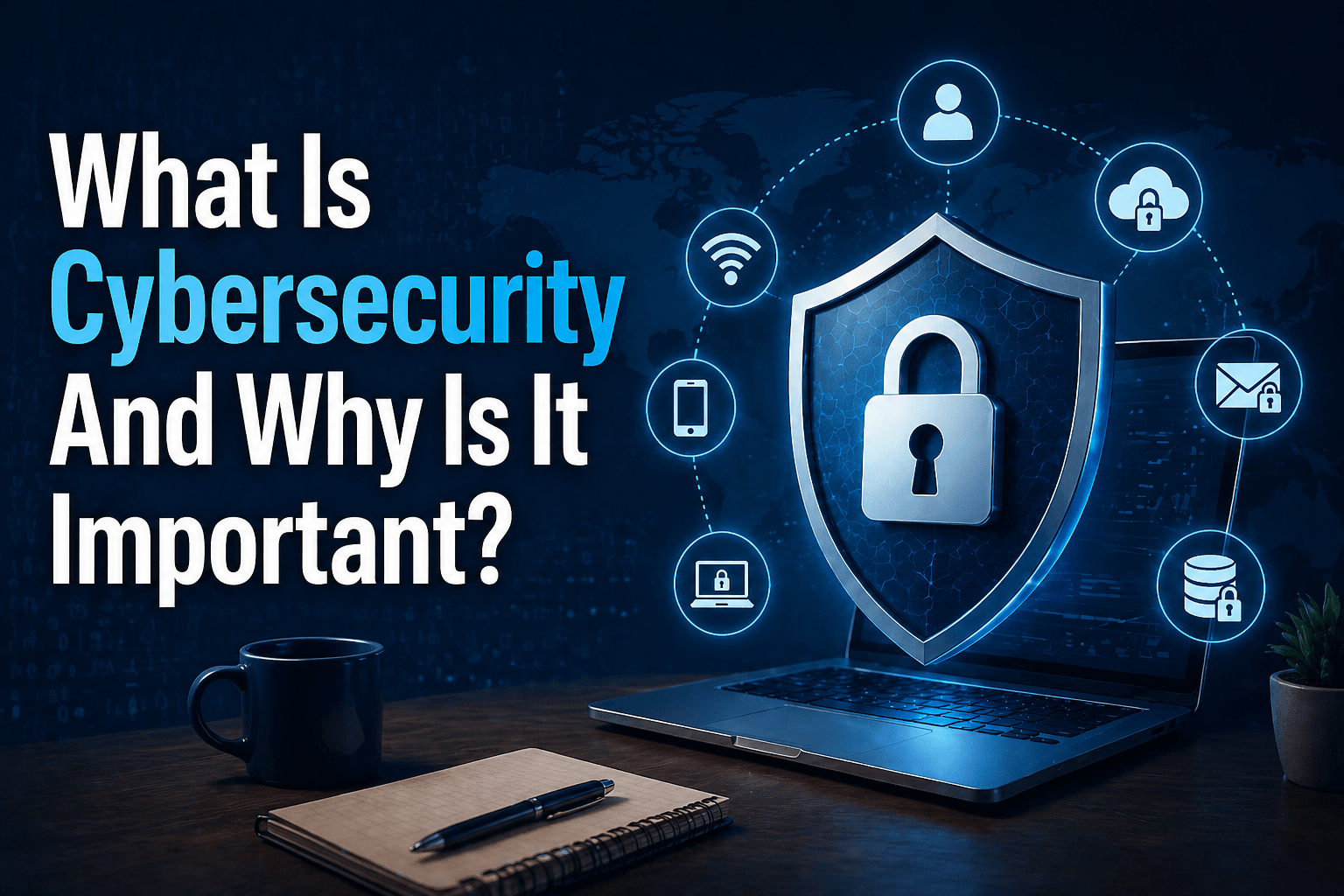
Cybersecurity is the practice of protecting computers, networks, systems, data, and people from digital attacks, unauthorized access, and damage. It covers everything from the antivirus software on a single laptop to the architecture that protects an enterprise network from nation-state actors. The common thread is intent: cybersecurity is the set of practices, tools, policies, and behaviors that keep digital environments trustworthy and operational.
The reason it matters has become impossible to separate from the reason business itself matters. Every organization today depends on digital systems to operate. Customer data lives in databases. Financial transactions move through networks. Communications happen in cloud platforms. When those systems are compromised, business stops — or continues under conditions the organization did not choose and cannot easily control.
For businesses in Louisiana and beyond working with managed IT services providers, cybersecurity is not a separate concern from IT operations. It is the operational posture that determines whether the IT environment is an asset or a liability when an attack arrives.
Overview
Cybersecurity encompasses the technologies, processes, and practices designed to protect digital systems, networks, and data from attack, damage, or unauthorized access. It is relevant to every organization that uses technology — which means every organization. The stakes have risen as organizations have moved more of their operations, data, and communications into digital environments that are accessible, connected, and therefore attackable.
- Cybersecurity protects the confidentiality, integrity, and availability of information and systems
- Threats include malware, ransomware, phishing, social engineering, and insider risks
- Small and mid-sized businesses face the same threat landscape as enterprises with smaller resources to defend against it
- Effective cybersecurity combines technology, policy, and human behavior
- The cost of a breach typically exceeds the cost of prevention by a significant margin
The 5 Why’s
- Why has cybersecurity become a business-critical function rather than just an IT concern? Because the assets cybersecurity protects are business assets. Customer data, financial records, intellectual property, and operational systems are not IT resources — they are the business. When cybersecurity fails, business outcomes follow: revenue interruption, regulatory penalties, reputational damage, and recovery costs that can take years to absorb. Every business leader is responsible for the security of the business’s assets; cybersecurity is the discipline that protects them.
- Why do small and mid-sized businesses face elevated cybersecurity risk relative to their resources? Because attackers specifically target SMBs as a class. SMBs hold valuable data, process payments, and have access to larger organizations through supply chains — but typically have fewer security controls than the enterprises attackers would prefer to breach. Automated attack tools scan the internet for vulnerable organizations without discriminating by size. The organization with an unpatched VPN or a misconfigured email server is attacked regardless of how small it is.
- Why is cybersecurity a continuous operational practice rather than a one-time implementation? Because the threat landscape changes continuously. New vulnerabilities are discovered in software that was previously considered secure. New attack techniques are developed. New tools, cloud platforms, and connected devices expand the attack surface. A security posture that was adequate eighteen months ago may not be adequate today. Cybersecurity requires ongoing monitoring, updating, and reassessment — not installation and assumption of coverage.
- Why does cybersecurity require human behavior change alongside technology? Because the majority of successful attacks begin with human action: clicking a phishing link, reusing a password, mishandling sensitive data, responding to a social engineering attempt. Technology controls can reduce exposure, but they cannot eliminate human vulnerability. Organizations that invest only in technology controls and not in security awareness training have a security posture with a large, predictable gap.
- Why does the cost of a breach typically exceed the cost of prevention? Because breach costs are multiplicative and uncertain. Direct costs include investigation, remediation, recovery, and regulatory notification. Indirect costs include business interruption, reputational damage, customer attrition, and increased insurance premiums. Prevention costs are predictable and bounded. Breach costs are neither. The organizations that discover this comparison after an incident uniformly report that prevention was less expensive.
What Cybersecurity Actually Covers
Network Security
Protecting the infrastructure that connects systems: firewalls, intrusion detection and prevention systems, network monitoring, VPN configuration, and the policies that govern who can connect from where and with what credentials. Network security is the perimeter layer — it does not stop everything, but it reduces the attack surface significantly when properly configured.
Endpoint Security
Protecting the devices that connect to the network: laptops, desktops, mobile devices, and servers. Endpoint security includes antivirus, endpoint detection and response (EDR), device management, and patch management. Endpoints are where most attacks begin — a compromised laptop is the most common entry point for ransomware and data breaches.
Identity and Access Management
Controlling who can access what, with what credentials, from where, and under what conditions. Multi-factor authentication (MFA), least-privilege access policies, and privileged access management are the core tools. Identity attacks — credential theft, account compromise, privilege escalation — are the most common path from initial access to significant damage.
Data Security
Protecting sensitive data at rest and in transit through encryption, access controls, data classification, and data loss prevention tools. Data security determines what an attacker can do once they are inside: an environment with strong data security limits the value of a breach even when other defenses are compromised.
Security Awareness Training
Reducing the human vulnerability that technology controls cannot address. Employees who recognize phishing attempts, handle data appropriately, and report suspicious activity are a security control. Employees who do not are an attack surface. Training is the investment that changes which one they are.
Incident Response
The plan, procedures, and capabilities that determine what happens when a security event occurs. Detection, containment, eradication, recovery, and post-incident review. Organizations with mature incident response capabilities contain incidents faster and at lower cost than those without them.
Why Cybersecurity Is Not Optional
The question of whether cybersecurity is worth investing in has been settled by the breach statistics. The average cost of a data breach has risen every year for more than a decade. Ransomware attacks increased in frequency and severity throughout the early 2020s and have not receded. Regulatory requirements — HIPAA, PCI-DSS, SOC 2, state data protection laws — have created legal obligations around security controls that make the “optional” framing legally incorrect for regulated industries.
For businesses operating in Louisiana’s healthcare, financial services, insurance, and legal sectors, cybersecurity compliance is a regulatory requirement alongside a security necessity. The question is not whether to invest in cybersecurity. It is whether to invest before or after a breach makes the investment mandatory under worse conditions.
Final Takeaway
Cybersecurity is the practice of protecting digital systems, data, and people from attack and unauthorized access. It is important because every organization depends on digital systems to operate, because the threat environment is active and continuous, because human behavior is part of the attack surface, and because the cost of a breach is reliably higher than the cost of prevention. It is not a technology purchase. It is an operational posture built from technology, policy, and behavior working together.
Cybersecurity Services From Mindcore Technologies
Mindcore’s cybersecurity services cover the full security stack — network security, endpoint protection, identity management, data security, awareness training, and incident response — for businesses across Louisiana and the Gulf South. Our managed IT services integrate security into day-to-day IT operations so it is maintained continuously rather than addressed periodically.
Talk to Mindcore Technologies About Your Cybersecurity Posture
Contact our team for a no-obligation assessment of your current security coverage.