

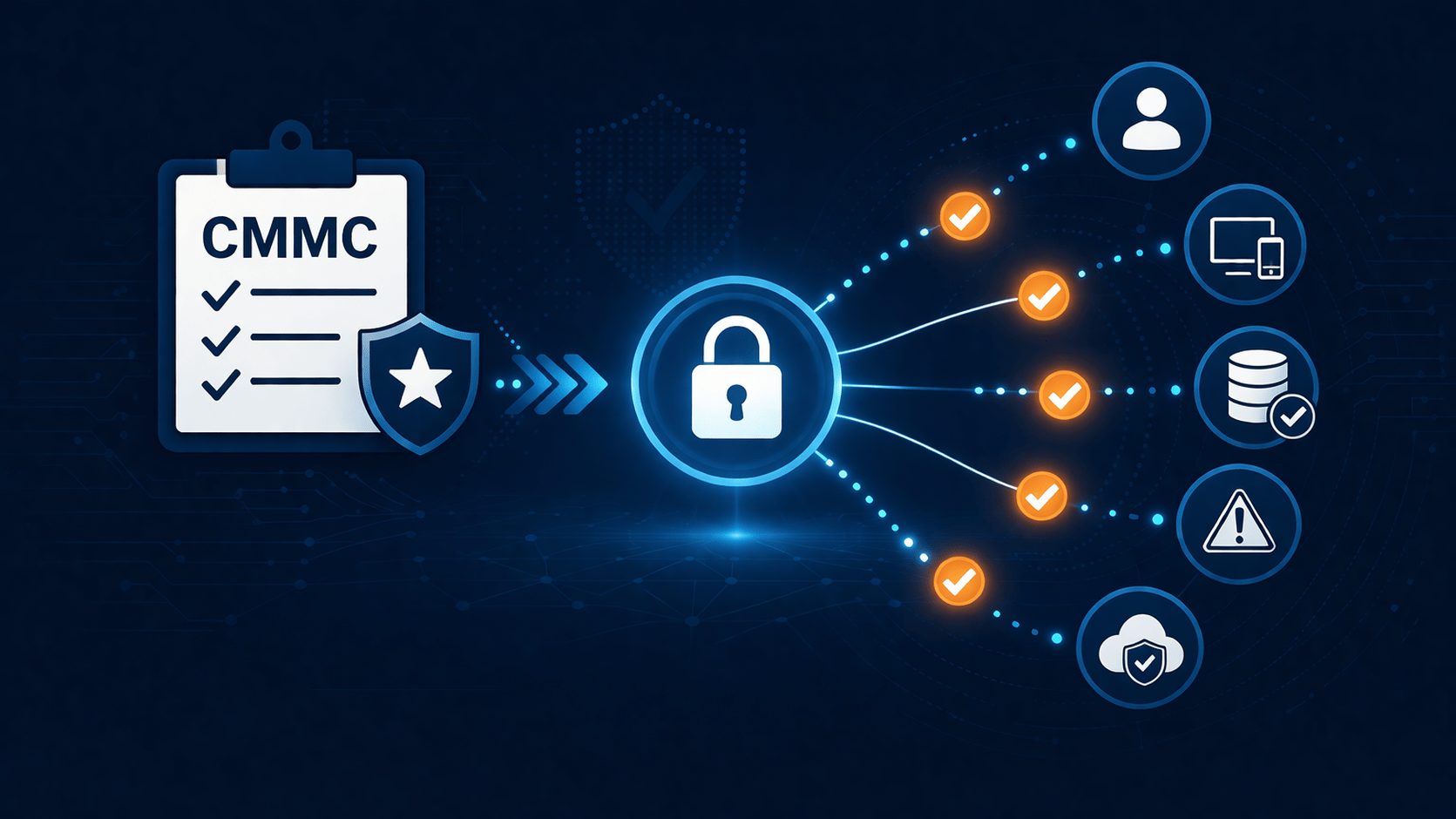
Most organizations treat CMMC and Zero Trust as separate initiatives. One is viewed as compliance, the other as security strategy. In practice, they are solving the same problem, enforcing control over access, data, and systems in environments where exposure is the primary risk.
We see companies implement Zero Trust at the identity layer while trying to meet CMMC through documentation and tooling. This creates gaps. Identity is verified, but infrastructure remains visible. Controls are defined, but not consistently enforced.
Mapping CMMC requirements to Zero Trust infrastructure only works when Zero Trust is implemented beyond authentication. It must include visibility reduction, controlled access environments, and centralized enforcement.
Compliance is not achieved by aligning frameworks. It is achieved by aligning architecture.
Core Alignment Between CMMC and Zero Trust
CMMC and Zero Trust share foundational principles around access and control.
• Verify identity before access, ensuring only authorized users can interact with systems
• Enforce least privilege, limiting users to only what is required for their role
• Monitor all activity, providing visibility into user and system behavior
• Protect sensitive data, ensuring FCI and CUI remain secure at all times
• Restrict access paths, reducing exposure and attack surface
These principles form the foundation of both models.
Where Zero Trust Implementations Fall Short for CMMC
Most Zero Trust deployments focus on authentication and device validation.
We see environments where identity is verified, but infrastructure remains exposed.
This results in:
• Exposed authentication endpoints, allowing attackers to target login systems directly
• Visible infrastructure, enabling reconnaissance and targeted attacks
• Inconsistent policy enforcement, creating gaps across systems and environments
• Over-reliance on monitoring, detecting issues after access is already established
CMMC requires enforceable controls, not partial implementation.
CMMC Domains Mapped to Zero Trust Architecture
Mapping CMMC to Zero Trust requires aligning control domains with architectural enforcement.
Access Control → Identity and Session Enforcement
• Enforce least privilege, ensuring users only access systems required for their role
• Restrict access to specific applications, preventing broad network-level access
• Use session-based controls, limiting access duration and reducing exposure
Identification and Authentication → Continuous Identity Validation
• Require multi-factor authentication, strengthening identity verification
• Use unique user identities, ensuring accountability for all actions
• Continuously validate sessions, preventing unauthorized access during activity
System and Communications Protection → Invisible Infrastructure
• Remove infrastructure from discovery, preventing external scanning and reconnaissance
• Encrypt all communications, protecting data in transit
• Control network paths, limiting how systems communicate
Audit and Accountability → Centralized Monitoring
• Capture all activity, ensuring complete audit trails for compliance
• Centralize logs, providing consistent visibility across environments
• Protect log integrity, ensuring reliable audit evidence
Incident Response → Controlled Containment
• Detect anomalies in real time, identifying potential threats quickly
• Isolate affected environments, limiting the spread of incidents
• Support structured response workflows, improving remediation and recovery
Key Architectural Requirements for Alignment
Achieving alignment requires structural changes beyond policy and tooling.
Identity-Centered Access Control
• Multi-factor authentication, ensuring strong and consistent user verification
• Role-based access control, limiting access based on job function
• Least privilege enforcement, reducing unnecessary permissions and exposure
Invisible Infrastructure Model
• Removes exposed systems, eliminating targets for attackers
• Reduces attack surface, limiting entry points into the environment
• Prevents reconnaissance, disrupting attack planning
Controlled Access Environments
• Centralizes applications and data, improving governance and consistency
• Limits direct system access, reducing exposure to endpoints
• Improves visibility, capturing all activity within controlled environments
How ShieldHQ Bridges CMMC and Zero Trust
ShieldHQ Powered by Dispersive® Stealth Networking provides the architecture required to align CMMC requirements with Zero Trust enforcement.
• Secure workspaces centralize applications and data, ensuring controlled access and reducing exposure
• Stealth networking removes infrastructure from discovery, eliminating attack surface and improving security posture
• Identity-driven access enforces strict authentication, aligning with Zero Trust principles and CMMC controls
• Centralized monitoring provides audit-ready visibility, supporting compliance and reporting requirements
This ensures that Zero Trust is not partial, but fully aligned with compliance.
How Mindcore Technologies Delivers Aligned Architecture
Mindcore Technologies helps organizations align CMMC requirements with Zero Trust infrastructure.
• Assess current Zero Trust implementation, identifying gaps in enforcement and visibility
• Map CMMC requirements to architecture, ensuring alignment with NIST SP 800-171
• Design environments that remove exposure, enforcing identity-driven access and control
• Implement ShieldHQ, enabling enforceable compliance and Zero Trust alignment
• Prepare for assessments, ensuring audit readiness and validation
• Provide ongoing support, maintaining alignment as requirements evolve
Execution determines whether alignment is achieved or remains theoretical.
Final Takeaway
Mapping CMMC requirements to Zero Trust infrastructure requires more than aligning policies or frameworks, it requires enforcing identity-driven access, removing infrastructure from visibility, and centralizing monitoring within controlled environments so that security controls are consistently applied and auditable. Organizations that implement Zero Trust only at the authentication layer will continue to face gaps in exposure and enforcement, while those that adopt architecture-driven approaches align both security and compliance requirements by design. ShieldHQ enables this alignment by combining stealth networking, secure workspaces, and centralized visibility into a unified model that supports both Zero Trust and CMMC requirements.
If your organization is working to align Zero Trust strategy with CMMC compliance, schedule a free strategy call with Mindcore Technologies to assess your current architecture and define a path forward.

