

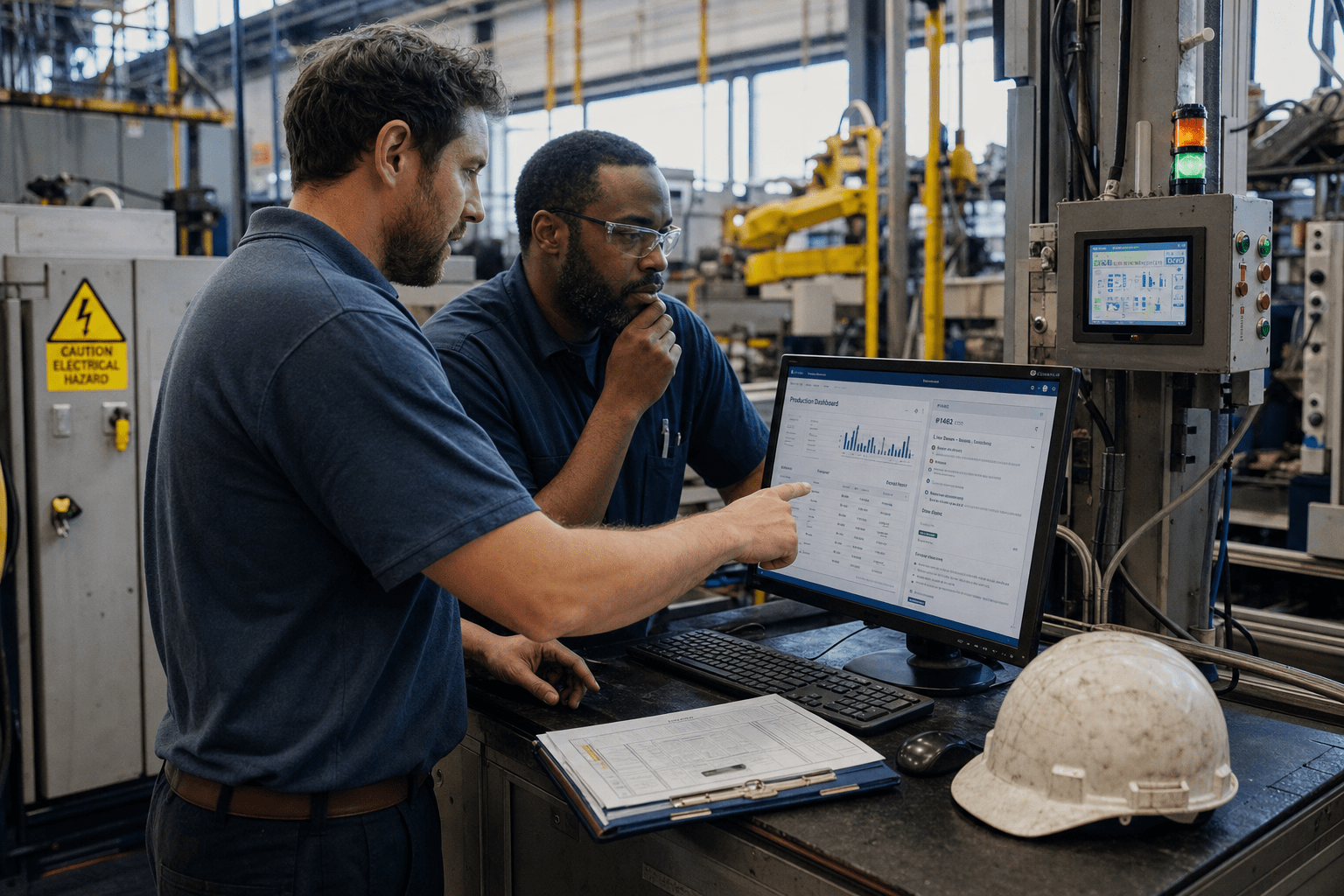
A Manufacturing Help Desk is judged by how effectively it handles the line-down events that traditional office businesses rarely face. When a shop-floor terminal freezes, an ERP outage stops shipping, or a machine controller loses its network path, the cost is not an inconvenienced employee but a stopped production line burning money by the minute. We have supported manufacturing plants through these exact moments, and a generic help desk built for office workers handles them poorly. It treats a programmable logic controller like a laptop, staffs only business hours while the plant runs two shifts, and escalates slowly when minutes of downtime translate to real dollars. This guide walks what help desk support actually has to cover for a manufacturer, so you buy production uptime, not just ticket-closing.
What Manufacturers Get Wrong When Buying Help Desk
A Manufacturing Help Desk falls short when a plant buys the same package an accounting firm would, because a factory’s failure modes and hours are different. The office-grade desk looks fine on paper and then misses on the tickets that stop the line. These are the gaps we see manufacturers hit, and each one is avoidable if you scope support to how a plant actually runs.
- Business-hours-only coverage. A plant running second and third shifts has no support exactly when a smaller crew is least equipped to troubleshoot.
- No OT awareness. A desk that only knows office IT is lost when the problem is a PLC, an HMI, or a machine on the production network.
- Slow line-down escalation. A ticket queue that treats a stopped line like a password reset costs a fortune in idle labor and machines.
- No production-system knowledge. Support that does not understand your ERP and MES cannot resolve the outages that matter most.
- Ignoring OT security. Connecting shop-floor systems without segmentation invites the exact downtime the plant fears.
Why Manufacturing Help Desk Is Not the Same as Office IT
A Manufacturing Help Desk is different from office IT because downtime stops physical production, not just paperwork, and the systems involved reach beyond standard computers. The argument that IT support is IT support holds for the front-office side of a manufacturer, where email, laptops, and accounting look like any other business. It breaks down on the shop floor, where operational technology like PLCs, human-machine interfaces, and networked machines follow different rules and cannot simply be rebooted mid-run. Neither view is entirely wrong, since a manufacturer genuinely needs both office and plant support. The point is that a desk covering only the office half leaves the production half exposed. CISA’s industrial control systems guidance exists precisely because these environments demand a different approach than a typical office network.
Why 24/7 Coverage Matters for a Plant That Runs Shifts
Round-the-clock help desk coverage matters for a manufacturer because production does not stop at 5 p.m. and neither do its failures. A plant running multiple shifts needs support available whenever the line is running, since a second-shift outage with no help means idle workers and missed shipments until morning. The counterpoint is cost, and a single-shift operation may reasonably question paying for overnight coverage. The honest answer is to match coverage to your production schedule, so a two-shift plant needs after-hours support that a nine-to-five office does not. We back manufacturing clients with a 24/7 emergency IT help desk so a line-down at 2 a.m. reaches a real engineer, not a voicemail box.
How Fast Escalation Protects Production Margins
Fast escalation protects a manufacturer’s margins because every minute a line sits idle multiplies across labor, machines, and delivery commitments. A help desk that routes a stopped-line ticket through the same slow queue as a routine request treats a five-figure problem like a five-minute one. Some argue that all tickets should follow a consistent process for fairness, and consistency has value for ordinary requests. But a line-down event is not ordinary, and it needs a severity path that puts a senior engineer on it immediately. We build escalation around production impact, not ticket order, as part of IT support that understands what a stopped line actually costs.
Why Support Must Understand Your Production Systems
Help desk value for a manufacturer depends on understanding the production systems, because a desk that cannot speak ERP, MES, or shop-floor networking cannot fix the outages that hurt most. When support knows how your production software connects to the machines and the office, it diagnoses a stalled work order or a failed integration quickly. The opposing view is that specialized production systems belong to the vendor, not the help desk, and vendor escalation does have its place for deep application bugs. But most day-to-day production IT issues, connectivity, permissions, integration hiccups, are exactly what a knowledgeable desk should own. We learn each plant’s systems so support is not starting from zero every time, which is the difference a managed help desk makes over a generic call center.
The Manufacturing Factor: OT, Uptime, and Safety
The A Manufacturing Help Desk is a blend of operational technology, relentless uptime pressure, and safety systems that a generic desk is not built to handle. A factory floor mixes IT and OT in ways an office never does, and mistakes there can stop production or create safety issues, not just inconvenience. Support has to respect that a machine controller cannot be patched or rebooted on the same casual schedule as a laptop. The federal Ready.gov business guidance underscores that continuity planning must fit how a business actually operates, and for a manufacturer that means planning around production windows and physical processes.
How OT and IT Support Differ on the Shop Floor
OT and IT support differ on the shop floor because operational technology prioritizes availability and safety over the update-often approach typical of office IT. An office laptop can take a patch and a reboot anytime; a PLC controlling a running machine cannot, and forcing office habits onto OT can halt a line or worse. The counterargument is that modern OT increasingly resembles IT and can be managed similarly, and convergence is real. But the safety and uptime constraints remain, so support must know when a change waits for a maintenance window. We handle OT with those constraints in mind and segment it from office systems, guided by the security practices CISA recommends for industrial control systems.
Why On-Site Response Still Matters in a Plant
On-site response still matters for a manufacturer because much of a plant’s hardware is physical and cannot be fixed over a remote session. A frozen shop-floor terminal, a failed network switch in a production area, or a machine that will not communicate often needs hands on the equipment. The other side is fair: remote support resolves a large share of tickets quickly and cheaply, and remote-first is the right default even for a plant. The limit is the factory floor itself, where physical presence sometimes decides how fast the line comes back. We pair remote-first support with a dispatch path and network outage emergency support so a physical failure does not become a shift of lost production.
How to Choose a Help Desk Provider for Your Plant
Choosing a A Manufacturing Help Desk means confirming they cover production hours and understand OT, not just office IT, and asking about the line-down scenario directly. Ask any provider how they handle a stopped-line ticket, what their coverage looks like across your shifts, and whether they understand your ERP and shop-floor systems. Confirm they treat operational technology with the right caution rather than patching it like a laptop, and that they can dispatch someone when hardware fails. A provider that talks only about office desktops and business hours is not built for a plant. NIST’s small business guidance is a useful reminder that support has to fit operational reality, which for a manufacturer means production uptime above all.
Frequently Asked Questions
How is help desk support for manufacturers different from regular IT support?
Help desk support for manufacturers is different because it must cover production systems and operational technology, not just office computers. A stopped production line is far more costly than an inconvenienced office worker, so response speed and shift coverage matter more. Support also has to handle OT like PLCs and machine controllers with the right caution.
Do manufacturers need 24/7 help desk coverage?
Manufacturers that run multiple shifts need help desk coverage whenever the line is running, because an outage on a night shift otherwise waits until morning. A single-shift operation may not need full overnight support. The right coverage matches your actual production schedule rather than a standard business-hours default.
Can a help desk support shop-floor and OT systems?
A capable manufacturing help desk can support many shop-floor and OT issues, especially connectivity, permissions, and integration problems. Deep machine-specific faults may still require the equipment vendor. The key is a provider that understands operational technology and knows when a change must wait for a maintenance window.
How much does help desk support cost for a manufacturer?
Help desk support cost for a manufacturer depends on coverage hours, the number of systems, and whether OT and on-site dispatch are included. A plant needing 24/7 production coverage pays more than an office-hours desk. The right way to weigh it is against the cost of production downtime the support prevents.
Why does escalation speed matter so much in manufacturing?
Escalation speed matters in manufacturing because a line-down event costs money every minute across idle labor, machines, and delayed shipments. A help desk that routes a stopped line through a routine queue wastes that time. Support should escalate by production impact so critical outages reach a senior engineer immediately.
Keep Your Line Running With the Right Support
Help desk support for manufacturers rewards the plant that scopes support to production and punishes the one that buys an office package for a factory. The ticket that decides everything is the line-down event, and a generic desk that treats a PLC like a laptop, staffs only business hours, and escalates slowly is the wrong fit for an operation that runs shifts. Every one of those gaps is something you can scope out before you sign, and getting it right costs far less than the production hours a mismatched desk quietly loses. The manufacturers that come out ahead treat help desk as production insurance with real coverage, OT awareness, fast escalation, and a dispatch path, not a line item to minimize. If you want a clear read on whether your current support could actually get your line back up fast, our team will review your plant’s systems and shifts and build support sized for a factory floor. Book a free strategy call and we will start with the scenario that matters most, the day the line goes down.

