

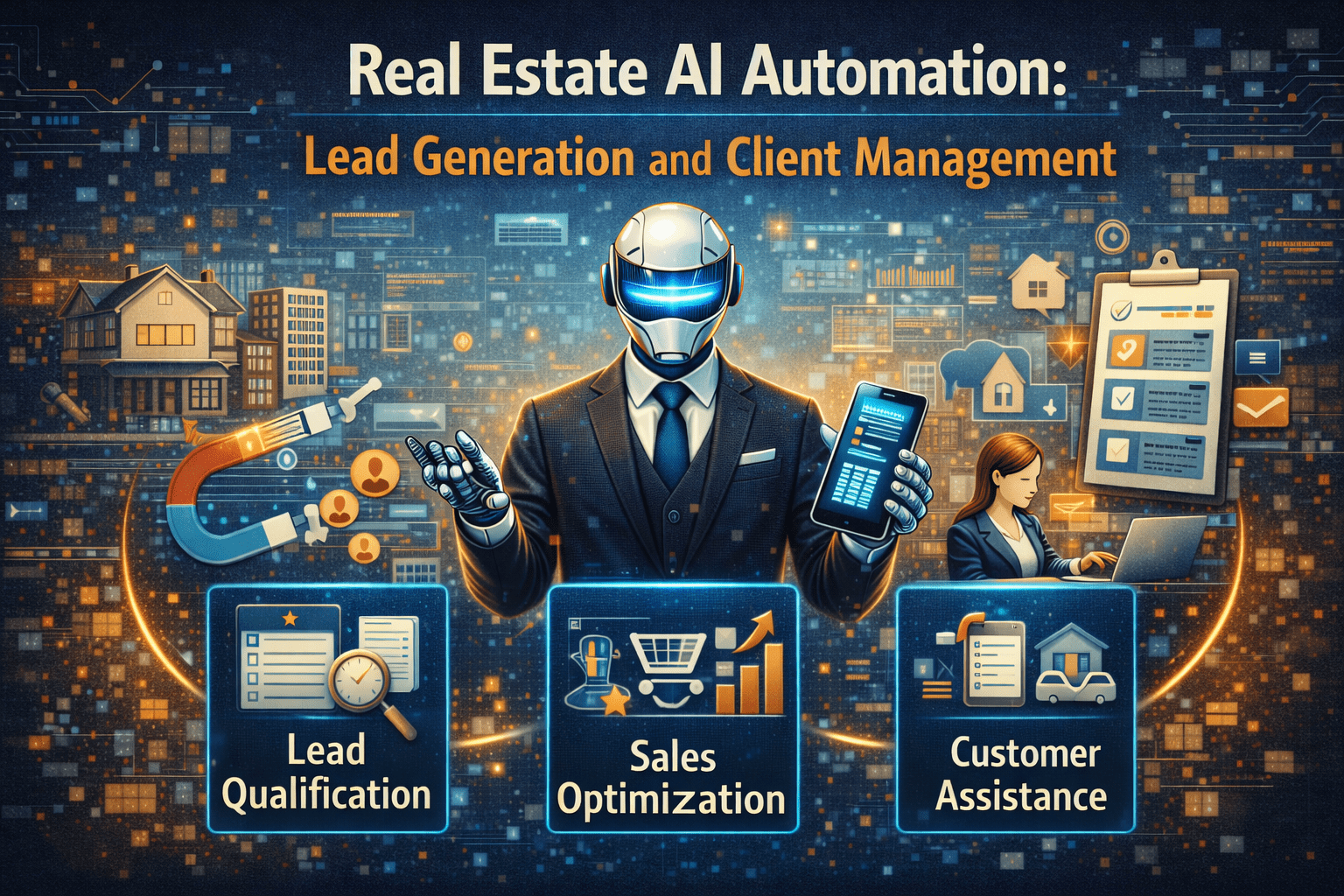
The AI Automation Real Estate sector relies on speed, responsiveness, and relationship management, where AI Automation Real Estate tools directly influence deal outcomes. The difference between winning and losing a deal is often measured in minutes. Slow follow-up, inconsistent communication, and fragmented client tracking reduce conversion rates. AI Automation Real Estate must accelerate lead response, enhance client management, and improve transaction visibility while maintaining the human relationship aspect.
The broader sector framework is introduced in AI Agents by Industry: Tailored Solutions for Every Business Sector, where AI deployment is aligned with industry workflow structure.
Real estate demands speed and consistency.
Core Real Estate Operational Challenges
Common friction points include:
• Slow lead response time
Reduces conversion probability.
• Manual follow-up tracking
Leads to missed opportunities.
• Fragmented CRM usage
Limits visibility into pipeline status.
• Transaction milestone delays
Impact closing timelines.
Industry alignment methodology is reinforced in Industry-Specific AI Automation: Finding the Right Fit for Your Sector.
Lead Qualification and Routing Automation
Within AI Automation Real Estate workflows, AI agents optimize lead handling by prioritizing high-intent prospects and minimizing response delays.
Capabilities include:
• Automated lead scoring
Prioritize high-intent prospects.
• Instant response triggers
Reduce follow-up delay.
• Inquiry routing by geography or property type
Improve agent assignment.
• Escalation alerts for uncontacted leads
Prevent pipeline leakage.
Sector selection discipline is expanded in How Different Industries Choose AI Agent Solutions.
Client Communication Sequencing
Consistent communication strengthens trust.
In the AI Automation Real Estate industry, AI supports:
• Automated follow-up sequences
Maintain engagement.
• Appointment scheduling integration
Reduce coordination friction.
• Listing update notifications
Keep clients informed.
• Status updates during transaction process
Improve transparency.
Service automation parallels appear in Retail AI Agents: Inventory, Sales, and Customer Experience.
Transaction Milestone Monitoring
Real estate transactions involve multiple steps.
AI agents can:
• Track inspection deadlines
Prevent missed contingencies.
• Monitor financing approval status
Reduce closing delays.
• Route documentation review workflows
Improve compliance oversight.
• Generate milestone dashboards
Increase executive visibility.
Project-based parallels exist in AI Agents for Construction Companies: Project Management and Operations.
CRM and MLS Integration Requirements
In the AI Automation Real Estate industry, real estate AI must integrate with:
• CRM platforms
Track client interactions.
• MLS databases
Sync listing updates.
• Transaction management software
Monitor deal progress.
• Marketing automation systems
Coordinate campaigns.
Integration validation aligns with principles in Industry-Specific AI Automation: Finding the Right Fit for Your Sector.
Measuring ROI in Real Estate AI
Key performance metrics include:
• Faster lead response times
• Increased conversion rates
• Shortened closing cycles
• Reduced administrative workload
• Improved agent productivity
Sector ROI modeling is reinforced in How Different Industries Choose AI Agent Solutions.
Common Real Estate AI Mistakes
• Over-automating personal communication
• Ignoring CRM data hygiene
• Failing to pilot automation sequences
• Scaling without integration validation
• Not training agents on workflow transparency
Automation must enhance relationships, not replace them.
Key Takeaways
AI Automation Real Estate strengthens lead qualification, speeds up response times, improves transaction milestone tracking, and enhances CRM visibility through industry-specific integration. By automating follow-up sequences, routing high-intent prospects intelligently, and consolidating transaction reporting, AI agents increase conversion rates and reduce administrative overhead while preserving relationship-driven client engagement. When deployed strategically, real estate AI becomes a performance accelerator rather than a communication substitute.
Frequently Asked Questions
How does AI automation improve lead generation in real estate?
AI automation improves lead generation by scoring prospects, triggering instant responses, routing inquiries intelligently, and reducing delays that often cause potential buyers or sellers to disengage.
Why is fast lead response important in real estate?
Real estate is highly response-sensitive, and delayed communication can reduce conversion rates significantly. Faster response times improve engagement, strengthen trust, and increase the likelihood of securing new clients.
How can AI agents improve client management for real estate teams?
AI agents help automate follow-up communication, appointment scheduling, listing updates, transaction notifications, and CRM tracking, improving visibility and consistency throughout the client journey.
Why is CRM integration important for real estate AI automation?
CRM integration centralizes client interactions, transaction details, lead status, and communication history, helping agents improve organization, reduce missed opportunities, and maintain stronger client relationships.
What are common mistakes when implementing AI automation in real estate?
Common mistakes include over-automating personal communication, failing to maintain CRM data quality, scaling automation too quickly, ignoring workflow transparency, and deploying systems without proper integration validation.
Real Estate AI Automation and Operational Strategy Expertise from Matt Rosenthal
Matt Rosenthal, CEO of Mindcore Technologies, has extensive experience helping organizations implement AI automation, operational workflow optimization, and scalable technology strategies across fast-paced business environments. His expertise in AI agents, CRM integration, automation architecture, operational visibility, cybersecurity governance, and infrastructure scalability helps businesses improve lead management, streamline workflows, and strengthen client engagement processes. Matt’s leadership focuses on building AI-driven operational frameworks that improve efficiency, reduce administrative overhead, strengthen visibility into business processes, and support long-term scalable growth initiatives.

