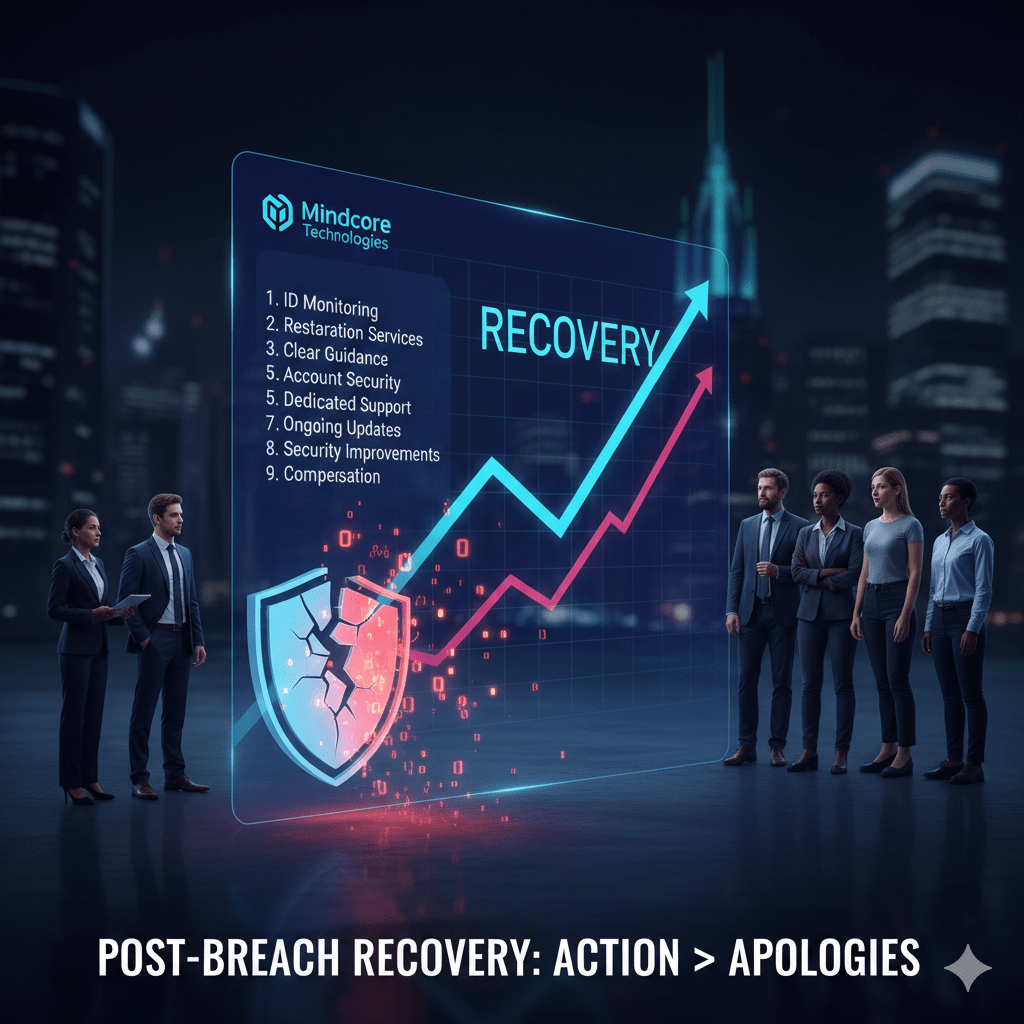
After a data breach, what a company offers affected individuals is not about generosity. It is about risk reduction, accountability, and credibility. The wrong response increases legal exposure and reputational damage. The right response stabilizes trust and limits long-term fallout.
At Mindcore Technologies, post-breach recovery consistently shows one thing: organizations that offer practical protection instead of apologies recover faster and face less secondary damage.
This guide explains what companies can and should offer after a data breach, and why each item matters.
First Principle: Offers Must Reduce Real Risk
Affected individuals are asking one question, even if they do not say it directly:
“What are you doing to protect me now?”
Anything offered should:
- Reduce the chance of downstream fraud or identity theft
- Help individuals detect misuse early
- Demonstrate accountability, not deflection
Symbolic gestures do not work.
1. Identity Theft Monitoring and Credit Protection
This is the baseline expectation.
What it includes:
- Credit monitoring across major bureaus
- Alerts for new accounts, loans, or inquiries
- Dark web monitoring for exposed credentials
Why it matters:
Stolen data is often used months later. Early alerts reduce financial damage.
Important note:
One year is often seen as minimal. Multi-year coverage demonstrates seriousness.
2. Identity Theft Insurance or Restoration Services
Monitoring detects problems. Restoration fixes them.
Effective offerings include:
- Access to identity restoration specialists
- Coverage for recovery costs and legal assistance
- Guided support if fraud occurs
This removes burden from the individual and reduces frustration.
3. Clear Guidance on Immediate Protective Actions
Most breach notifications fail here.
Companies should provide:
- Step-by-step instructions for securing accounts
- Password and MFA guidance
- Recommendations tailored to the exposed data type
Generic advice erodes trust. Specific actions build confidence.
4. Account Security Enhancements (Not Just Advice)
If your systems were involved, actions matter more than words.
Examples:
- Forced password resets
- Mandatory MFA enrollment
- Session revocation
- Access reviews
Offering improved security controls shows accountability.
5. Dedicated Support Channels
Affected individuals need answers, not silence.
Best practices include:
- A dedicated breach response hotline or email
- Trained support staff, not generic customer service
- Clear escalation paths
Poor communication amplifies reputational damage.
6. Transparency About What Was Exposed
Avoid vague language.
People want to know:
- What data was involved
- What was not involved
- What evidence supports those conclusions
Clarity reduces speculation and misinformation.
7. Ongoing Updates, Not One-Time Notices
Silence after notification increases anxiety.
Strong responses include:
- Follow-up communications as investigations progress
- Updates on security improvements
- Clear closure when appropriate
Consistency signals control.
8. Security Improvements That Are Publicly Communicated
Individuals want assurance the breach will not repeat.
Examples of meaningful commitments:
- Identity-based access controls
- Improved monitoring and detection
- Reduced data exposure and retention
- Third-party security reviews
Avoid claiming “enhanced security” without substance.
9. Compensation (When Appropriate)
Compensation is situational.
When it makes sense:
- Direct financial loss occurred
- Services were disrupted
- Legal or regulatory guidance recommends it
Cash alone does not replace trust, but it may be necessary.
What Companies Should Not Offer
Avoid these mistakes:
- Vague apologies without action
- One-size-fits-all generic advice
- Short-term monitoring for long-term exposure
- Minimizing language that contradicts facts
- Silence after the initial notice
These increase legal and reputational risk.
Why What You Offer Matters Long-Term
Post-breach offerings affect:
- Customer retention
- Litigation outcomes
- Regulatory perception
- Brand credibility
- Insurance renewal terms
The breach response becomes part of your reputation.
Internal Reality Check for Leadership
Your response is weak if:
- Offers are decided before impact is understood
- Legal, IT, and communications are misaligned
- Support teams are unprepared
- Security improvements are cosmetic
Post-breach behavior is closely scrutinized.
How Mindcore Technologies Helps Organizations After a Breach
Mindcore helps organizations design post-breach responses that reduce harm and rebuild trust by:
- Aligning technical remediation with customer protection
- Supporting identity and access hardening
- Improving detection and response capabilities
- Helping leadership communicate clearly and credibly
- Preventing repeat exposure through structural fixes
We focus on restoring confidence through action, not statements.
Final Takeaway
What a company offers after a data breach signals how seriously it takes responsibility. The most effective responses focus on real protection, clear communication, and visible improvement. Monitoring, restoration services, guidance, and transparency matter far more than apologies.
Organizations that respond with substance limit long-term damage. Those that respond with minimal gestures often face prolonged reputational and legal consequences.