

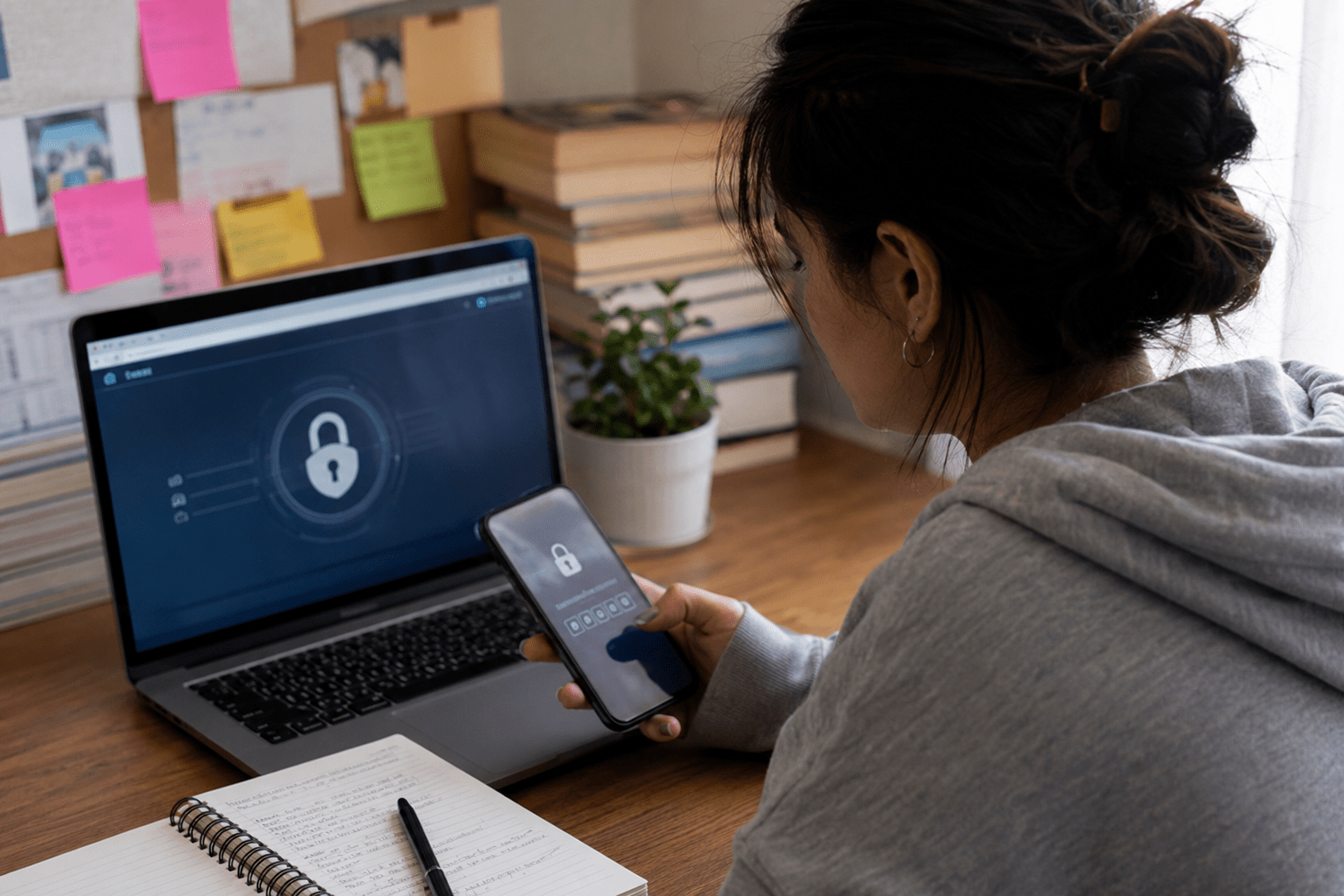
If your school, college, or university uses a platform that has been hacked, the most important thing you can do is act quickly.
The instinct to wait for official communication or assume your specific data was not affected is understandable. It is also the wrong approach.
In large-scale platform breaches, the full scope of exposure can take weeks to determine. By then, attackers may have already used the data they obtained.
This guide walks through exactly what to do, in order, starting from the moment you learn your institution’s platform has been compromised.
Organizations supporting students, faculty, or staff should evaluate layered cybersecurity services, incident response planning, and identity protection strategies before a platform breach occurs.
Step 1: Change Your Password on the Affected Platform Immediately
Do not wait for institutional instructions.
Change your password on the affected platform immediately.
Use a strong, unique password not used anywhere else.
A strong password:
- Contains at least 12 characters
- Uses uppercase and lowercase letters
- Includes numbers and symbols
Password managers generate and securely store these automatically.
Users improving credential hygiene should also review security breach prevention strategies.
Step 2: Change Passwords on Any Account Using the Same Credentials
If you reused the same password elsewhere, change it everywhere.
This is one of the most important steps most people skip.
Attackers immediately test stolen credentials against:
- Email providers
- Banking platforms
- Social media accounts
- Cloud storage services
If your passwords match across accounts, every connected account is now at risk.
Start with:
- Your primary email account
- Financial accounts
- Work or other school accounts
- Social media platforms
- Accounts with stored payment information
Organizations reducing credential-based attacks should implement multi-factor authentication and password management policies.
Step 3: Enable Multi-Factor Authentication
If MFA is not already enabled, activate it now starting with your email account.
Matt Rosenthal, CEO of Mindcore Technologies, is direct about this:
“You’ve got to turn that on for every single account that you have. It should be your email, the banks, the credit cards. If you don’t have that turned on, you’re literally asking for a problem.”
With MFA enabled, attackers cannot access accounts using only stolen passwords.
Download an authenticator app like:
- Microsoft Authenticator
- Google Authenticator
Enable MFA on:
- Email accounts first
- Financial platforms next
- All remaining important accounts afterward
Organizations modernizing identity security should also evaluate Zero Trust security architecture and secure workspace solutions.
Step 4: Monitor Your Financial Accounts
Log into your banking, credit card, and financial accounts immediately and review recent activity.
Enable real-time transaction alerts whenever available.
Watch for:
- Small test charges from unfamiliar merchants
- Transactions you do not recognize
- New credit lines or accounts you did not open
If you see suspicious activity, contact your financial institution immediately.
Organizations protecting financial and regulated data should review network security monitoring and managed security services.
Step 5: Consider a Credit Freeze
If the breach may have exposed sensitive personal information including your Social Security number, place a credit freeze with all three major credit bureaus.
Cybersecurity expert James Turgal recommends acting quickly:
“If they’ve got credit cards, I’m freezing those credit cards and freezing their credit reports.”
A credit freeze:
- Prevents new credit accounts from being opened in your name
- Does not affect your existing accounts
- Does not affect your credit score
- Can be temporarily lifted when needed
Contact each credit bureau directly to place the freeze.
Step 6: Watch for Follow-Up Phishing Attempts
After high-profile breaches, attackers frequently launch follow-up phishing campaigns targeting affected users.
These messages may impersonate:
- Your school or university
- The breached platform provider
- Credit monitoring services
- Government agencies
The goal is to capture additional information or deliver malware.
Signs of Post-Breach Phishing Attempts
- Unexpected breach compensation offers
- Requests to verify personal information
- Urgent language demanding immediate action
- Links not matching official domains
If you receive communication regarding the breach:
- Do not click links in emails
- Go directly to your institution’s verified website
- Verify announcements through official channels
Organizations reducing phishing exposure should implement security awareness training and phishing simulations.
Step 7: Check Your Credit Report
Review your credit reports from all major bureaus carefully.
Look for:
- Accounts you did not open
- Hard inquiries from unknown lenders
- Incorrect personal information
If you identify suspicious activity:
- Dispute it with the credit bureau
- Contact the listed creditor immediately
Step 8: Follow Your Institution’s Official Guidance
Your institution will provide updates through official communication channels as the investigation develops.
Follow institutional guidance carefully.
If free credit monitoring or identity protection services are offered as part of the breach response, enroll immediately.
If you have questions:
- Contact your institution’s IT department
- Use verified contact information only
- Avoid relying on links in unsolicited emails
Organizations strengthening breach response readiness should also evaluate incident response services and business continuity planning.

What Parents Should Do If Their Child’s Data Was Exposed
Place a Credit Freeze for Minor Children
Parents and guardians in the United States can place a credit freeze on behalf of minor children.
This prevents criminals from opening fraudulent accounts using a child’s identity.
Monitor for Child Identity Theft
Children’s Social Security numbers are attractive to attackers because they are rarely monitored.
Warning signs include:
- Credit offers addressed to the child
- Collection notices
- IRS notices involving unknown tax filings
Use the Incident as a Teaching Opportunity
Discuss:
- Password hygiene
- Phishing awareness
- MFA usage
- Safe online practices
Ongoing Steps
- Monitor accounts for at least 12 months – Identity theft may occur long after the breach
- Review app and account permissions – Remove unfamiliar third-party integrations
- Update security questions – Especially if answers may have been exposed
Organizations improving long-term resilience should also evaluate co-managed IT services and managed IT support.
FAQ: School Platform Breach Response
Does my school have to notify me if my data was breached?
Yes. Educational institutions are subject to federal and state breach notification laws. FERPA and state regulations generally require notification when student information is exposed.
What information is typically stored on school learning platforms?
Learning management systems often store names, email addresses, login credentials, course information, assignments, grades, and communication records. Some platforms integrate with student information systems containing more sensitive personal data.
Should I worry if I only used my school email address?
Yes. School email accounts can still be used for phishing, social engineering, and account recovery attacks. Change the password and enable MFA immediately.
What is the financial risk from a school platform breach?
Even if direct banking information was not stored, exposed personal identifiers can still be used for identity fraud, tax fraud, or fraudulent loan applications.
The Bottom Line
A platform breach at your school is not a reason to panic. It is a reason to act quickly and methodically.
The people experiencing the worst outcomes after breaches are often the ones who waited for confirmation before taking action.
The people who fare best are the ones treating potential exposure as real exposure and responding immediately.
Mindcore Technologies helps organizations build breach response protocols, platform risk strategies, and communication frameworks designed for real-world cyber incidents.
If your institution or organization does not have a tested response plan for platform-level incidents, the time to build one is before the next breach happens.
Schedule a consultation with Mindcore to strengthen breach response readiness, improve platform risk management, and reduce organizational exposure before attackers exploit the next large-scale platform vulnerability.
Source content adapted from uploaded file. :contentReference[oaicite:0]{index=0}

