

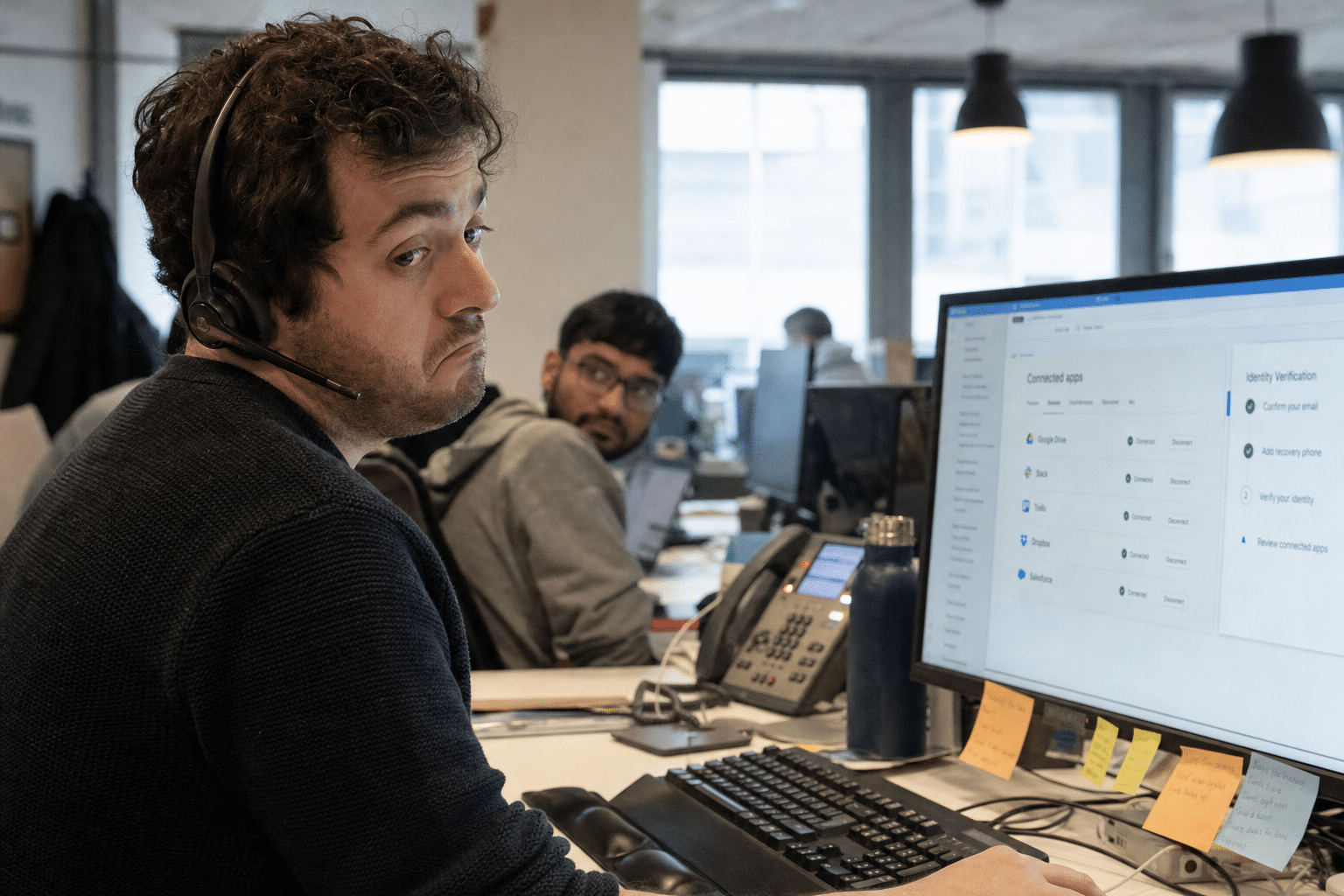
SaaS data theft extortion is an attack where criminals get into a company’s cloud business applications, copy the data, and demand payment to keep it private, without ever deploying ransomware or encrypting a single file. The 2026 incident at iRhythm, the maker of the Zio wearable cardiac monitor, follows that pattern closely. According to the company’s disclosures reported by The HIPAA Journal, iRhythm identified unauthorized access to business applications hosted on a third-party platform on June 8, 2026. The next day, a threat actor contacted the company claiming to have stolen data and demanding payment. The attacker got in through social engineering. Notification letters began going out on October 9, and the affected population runs into the hundreds of thousands, with more than 360,000 people in Texas and South Carolina alone. iRhythm reported no impact on its devices, clinical systems or manufacturing. This article explains how these attacks work and what organizations of any size should change.
Overview: Five Points on Cloud App Extortion
The iRhythm disclosure is short on technical detail, but its outline matches a wave of SaaS extortion cases our team has followed since 2024. Five points frame the rest of the article.
- No malware was needed. The attacker used persuasion, not exploits, to gain access, which means endpoint tools and patching had nothing to catch.
- The data lived in someone else’s cloud. Business applications hosted by a third party held names, addresses, insurance numbers and dates of service.
- Extortion replaced encryption. Nothing was locked. The leverage was the threat of publication, which still triggers breach notification and regulatory filings.
- Operations kept running. Devices, clinical systems and manufacturing were unaffected, so the incident caused no outage and no obvious symptom inside the company.
- The fixes are identity and visibility. Stronger verification at the help desk and logging inside cloud apps would block or reveal most of these attacks.
How SaaS Data Theft Extortion Works From First Call to Ransom Note
This kind of attack usually starts with a phone call or message, moves through a stolen session or approved connection, and ends with bulk export of records from the cloud application. The attacker’s goal is a legitimate-looking login with enough permissions to pull data. Once they have it, the cloud platform does exactly what it was designed to do: serve data to an authenticated user quickly and reliably.
The social engineering step
Attackers in these campaigns commonly call an organization’s IT help desk while posing as an employee who is locked out, or they call employees while posing as IT support. Either way, the aim is a password reset, a multi-factor authentication device change, or approval of a connected application. iRhythm’s filing says social engineering was the entry point without naming the method, but the help desk reset and the fake IT support call are the two techniques behind most similar incidents we have reviewed.
The connected app or stolen session
Once a caller has convinced someone to act, they often ask the victim to authorize a connected application through an OAuth consent screen, which grants an outside tool persistent access to the SaaS platform. Other times they capture a session token directly. Either route bypasses the normal password and multi-factor prompt for later access, so changing the user’s password alone may not cut the attacker off.
Bulk export and the demand
With access in place, the attacker queries the application’s API or export functions and pulls large sets of records, often within hours. In iRhythm’s case, the demand arrived one day after the company identified the access. That speed is typical. The attackers are not interested in staying hidden; they want the data and the leverage as fast as possible.
Why Third-Party Hosted Applications Fall Outside Most Security Programs
Third-party hosted applications fall outside many security programs because the tools organizations buy for their own networks cannot see inside a vendor’s cloud. Firewalls watch traffic at the office edge. Endpoint detection watches laptops and servers. Neither sees an attacker logged into a hosted customer service, billing or analytics platform from their own computer across the internet.
Shared responsibility is often misunderstood
Cloud vendors secure the platform. Customers secure their own accounts, permissions, connected apps and data. Many organizations assume the vendor handles everything, so nobody reviews who has export rights or which outside apps have been granted access. Our team routinely finds service accounts with full data access, former employees still active, and connected tools that nobody can identify.
Logging is off or never reviewed
Most enterprise SaaS platforms offer detailed audit logs for logins, exports, API calls and permission changes, but the most useful logs often sit behind an add-on license or are retained for only a short period. When an incident happens, investigators find that the evidence of what was taken has already rolled off. A managed security services provider that collects those logs centrally closes this gap.
Outages make noise, data theft does not
Ransomware announces itself because systems stop working. Data theft from a hosted application produces no outage at all. iRhythm’s devices and clinical systems were untouched, which is good for patients but also means there was no operational alarm. Detection depended on the company noticing unusual access, which it did within a day of the extortion contact.
How to Harden the Help Desk Against Social Engineering
Hardening the help desk against social engineering means making identity verification something an attacker cannot talk their way around, regardless of how convincing they sound. The help desk exists to unblock people quickly, and attackers exploit that service instinct. The answer is a process that is fast for real employees and very slow for impostors.
Verify identity with something the caller cannot fake
Do not reset passwords or multi-factor devices based on information an attacker could find online, such as an employee ID, date of birth or manager’s name. Instead, require a callback to a number already on file, a video call matched against a badge photo, or approval from the employee’s manager through a separate channel. For privileged accounts, require two people to approve any reset.
Treat multi-factor resets as high-risk events
A multi-factor device change is the single most valuable action an attacker can trigger. Log every one, alert the security team in real time, and notify the employee through a second channel so they can report a change they did not request. Phishing-resistant methods such as FIDO2 security keys or passkeys remove the option of an attacker simply enrolling their own phone.
Train for the scripts attackers really use
Generic awareness training does little against a confident caller. Run short, targeted sessions for help desk staff using real call scripts from recent campaigns, and test them with simulated calls. Employees outside IT need one simple rule: the real IT team will never ask you to approve a connected app or read out a code over the phone.
How to Monitor SaaS Security Posture Before Data Leaves
SaaS security posture monitoring means continuously checking cloud application settings, permissions and activity so risky configurations and unusual exports are caught before they become a breach. It complements help desk hardening by catching the attacks that still get through.
Review connected apps and export rights quarterly
List every connected application and integration in each major SaaS platform, remove anything unrecognized or unused, and restrict which users can approve new connections. Limit bulk export and API rights to the small group of people who need them. Many platforms let administrators block users from consenting to new apps on their own, which shuts down a favorite attacker technique.
Alert on unusual volume and new locations
Set alerts for large exports, high API call volumes, logins from new countries or hosting providers, and new connected apps. These events are rare in normal operations, so even a small rule set produces useful signals. Route alerts to someone who watches them around the clock; our article on managed detection and response contract traps explains why SaaS coverage should be named explicitly in any monitoring contract.
Plan the response before the ransom note arrives
When an extortion demand lands, the first hours decide how much you can prove about what was taken. Have a plan that covers revoking sessions and connected app tokens, preserving SaaS audit logs, engaging counsel, and assessing notification duties. Our data breach incident response team builds these plans, and our guide to building your cyber incident response team covers the roles. When notification is required, our piece on AI tools for breach notification drafting helps speed up the letters.
Frequently Asked Questions
Is SaaS data theft extortion the same as ransomware?
No, this kind of attack copies data and threatens to publish it without encrypting anything. It still counts as a breach for notification purposes, and it often causes no outage, which makes it harder to spot than ransomware.
Can a cloud vendor be blamed for a breach like this?
Responsibility depends on how the attacker got in. When access comes through social engineering of the customer’s staff or approved connected apps, the customer usually owns the failure, because account security sits on the customer side of the shared responsibility model.
Does changing the user’s password stop the attacker?
Not always, because a stolen session token or an approved connected app can keep working after a password change. Responders must also revoke active sessions and remove unauthorized app grants.
What data in a SaaS platform triggers HIPAA notification?
Any protected health information, such as names combined with dates of service, insurance numbers or patient account numbers, can trigger notification if it was acquired without authorization. Healthcare organizations and their vendors should assume patient data in a business app is in scope.
Will cyber insurance cover a data extortion event?
Many policies cover investigation, notification and sometimes extortion payments, but insurers increasingly require controls such as phishing-resistant multi-factor authentication. Review your policy terms before an incident.
Who Is Behind This Guidance
Mindcore Technologies helps organizations secure the cloud applications and identity systems that now hold most of their sensitive data, and we provide hands-on cyber incident containment when an attack lands. Our team works with healthcare providers and other regulated organizations, which you can read about on our healthcare industry page, and we see the help desk and connected app techniques described here in real investigations. Insurers are asking about the same controls, as covered in our article on cyber insurance requirements owners miss. Mindcore is led by CEO Matt Rosenthal, who focuses on helping organizations reduce cyber risk with practical controls leadership can measure.
Close the Doors SaaS Extortion Crews Walk Through
The iRhythm incident shows that SaaS data theft extortion does not need malware, an unpatched server or a stolen laptop. An attacker used social engineering to reach business applications hosted by a third party, copied patient data, and demanded payment a day later, all while devices and clinical systems kept running normally. Most security budgets guard servers and endpoints, while this attack went through a phone call and a cloud login. The controls that would stop it are practical: identity verification at the help desk that cannot be talked around, phishing-resistant multi-factor authentication, tight limits on connected apps and export rights, SaaS audit logs collected and watched, and a response plan ready before any demand arrives. If you are not sure who can export data from your cloud applications today, or whether your help desk would reset a caller who sounded convincing, our team can help you find out. Book a free strategy call and we will review your SaaS access, help desk process and monitoring so the next extortion attempt finds the door closed.

