

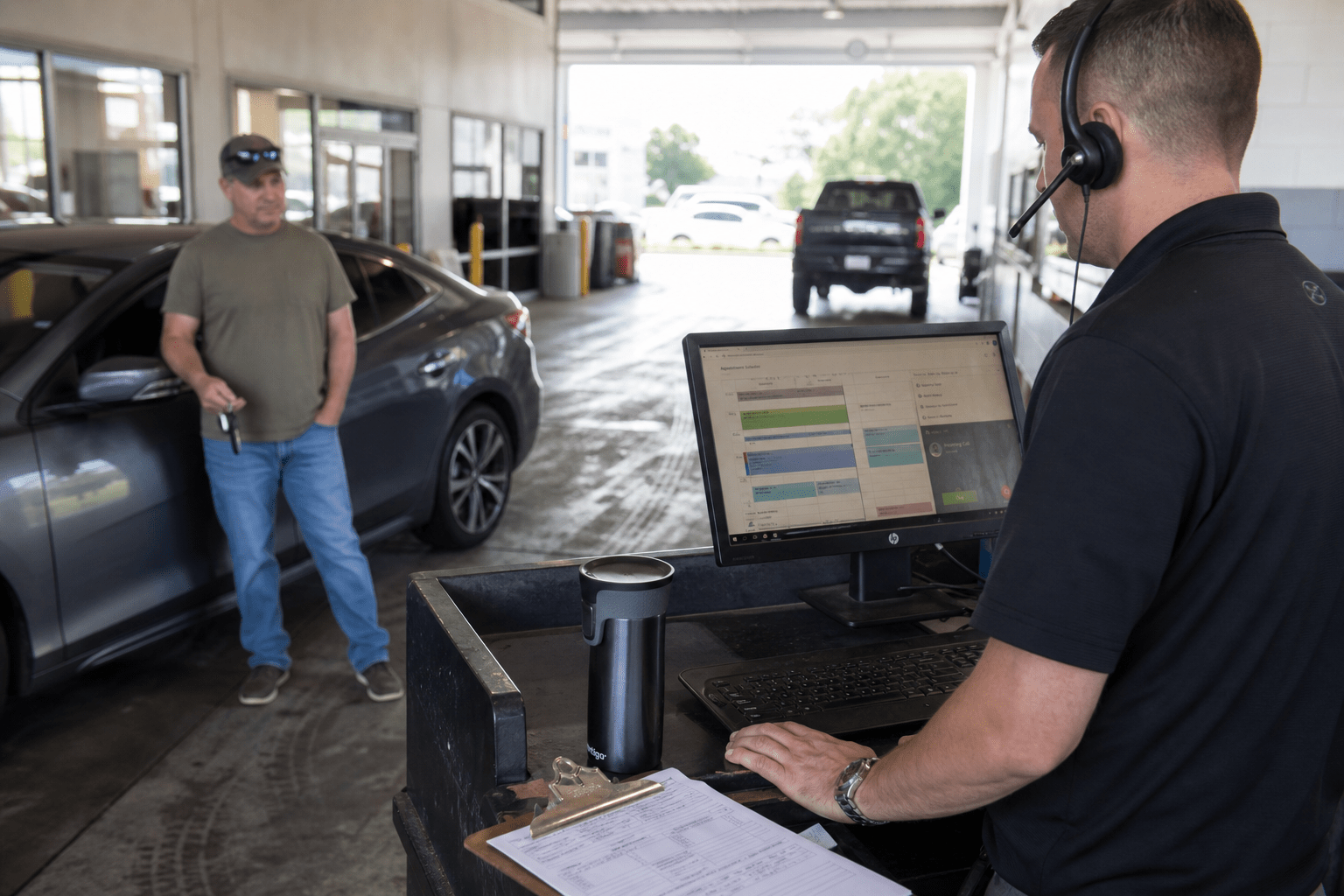
The best AI tools for auto dealerships in 2026 concentrate on three places where money leaks: the unanswered inbound lead, the service drive, and the follow up nobody made. Fullpath pulls DMS, CRM, and website data together to enrich leads and automate outreach. Matador AI and Numa run conversational sales and service across phone, text, and web chat, with Numa built specifically around missed calls and unhappy service customers. DriveCentric scores buyers on engagement and automates follow up. CarNow guides shoppers through digital retailing steps on the dealer site. Every one of these ingests customer financial information, which makes the buying decision a compliance decision as much as a sales one.
Five Points to Settle Before a Vendor Demo
We put these five to dealer principals and general managers before any demo, because they predict the result better than a feature list does.
- Speed is the metric that matters most. Industry data puts a sub sixty second response at roughly twenty one times more likely to qualify a lead than a five minute wait. Measure your current after hours response before you shop.
- The Safeguards Rule already applies to you. Dealers are financial institutions under the FTC rule, and any platform touching credit applications or customer financial data belongs inside your written security program and your vendor oversight.
- Your DMS integration decides everything. A tool that cannot write to the CRM and read the DMS creates duplicate records and a second system your staff will not maintain.
- Service is underrated next to sales. Most dealers shop AI for the sales floor while the service drive quietly loses more revenue to missed calls and unreturned voicemails.
- Consent rules govern automated outreach. Automated texting and calling sit under TCPA obligations. The platform’s compliance features matter, and so does who at the store owns the opt out list.
The Compliance Question Comes Before the Sales Question
Dealership AI conversations almost always start with lead conversion, and they should start with the fact that a dealer is a financial institution under federal rules. This surprises people who have run stores for decades. Because dealers arrange financing, the FTC Safeguards Rule requires a written information security program, a qualified individual accountable for it, risk assessments, staff training, incident response planning, and documented oversight of service providers who handle customer information. An AI platform that reads credit applications, records sales conversations covering income and trade equity, or holds customer contact and financial detail is squarely a service provider under that obligation. Adding one without updating the program is not a technicality. It is a gap in the exact documentation an examiner or an insurer asks to see, and we cover the underlying requirements in our note on the FTC guidelines for car dealerships.
Vendor Oversight Is a Documented Process, Not a Handshake
Service provider oversight has to be evidenced, and a vendor’s own security brochure is not evidence. Before a platform touches customer data, get written answers to a short list: where is the data stored, is it used to train models serving other dealers, which subprocessors have access, what is the breach notification commitment and timeline, and how is data returned or destroyed at contract end. Ask for an independent audit report rather than a self assessment. Keep those answers in the same file as the rest of the security program, because the point is not only that you asked, it is that you can show you asked. Stores that treat this as a five minute task before signing find it takes far less time than reconstructing it a year later under pressure, when a group acquisition or an insurance renewal puts the whole program under review.
Recorded Conversations Are Now Part of the Record
Conversational AI records and transcribes, which creates a body of customer communication most stores have never had to manage. Call intelligence platforms transcribe and analyze every phone conversation, which is genuinely useful for coaching and for understanding where marketing spend converts. It also means the store now holds detailed records of what salespeople promised, what customers disclosed about their finances, and how objections were handled. Decide deliberately how long those recordings are kept, who can access them, and whether they are discoverable in a dispute. Two party consent states add a further requirement around notifying participants that a call is recorded. None of this argues against the technology, and the coaching value is real. It argues for making the retention decision on purpose rather than inheriting whatever the vendor’s default happens to be.
Best AI Tools for Auto Dealerships by Department
The best AI tools for auto dealerships divide by department, and buying department by department gives a dealer principal a number to hold the investment against. Sales is judged on speed to first response and appointments set. Service is judged on calls answered and shop loading. Marketing is judged on cost per sold unit. A platform that claims all three usually excels at one, so it pays to ask which one the vendor built first.
Sales, Lead Response, and Digital Retailing
Sales AI is the crowded end of the market and the one with the clearest arithmetic behind it. Fullpath centralizes DMS, CRM, and website data to enrich leads and automate outreach across channels, which suits stores wanting one system rather than several point tools. Matador AI is purpose built for dealerships, automating sales and service conversations across phone, text, email, social, and web chat, with a compliance engine aimed at consent obligations. DriveCentric applies AI to response times, scores buyers on engagement behavior, and automates follow up across text, email, and video. CarNow works further down the funnel, guiding shoppers through vehicle discovery, payment estimation, and trade steps on the dealer website so more of the deal happens before anyone walks in. Conversica, VinSolutions, Impel, and Podium all address adjacent slices of the same problem.
Service Drive, Retention, and Fixed Operations
Fixed operations is where we see the most overlooked return, because the service phone is answered inconsistently at almost every store. Numa is built around exactly this, handling missed calls and difficult service conversations across a large installed base of dealerships, and the value shows up as appointments that would otherwise have gone to an independent shop down the road. The measurement is unusually clean here. Count the calls that ring out or go to voicemail during a busy Tuesday, then count them again sixty days after implementation. Service customers also carry the retention relationship that eventually produces the next sale, so the effect compounds beyond the immediate repair order. The prerequisite is a current, accurate shop capacity picture, since an assistant booking appointments into a shop that cannot absorb them creates a worse customer experience than the missed call did.
Marketing, Inventory, and Merchandising
Marketing and merchandising tools work on presentation and spend efficiency rather than on conversation. Spyne and similar platforms handle vehicle photography and listing enhancement at volume, which matters because listing quality drives engagement on third party sites where most shoppers still start. Call intelligence platforms such as LeadScore attribute phone conversion back to campaigns, replacing the guesswork that has always surrounded dealer advertising spend. Impel and comparable tools work on listing engagement and shopper retargeting. A caution worth stating on merchandising specifically: generated or heavily enhanced vehicle imagery has to represent the actual unit on the lot. Background replacement and lighting correction are ordinary retail practice and nobody objects to them, but anything that conceals damage, alters trim appearance, or shows equipment the vehicle does not carry creates a misrepresentation problem that lands on the dealer rather than the software vendor. Agree internally where that line sits, write it into the merchandising process, and make sure whoever runs the photo booth understands it, because the person operating the tool is rarely the person who would field the complaint. For stores running Microsoft tooling on the business side, our note on integrating Microsoft Dynamics 365 with other Microsoft tools covers how the CRM layer connects to the rest of the office stack.
Measure the Baseline Before You Turn Anything On
Dealers routinely buy conversational AI without recording what the store does today, which makes the return impossible to prove and the renewal conversation a matter of opinion. This is avoidable with two weeks of counting. For sales, capture how many inbound inquiries arrive outside staffed hours, how long the average first response takes during a busy Saturday, and what share of internet leads receive a second follow up attempt at all. For service, count the calls that ring out, the voicemails left, and the voicemails returned within the same day. None of this requires a consultant, and most phone systems and CRMs will report it if somebody asks. The baseline does two things. It tells you which department has the larger leak, which frequently contradicts the assumption the general manager arrived with, and it gives you an honest comparison sixty days after go live rather than a vendor supplied dashboard measuring itself. Stores that skip this step end up renewing on the strength of a feeling, and the ones that measure often discover the fixed operations case was stronger than the sales case all along.
What Dealership AI Needs From Store IT
Dealerships run complex networks across showroom, service, parts, and body shop, often with equipment installed by different vendors over many years, and AI platforms assume a level of control most stores have not established. The environment is genuinely difficult. Manufacturer mandated systems, third party DMS access, service department tablets, and public guest wireless frequently share more of the network than anyone intended. Add a platform holding customer financial data and the exposure is concrete rather than theoretical. Named accounts instead of shared logins, enforced multi factor authentication on anything reaching the DMS, network segmentation separating guest wireless and shop equipment from finance office workstations, and monitored logging are the baseline the Safeguards Rule effectively assumes. Our overview of AI cybersecurity tools covers where automation helps a store without dedicated security staff, and managed IT services software covers the operational tooling underneath.
Multi rooftop groups carry an additional wrinkle that single stores do not. Acquisitions arrive with their own domains, their own DMS instances, their own vendor contracts, and staff accustomed to a different way of working, and the technology consolidation usually trails the financial one by a year or more. During that gap, a group level AI platform either connects to several systems that disagree with each other or gets deployed at one rooftop as a pilot that never generalizes. Neither outcome is what the group paid for. The sequencing that works is to consolidate identity first so every employee has one account under group control, then standardize the DMS and CRM arrangement, and only then buy platforms at the group level. Doing it in the other order produces a set of per rooftop contracts nobody can compare and a reporting picture the group operator cannot trust well enough to act on.
Frequently Asked Questions
What are the best AI tools for auto dealerships right now?
Fullpath is strong for consolidated lead enrichment and outreach. Matador AI and Numa lead conversational sales and service, with Numa focused on missed calls and service recovery. DriveCentric applies AI to response speed and follow up, and CarNow handles digital retailing on the dealer website. Most stores run two or three rather than one.
Does the FTC Safeguards Rule apply to dealership AI vendors?
Yes. Dealers are financial institutions under the rule, and any vendor handling customer information counts as a service provider requiring documented oversight. That means written diligence, contractual security commitments, and periodic review, all kept with the written information security program rather than in someone’s inbox.
Can AI answer dealership phones without a salesperson?
For routine inquiries, availability questions, service scheduling, and after hours coverage, yes, and that is where the fastest return appears. Pricing negotiation, financing discussions, and any complaint should route to a person quickly. Set that boundary before launch and monitor the handoffs for the first several weeks.
How much do dealership AI tools cost?
Pricing is usually monthly per rooftop, sometimes with volume components tied to conversations or work orders. Conversational platforms and consolidated marketing systems sit at the higher end. Judge cost against a single figure the store already tracks, such as appointments set from after hours inquiries or service calls answered.
Is automated texting to customers legal?
It is, within consent rules. TCPA obligations govern automated calls and texts, so the store needs proper consent records, working opt out handling, and an owner for the do not contact list. Platforms built for dealerships generally include compliance features, though the obligation stays with the dealer rather than the vendor.
Who Is Behind This Guidance
Mindcore works with dealership groups on the layer beneath the sales and service software: network segmentation across showroom, service, and finance areas, identity consolidation after acquisitions, device management for service tablets, and the vendor security reviews the Safeguards Rule requires a dealer to document. That is why this article leads with the compliance question rather than with a product ranking. We have watched stores sign capable platforms and then scramble to reconstruct diligence paperwork when an insurer or an acquiring group asked for it. Matt Rosenthal, who leads Mindcore, has focused the company on organizations in exactly this position: regulated enough that the obligation is real, lean enough that nobody on staff has room to own it. Selling and fixing cars stays with your team. Making the systems underneath defensible is ours.
Book a Free Strategy Call Before You Sign a Platform
Choosing among these platforms gets much simpler once a store names the department it wants to fix and accepts that the vendor review is part of the purchase rather than an afterthought. Sales, service, and marketing are three separate decisions with three separate measures, and running one at a time against a number the store already tracks gives the principal something real to judge each quarter. Ahead of any signature, get named accounts onto DMS access, put multi factor authentication on the finance office, segment guest wireless away from shop and finance systems, and write the vendor diligence into the security program where it belongs. Those four decide whether the platform you buy strengthens the store or widens its exposure. If you want an outside read on where your rooftops stand, we will assess the environment and say plainly what to fix first. Book a free strategy call with our team. Groups weighing the wider technology picture may also find how to choose the best team collaboration tools, our comparison of AI assistants and classic office tools, and our overview of IT tools for growing organizations useful.

