

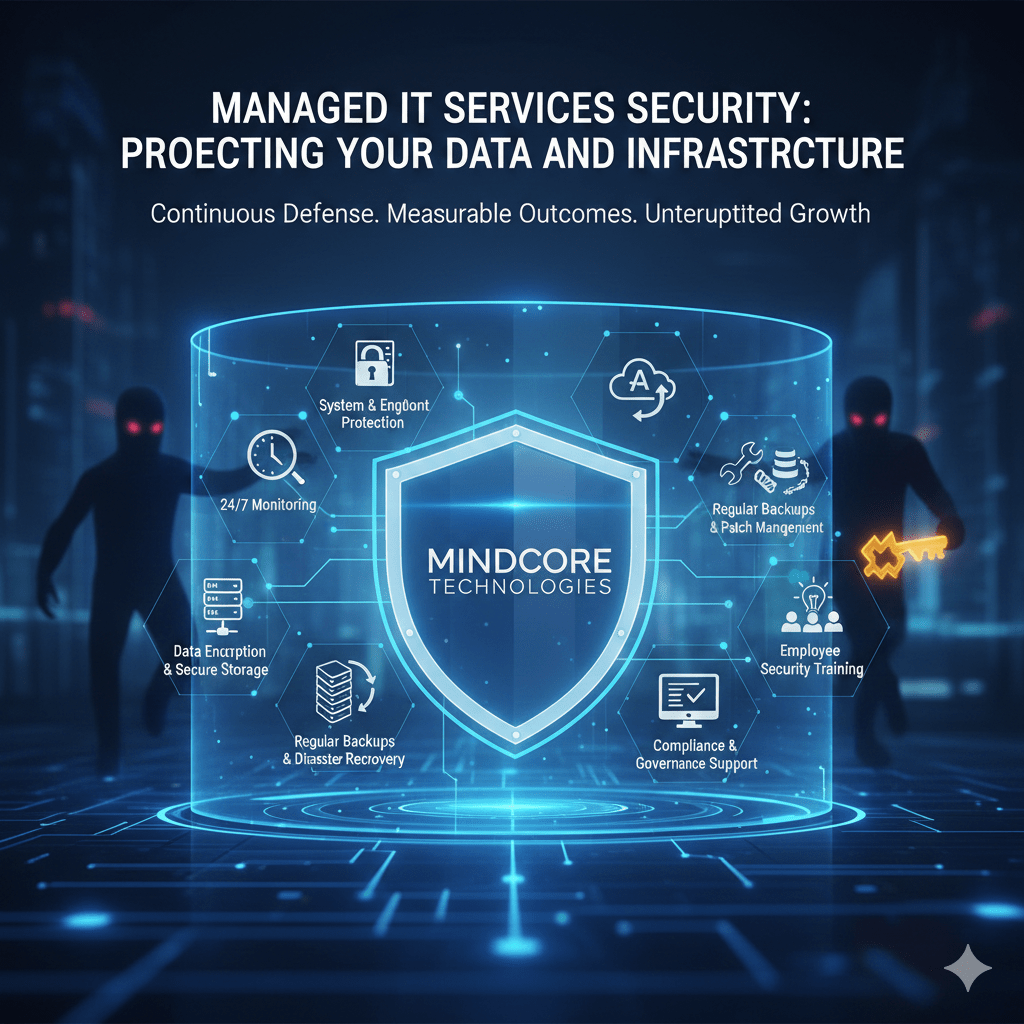
Cyber threats today target every company — not just large enterprises. Small and mid-sized businesses are especially at risk because they often lack dedicated security specialists or the layered defenses modern threats demand. Waiting until a breach happens means responding when damage, cost, and disruption are already in motion. Managed IT services shift this dynamic by protecting your technology before attackers succeed rather than reacting afterward.
Managed IT services combine continuous monitoring, proactive defense, and ongoing maintenance so your data and infrastructure remain secure, resilient, and aligned to business goals.
Understanding the Security Imperative
Modern cyber threats include ransomware, phishing, and supply-chain attacks that can cripple systems and expose sensitive data. Managed IT services help organizations defend against these risks with enterprise-grade security capabilities that most internal teams cannot sustain alone.
Security needs to be active, continuous, and measurable — and that’s exactly what managed IT brings.
What Managed IT Security Actually Does
Managed IT services protect both data and infrastructure by engineering defenses that operate around the clock. A modern managed IT model includes:
1. Around-the-Clock Monitoring and Threat Detection
Managed providers watch your network and systems 24/7 for suspicious behavior, allowing them to detect and respond to threats before they escalate into breaches. This proactive stance is far more effective than periodic checks or reactive approaches.
2. System and Endpoint Protection
Protecting every device that touches your network — from servers to laptops — is essential. Managed IT services implement next-generation antivirus, endpoint detection and response (EDR), firewalls, and intrusion prevention systems to block or contain attacks.
3. Data Encryption and Secure Storage
Business data — including customer details, financial records, and intellectual property — must be encrypted both in transit and at rest to prevent unauthorized access or interception by attackers. Encryption is a core component of data security best practices.
4. Regular Backups and Disaster Recovery
In a breach or outage, having validated backups allows your business to recover quickly rather than pay ransom or lose data. Managed IT services handle automated backups and recovery strategy implementation, including offline or segregated copies to withstand cyber extortion attacks.
5. Vulnerability Assessments and Patch Management
Regular assessments identify security gaps before they are exploited. Managed IT services also deploy patches and updates promptly to eliminate known attack vectors that threat actors often use.
6. Employee Awareness and Security Training
People remain one of the largest risk vectors for cyber incidents. Security programs within managed IT include training and phishing simulations that turn staff from potential liabilities into active defenders.
7. Compliance and Governance Support
Many industries require evidence of security controls, audits, and retention policies. Managed IT services help ensure your security posture aligns with regulatory requirements, reducing audit risk and compliance burden.
How This Protects Your Business
Managed IT security doesn’t just stop threats — it:
- Reduces downtime and operational disruptions
- Prevents financial loss from data breaches
- Protects your reputation with customers and partners
- Frees internal teams to focus on strategic initiatives
- Delivers measurable security outcomes, not guesswork
By integrating security into daily operations — rather than treating it as an afterthought — managed IT services turn risk management into continuous defense.
Why Choose Mindcore Technologies for Managed IT Security
Mindcore Technologies delivers managed IT services that are designed to secure your business infrastructure and data while enabling growth and efficiency. We combine deep technical expertise with proactive defense capabilities, ensuring:
- 24/7 threat monitoring and rapid response
- Endpoint, network, and cloud security
- Automated backups and validated recovery processes
- Security training integrated into your operations
- Compliance-ready reporting and evidence capture
- Support tailored to your industry and risk profile
This means your organization gains enterprise-level security without the cost and complexity of building it in-house.
What You Should Do Next
If your current IT setup lacks continuous defense:
- Assess your current security posture — identify gaps in monitoring, backup, and threat detection.
- Implement around-the-clock managed monitoring — even small exposures become big problems without continuous oversight.
- Ensure endpoint and network protections are enforced consistently.
- Automate patching and vulnerability scanning to reduce exploitable windows.
- Educate employees regularly on cyber risks and safe behaviors.
- Integrate backup and recovery into your continuity planning.
- Work with a managed provider that aligns security with business outcomes.
These actions convert defense effort into defensible security postures rather than hopeful checklists.
Final Thought
Security isn’t a one-time project — it’s a continuous operational capability that supports business success. Managed IT services make security sustainable, measurable, and proactive, protecting your data and infrastructure from evolving threats while letting your organization focus on growth.
Invest in defense that operates every minute of every day — because cyber threats never sleep.

