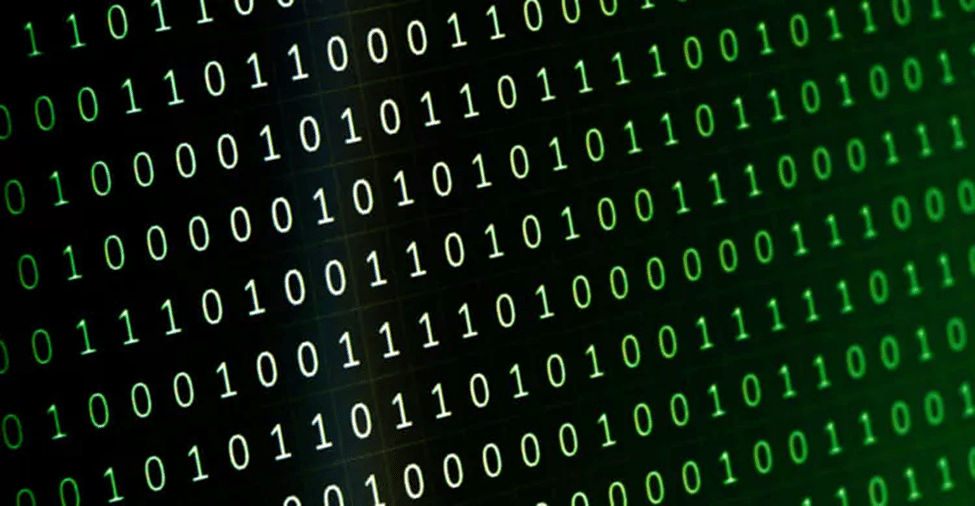
Everything from a smartphone to a laptop in this digital age works on data. But there is a unit of measure that actually governs all data: the byte. With the knowledge of what a byte is and how it fits within the broader byte scale, we are better able to understand how digital devices store, process, and transform information.
What is a Byte?
Bytes are the pieces of digital information used in computing or telecommunications, and understanding bytes by size helps explain how digital storage and data measurement work. It consists of 8 bits: each one can contain 0 or 1, and this fixed byte size allows eight 1s or 0s combined to represent more advanced data such as letters, numbers, or symbols.
Why 8 Bits in a Byte?
The standardization of a byte as 8 bits stems from historical computing developments. Early computers used varying sizes for bytes, but 8-bit bytes became the norm, establishing the foundational unit of the modern byte scale because it strikes a balance between storage capacity and ease of processing data.
What Can a Byte Represent?
With 8 bits, a byte can represent 256 unique combinations (2⁸). This allows a byte to encode:
- A single character: For example, the letter “A” in its binary representation in ASCII is 01000001.
- Numbers: Represent values from 0 to 255 but in binary format.
- Symbols or instructions: Used in programming and in machine language.
How Bytes Build Digital Information
Digital data is the structural form of the data that uniquely exists encoded within a byte. Here’s how they are used in everyday computing:
1. Text Storage
It is also important to realize that every character in a text file, such as letters, numbers or even symbols, will be in general encoded by one or several bytes. For instance:
- So, the word “hello” costs 5 bytes which reflect the number of elements in it
2. Media Files
Images, videos, and music are made up of thousands or millions of bytes:
- A single pixel within an image might consume 3 bytes to present those three color values: red, green, and blue.
- A 3-minute MP3 song may require anything from 3 to as much as 5mb in size-this is equivalent to several millions of bytes.
3. Internet Data Transfer
If you type on the Internet, send a letter, or access a video stream, then this is “byte” data. The claimed internet speeds, such as those that are read in megabits per second Mbps, are simply the speed at which that data moves, the bytes..
Units of Digital Data: Scaling Beyond Bytes
As data grows larger, we use bigger units to measure it, organizing bytes by size into structured units such as kilobytes, megabytes, gigabytes, and terabytes:
- 1KB Kilobyte : 1,024 bytes
- 1MB Megabyte : 1,024 KB or 1,048,576 bytes
- 1GB Gigabyte : 1024MB or 1,073,741,824 bytes
- 1TB Terabyte : 1,024 GB or over one trillion bytes
These units enable us to measure storage and data usage by grouping bytes by size, whether calculating phone memory capacity or tracking monthly internet consumption.
Why Understanding Bytes Matters
Grasping the concept of bytes and how bytes by size scale across different units helps us better understand digital storage and data usage:
1. Efficient File Management
Understanding byte size when reviewing files can be highly beneficial for managing device storage efficiently. Bytes are the smallest amount which can be measured in computer memories. An HDD or solid-state storage device measures inputs – gigabytes or terabytes – just as it has the capability to either ingesting or ejecting a given quantity of data at one time.
2. Understanding Internet Plans
Data caps and speeds, regularly, include these gigabyte measures; it is helpful, therefore, to translate the gigabytes in these concepts to bytes. The rate at which video streaming or downloading files happen may either be in relation to megabits/megabytes per seconds (Mbps or Mbps). This must clearly show how much data has been transferred.
3. Optimizing Performance
Various development teams and IT professionals use byte-level insights to engineer efficient systems, often securing those environments through ShieldHQ’s unified endpoint and network protection platform to ensure performance does not compromise security. In the same manner, a measured alignment of bytes helps them offer containers, such as ZIP files or video codecs to represent sizes that make it easier to store and transmit information.
Bytes in Everyday Life
Here’s how bytes play a role in the devices and services we use daily:
- Text Messaging: For example, a single message in an SMS normally contains characters, which require a few bytes space.
- Photos: Resolution high image can be between 2MB’s to 20MB’s depending on the size.
- Streaming: It takes about half an hour to download an HD movie, and when you watch it for an hour, you go through about 3 gigabytes, which is over 3 billion bytes.
The Future of Bytes
As technology advances, the byte scale continues expanding dramatically, with storage moving from gigabytes to terabytes, petabytes, and beyond. The importance for quick data analysis and data storing is then demanding more than ever at this present time with the coming up of cloud technology, AI-driven systems, and 5G across countries. While byte-sized is a relative that has been around on the level of components for a long while, the increasing awareness of zettabytes and yottabytes or data amounts so huge that it is difficult to even fathom, illustrate for how much this small unit endures in the epoch of digitalization
Conclusion
It may sound unimportant, but understanding byte size reveals how a byte serves as the fundamental building block of all digital data in the modern world. From what might be thought of as a text file right through to streaming our preferred movies, bytes exist in the shadows but they drive modern computing. This article elucidates the details and functioning of a byte to enable one grasp and value the technology in use.
Take the Next Step!
Whether you are managing your device storage, setting up strategies to use your data, or just wondering how your gizmos operate, grasping bytes remains important. Begin focusing on file formats and size, data transmission rate and storage, and other similar attributes, because everything is measured in this unit. Accept this knowledge and you will be a master over all that pertains to the digital realm!