

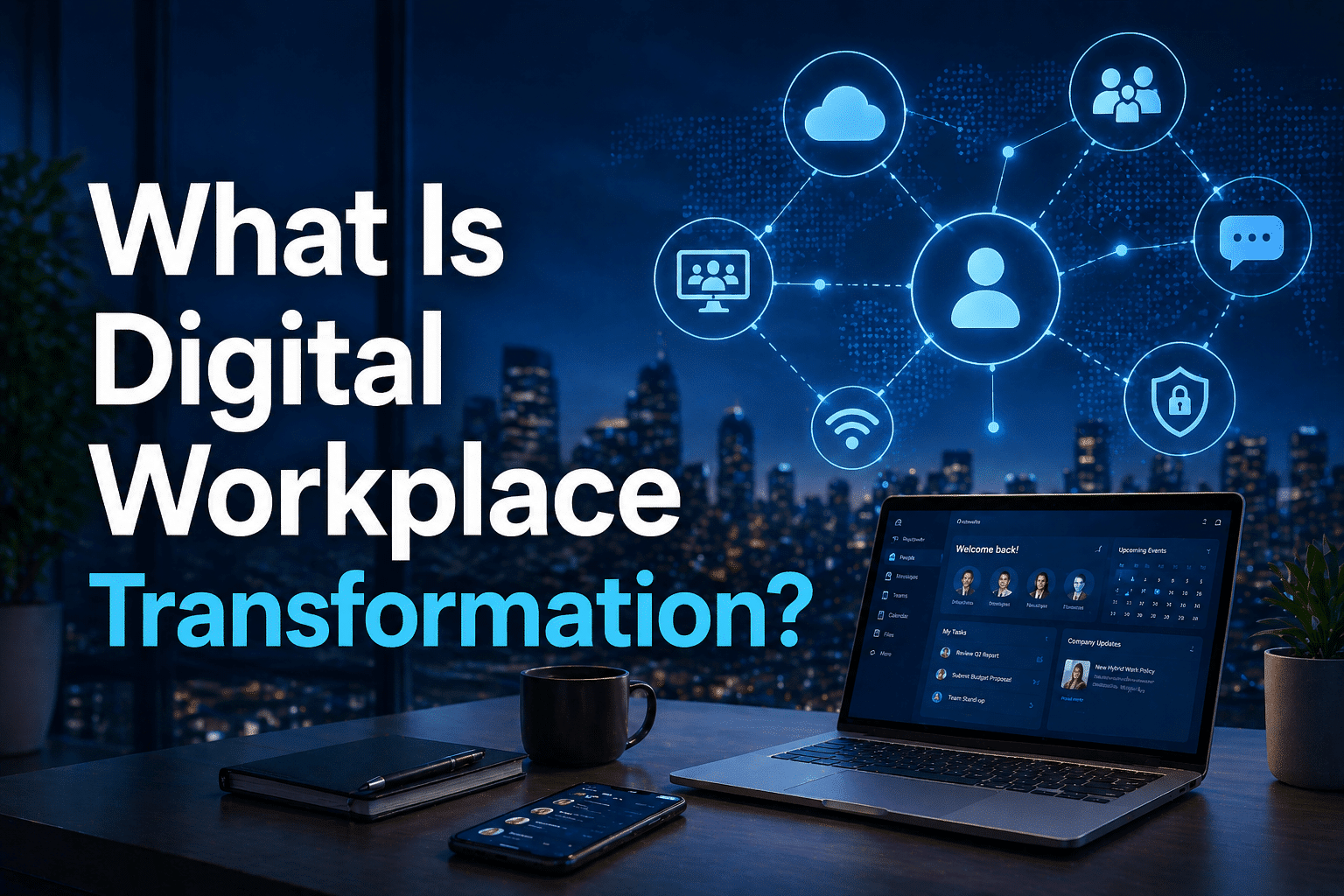
Digital workplace transformation is the process of modernizing the tools, platforms, and processes that employees use to do their work — replacing outdated or disconnected tools with integrated, cloud-based, and mobile-accessible solutions that reflect how modern work actually happens.
The digital workplace encompasses everything an employee interacts with to do their job: their devices, their communication tools, their collaboration platforms, their access to business applications, and the processes that connect their work to the broader organization. Transformation happens when outdated elements of that environment are replaced with modern equivalents that are more capable, more secure, more accessible, and more integrated.
For businesses working with Microsoft 365 management services or cloud migration support, digital workplace transformation is frequently the specific initiative those services enable.
What Digital Workplace Transformation Covers
Communication and collaboration modernization: migrating from legacy email and communication tools to modern platforms — Microsoft Teams, SharePoint, and the broader Microsoft 365 ecosystem — that enable real-time collaboration, document sharing, and video communication from any location.
Device modernization: replacing aging hardware with current devices that support modern software, enforce security policies, and enable remote work. Device modernization includes enrolling devices in managed IT services management systems that enable centralized security management.
Process digitization: replacing paper-based, manual, or email-driven processes with digital workflows — approval processes, document management, project tracking — that are faster, auditable, and accessible without physical presence.
Remote and hybrid work enablement: building the infrastructure — secure remote access, cloud-based applications, endpoint management — that enables employees to work effectively from any location without security compromise.
Identity and access modernization: moving from legacy on-premises Active Directory to cloud-based identity platforms that support modern authentication, multi-factor authentication, conditional access, and remote user management.
The 5 Why’s
- Why is the “digital workplace” specifically about the employee experience rather than just technology? Because technology that employees cannot or will not use does not produce the productivity benefits that justify its cost. Digital workplace transformation that involves employees in design, provides training, and addresses actual work friction produces adoption. Technology that is deployed without employee experience consideration produces resistance and workarounds.
- Why has remote work specifically accelerated digital workplace transformation? Because remote work exposed the limitations of infrastructure designed for employees to be physically present in an office. Organizations that had not yet migrated to cloud-accessible collaboration tools discovered this abruptly. The remote work shift converted digital workplace transformation from a future initiative to an immediate operational requirement.
- Why does digital workplace transformation specifically improve security posture? Because it replaces the mix of personal devices, consumer tools, and unmanaged shadow IT that many organizations tolerate with managed, monitored, and policy-governed enterprise tools. An organization where all employees work on managed devices with modern security controls has a fundamentally different endpoint security posture than one where employees use whatever tools they prefer.
- Why does digital workplace transformation require change management alongside technology deployment? Because technology is the easy part. The harder part is changing how people work — adopting new collaboration tools, building new workflows, abandoning familiar but outdated practices. Transformation projects that invest in training, communication, and user support achieve adoption. Projects that deploy tools without change management produce expensive shelfware.
- Why is Microsoft 365 specifically central to digital workplace transformation for most organizations? Because it provides the integrated platform that most digital workplace components need: email, document collaboration, video conferencing, team communication, file storage, security management, and device management in a single managed ecosystem. Microsoft 365 implementation is frequently the operational center of digital workplace transformation.
Final Takeaway
Digital workplace transformation modernizes the tools and processes employees use to do their work — enabling remote access, improving collaboration, strengthening security, and replacing manual processes with digital workflows. It is both a technology initiative and a people initiative, requiring change management alongside technology deployment.
Digital Workplace Transformation From Mindcore Technologies
Mindcore’s Microsoft 365 services, cloud migration, and managed IT services support digital workplace transformation for businesses across Louisiana and the Gulf South — from initial assessment through deployment, training, and ongoing management.
Talk to Mindcore Technologies About Digital Workplace Transformation

