

Market position current as of 3 September 2026.
“Best OT security company” is three different questions wearing one label, and answering the wrong one is how industrial operators end up with a platform nobody operates. The first question is which detection and visibility platform fits your environment, where independent analyst evaluation genuinely exists and is worth reading. The second is who deploys it without disrupting production, which is an engineering and integration question the platform vendor does not answer for you. The third is who watches it at three in the morning and knows what to do when it alerts, which is an operations question most industrial organizations cannot staff internally. We recommend you separate those three decisions before evaluating anyone, because the vendors who lead on the first question are frequently not involved in the second or third at all.
Disclosure: Mindcore is not an OT security platform vendor. We work on the network and security boundary around control systems, vendor access, segmentation, monitoring, and recovery. This page explains how to evaluate this market, including where our role sits and where it does not.
Overview
- Read the analyst work, not the vendor listicles. Gartner’s Magic Quadrant for Cyber-Physical Systems Protection Platforms is the closest thing to independent evaluation in this category.
- Most “top OT vendors” lists are published by vendors. Check who wrote the page, and notice where they placed themselves.
- Detection and segmentation are evaluated separately. A complete program spans two bodies of analyst research, not one.
- A proof of concept in your own environment beats any ranking. Your asset mix and network architecture decide which platform performs.
- The platform is not the program. Deployment, tuning, monitoring, and response are separate purchases, and they are where programs succeed or stall.
The 5 Why’s
This is written for plant IT and OT leads, engineering managers, and security directors at industrial operators between roughly one hundred and a few thousand employees: manufacturers, chemical and process operations, food and beverage producers, and industrial suppliers. Larger critical infrastructure operators in energy, water, and pipelines face the same platform market with heavier regulatory overlays, and much of what follows still applies, though those sectors carry sector-specific mandates that should drive their evaluation more than any analyst report does.
The trigger is usually external. An insurer asks about segmentation and asset visibility at renewal. A customer or corporate parent imposes a standard. A regulator or a sector directive requires an asset inventory. An incident at a peer operation prompts a board question. Occasionally the trigger is internal and more uncomfortable, when someone discovers how many devices are on the production network that nobody could account for.
Industrial organizations face a specific difficulty here. Most security tooling was built for environments where you can scan a host, install an agent, and patch on a schedule. On a production network none of those are safely available, which means the vendors in this market are solving a genuinely different problem and general IT security experience does not transfer cleanly.
The consequence of choosing badly is not usually a breach. It is a platform generating alerts nobody triages, purchased to satisfy a requirement, delivering an asset inventory that ages quietly.
Why “Best OT Security Company” Is Three Different Questions
Because the market is layered, and the layers are bought from different parties.
Platforms provide asset discovery, threat detection, vulnerability context, and increasingly secure remote access, all designed to work passively on a production network. Gartner published its first Magic Quadrant for Cyber-Physical Systems Protection Platforms in February 2025, evaluating seventeen vendors against asset discovery, threat detection, vulnerability management, and secure remote access, and naming Claroty, Dragos, Microsoft, Armis, and Nozomi Networks as Leaders, with Claroty positioned highest on both axes. Other established platforms in the category include Tenable OT Security, TXOne Networks, Darktrace, and OPSWAT. Network infrastructure vendors including Cisco, Palo Alto Networks, and Fortinet approach the same problem from the switching and firewall side, which is a legitimate alternative architecture rather than a lesser one.
Segmentation and enforcement is a separate evaluation. The Magic Quadrant covers the detection and visibility lane; microsegmentation is assessed in different analyst research, where vendors such as Illumio, Akamai, ColorTokens, and Elisity appear. Reading only one body of work will give you a partial picture of your own program.
Integrators and service providers do the work the platform assumes someone will do: scoping the boundary, designing zones and conduits, deploying sensors without interrupting production, tuning detections to your process, controlling vendor remote access, and monitoring and responding around the clock. That is our role, and it is described in our managed security services and manufacturing practices.
One caution about your own research. A large share of the pages ranking for OT vendor comparisons are published by vendors in the category, and they tend to place themselves first. That does not make the technical content wrong, and it does mean the ordering carries no information. Prefer the analyst reports, peer review platforms where the reviewers are identifiable by sector, and reference calls with operators running your kind of process.
Which Platform Category Do You Actually Need?
Start from what you cannot currently answer. Most industrial operators need asset visibility first, because every other control depends on knowing what is connected, and most cannot produce a current inventory of their production network.
If the gap is visibility and detection, you are shopping the platform category above, and the analyst Leaders are a reasonable shortlist rather than a ranking to follow. If the gap is that an incident on the business network could reach production, your problem is segmentation and the platform will describe rather than prevent it. If the gap is that integrators and equipment manufacturers hold standing remote access into your control environment, your first purchase is secure remote access, which several platforms now include and which is available as a standalone control. Exposed remote access has been a recurring root cause in industrial incidents, so that one frequently deserves priority over detection.

The right entry point shifts with what you already run. Organizations with strong network vendor relationships and modern managed switching may get further extending what they own, since the network vendors’ offerings integrate with infrastructure already deployed and avoid adding a separate sensor estate. Organizations with heavy regulatory reporting obligations should weight the evidence output above detection sophistication, because the practical question is which platform’s reporting slots into the audit and evidence process you already maintain. Smaller single-site operations often get most of the available risk reduction from segmentation and vendor access control alone, before any detection platform, at a fraction of the cost. Deciding you need a platform before you have segmented anything is the most common sequencing error in this market.
What we recommend you do about it:
- Name the question you cannot answer today. What is connected, what could reach production, or who is dialing in. Each points at a different purchase.
- Fix vendor remote access early. Standing integrator access is the most common way in and among the most contained projects available.
- Segment before you detect. Detection tells you something happened. Segmentation limits what it reaches.
- Read both bodies of analyst research. Detection and segmentation are separate markets with separate leaders.
- Weight reporting output if you have audit obligations. The evidence a platform produces matters more than its detection depth for compliance-driven buyers.
How Should You Evaluate an OT Platform Without Risking Production?
Run a proof of concept in your actual environment, passively, on a non-critical segment first, and judge on your own asset mix rather than on a general-purpose ranking.
The reason this matters more here than in IT security is that the environments are genuinely idiosyncratic. A platform’s discovery performance depends on your protocols, your vendor mix, your network architecture, and how your traffic is spanned or tapped. Two operators running the same platform on different plants get different results, which is why analyst Leaders are close enough to each other that the deciding factor is usually fit rather than capability. Operations teams should insist on seeing discovery output from their own network before committing.

Certain evaluation criteria matter in industrial settings and appear on no feature comparison. Deployment impact comes first: passive monitoring only, no active scanning of control devices, and a clear answer on what happens if a sensor or collector fails. Alignment to the industrial security standards your engineering team already references matters more than alignment to IT frameworks, since that is the vocabulary your plant staff and your equipment vendors use. Handling of specialized assets deserves specific attention, because equipment that cannot host an agent or be patched still needs to appear in your inventory and your documentation. And ask how the platform treats safety instrumented systems, which should be visible and untouched. For regulated operators, ask to see a sample report rather than a dashboard screenshot, because the report is the artifact your auditor reads.
What we recommend you do about it:
- Require a proof of concept on your own network. Discovery output from a vendor’s lab tells you nothing about your plant.
- Confirm passive-only operation in writing. Active probing of control devices is the one thing that can turn a security project into an outage.
- Start on a non-critical segment. Prove the deployment model before it touches anything that stops production.
- Ask for a sample compliance report. If evidence is part of why you are buying, judge the evidence.
- Involve engineering in the evaluation from the start. A platform selected without plant staff will be exempted from the areas that matter most.
What Does the Platform Not Do?
Deploy itself, tune itself, watch itself, or respond. Those four gaps account for most of the OT security programs we see that were funded, purchased, and then stalled.
Deployment in a production environment is engineering work. Sensor placement depends on network architecture, spanning and tapping decisions have to be made without interrupting traffic, and the change windows follow turnarounds and shift schedules rather than an IT maintenance calendar. Tuning is where most value is either realised or lost: an untuned OT platform generates alerts on normal process behaviour, and after a few weeks of that, operations stops reading them. Getting to a usable signal requires someone who understands both the platform and your process.
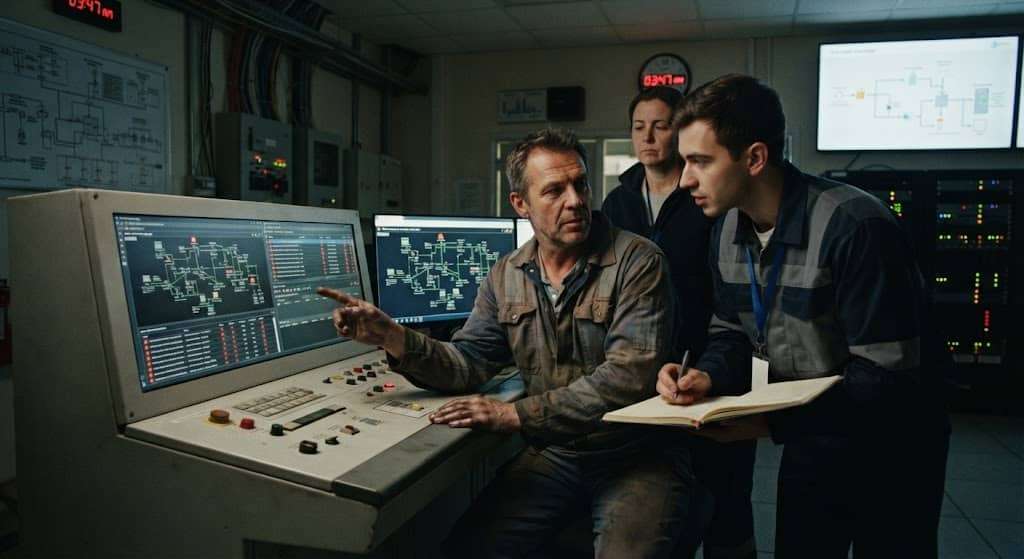
Then there is the part nobody budgets for. A detection platform assumes a recipient. Industrial operators rarely staff a security operations function covering nights and weekends, which is precisely when the alerts that matter arrive, and even where alerting reaches someone, response in a control environment cannot follow IT instincts. Isolating a device on a production network can create a safety event, so containment decisions need plant engineering involved in advance rather than consulted during. Organizations with a mature internal security function can absorb this. Most cannot, and for them the honest sequence is to pair any platform purchase with an operating arrangement, whether internal, from the vendor’s own service organisation, or from a provider like us. Buying the platform alone and hoping the operating model emerges later is the failure mode this whole market is quietly full of.
What we recommend you do about it:
- Budget deployment and tuning as a project, separately from licensing. They are engineering work, not a setup fee.
- Decide who receives alerts at three in the morning, before you buy. If the answer is nobody, the detection spend is not yet useful.
- Write containment decisions with plant engineering in advance. Isolation choices in a control environment are safety choices.
- Pair the platform with an operating model. Internal team, vendor service, or a provider. Any of the three beats none.
- Measure the program by triaged alerts, not deployed sensors. Coverage without triage is shelfware with good documentation.
OT Security Expertise from Matt Rosenthal
In 30 years working with industrial operators, I have watched a lot of good technology bought and left running with nobody reading it. What I have seen firsthand in plant environments is a detection platform deployed to satisfy an insurer, generating alerts on normal process behaviour, and switched off in everything but name within two months because nobody tuned it and nobody owned the response. Our team is not a platform vendor, and we will tell you which platform category your gap actually points at, then handle the boundary, the vendor access, the tuning, and the monitoring around it. Decide who answers the alert before you decide whose alert it is. See our cybersecurity services and manufacturing practice.
How to Run the Selection
Start by naming the question you cannot answer about your production environment today, because that determines which of the three markets you are actually shopping. Asset visibility, reachability from the business network, and standing vendor access are three different gaps with three different first purchases, and only one of them is a detection platform.
Then read the independent analyst work rather than the vendor comparisons, and treat the Leaders as a shortlist rather than an order of merit. Run a proof of concept on your own network, passively, on a non-critical segment, with engineering in the room. Judge on discovery quality against your asset mix and on the reports you would hand an auditor.
Then, before you sign anything, settle who deploys it, who tunes it, and who answers an alert overnight. That conversation is what separates a program from a purchase, and it is the one most industrial operators have after the licence is already bought rather than before. Our IT consulting and compliance work both start there.
If you can list your production assets but not say who watches them, that gap is worth closing before any platform decision. Schedule a consultation to talk through your OT boundary and monitoring model.

