

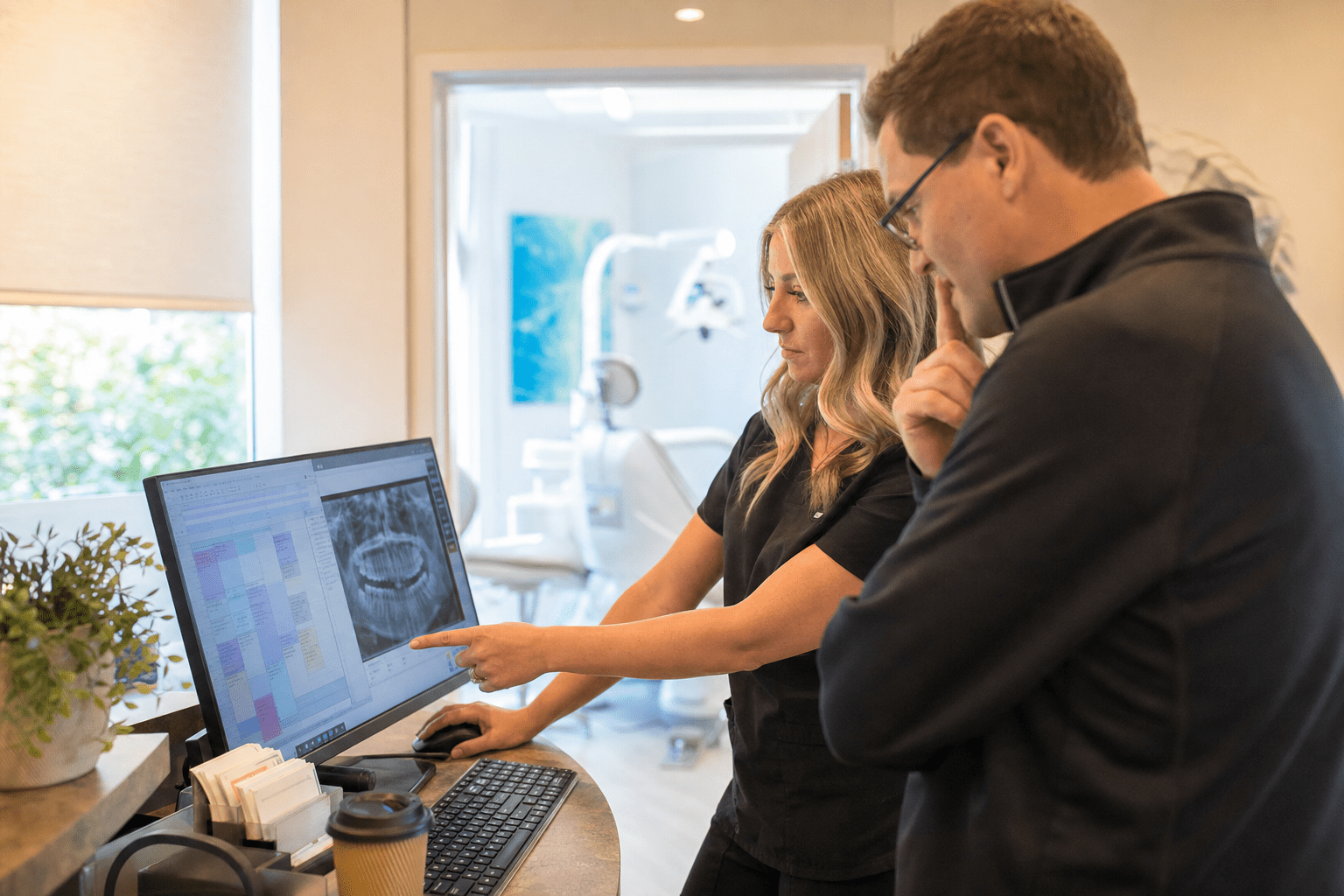
IT consulting for dental practices comes down to one number: production lost per empty chair. When a practice management system stalls or an imaging sensor stops talking to the operatory, the schedule backs up, patients wait, and revenue walks out the door in real time. Dental IT Consulting treats the practice as both a clinical production environment and a regulated workplace, protecting chair time and patient data together. A partner who cannot speak both HIPAA and chairside workflow will optimize the wrong thing, and in 2026 that is the difference between a practice that scales to a second location and one that fights fires every week.
Five Things That Decide the Right Dental IT Partner
Before comparing Dental IT Consulting providers, evaluate chair-time uptime, HIPAA safeguards, clinical-system knowledge, growth planning, and response speed. They summarize this guide.
- Chair-time uptime. The partner ties support speed to production, so imaging and scheduling stay live during patient hours.
- Patient-data protection. Records, images, and billing meet HIPAA duties with documented safeguards.
- Clinical-system fluency. The team knows practice management platforms and imaging hardware, not just office laptops.
- Growth planning. The roadmap supports adding operatories, providers, or a second location without a rebuild.
- Fast, local response. When a sensor or workstation fails mid-appointment, help arrives in minutes, not next business day.
Dental practices sit in a specific pain stage. They have outgrown the family member or part-time technician who set up the network, yet they rarely need a full internal IT department. IT consulting fills that gap with senior guidance sized to a dental office.
Why Generic IT Support Costs Dental Practices Real Production
Generic IT support costs dental practices production because it treats a clinical office like any other small business. A commodity provider keeps email running and patches the servers, then reports everything is fine. That misses the point of a dental operation, where a frozen imaging workstation during a patient visit is not a ticket, it is a stalled appointment and a delayed diagnosis. The CISA StopRansomware guidance also notes that healthcare targets are attractive precisely because downtime pressure pushes fast payment, which makes a dental practice’s uptime and security the same conversation.
There is a fair counterpoint. A brand-new single-provider practice with simple systems can run on basic support for a while, and paying for deep consulting on day one may be premature. The trade-off arrives with growth. The moment a practice adds operatories, a second provider, or cloud imaging, the informal setup starts to crack, and the cost of downtime climbs with every chair. The balanced read is to size support to the practice you are becoming, not only the one you are today, so the platform grows with the schedule rather than breaking under it. This is where real IT consulting separates from break-fix.
How Imaging and Practice Management Uptime Drive Revenue
Dental IT Consulting protects revenue by keeping imaging, scheduling, billing, and practice management systems available throughout patient hours. When the practice management system is unreachable, the front desk cannot check in patients, post treatment, or bill, and when imaging fails, the provider cannot diagnose. A consulting partner maps these dependencies and builds redundancy where a single failure would stop the schedule. The opposing view is that redundancy costs money and most days run clean. Both are true. The honest resolution is to price an hour of stopped chairs, then buy exactly the resilience that number justifies, which for most growing practices is more than they currently carry.
Where HIPAA Raises the Bar for Dental Offices
HIPAA raises the bar because a dental practice holds protected health information and answers for how it is secured. The HHS HIPAA Security Rule requires documented administrative, physical, and technical safeguards for every system that touches patient data, including imaging archives and cloud backups. A consulting partner should produce that documentation and keep it current, so a practice can answer an audit or a patient question without scrambling. The fair tension is that tighter controls add small daily steps for staff. Practices that frame those steps as patient care, not IT overhead, adopt them far more readily, and we see that framing work chairside.
Why Clinical-System Fluency Beats General IT Skill
Effective Dental IT Consulting requires direct experience with practice management platforms, digital sensors, imaging systems, and their integrations. Practice management platforms, digital sensors, cone-beam imaging, and integration between them behave nothing like standard office software. A generalist can keep the network up and still be lost when an imaging bridge fails. A partner fluent in dental systems fixes the actual problem faster. The counterargument is that a strong general IT team can learn any environment given time. That is true, but time is exactly what a stalled operatory does not have. The middle ground is to confirm real dental experience in the interview, then judge by how quickly the partner grasps your specific stack. Our work with medical and dental practices is built around that fluency.
What to Look For in Dental IT Consulting for 2026
The best IT consulting for dental practices shows up in how a partner plans, secures, and responds, so judge those behaviors with evidence. Ask for a redacted HIPAA risk assessment, a sample uptime plan for imaging, and a growth roadmap from an anonymized practice. A partner who does this work can show it.
Look for a Documented HIPAA Risk Assessment
A documented HIPAA risk assessment is the foundation, not a formality. It identifies where patient data lives, how it moves, and what protects it, then drives a plan to close gaps. A partner who skips this is guessing at your exposure. The opposing view is that assessments can become shelf documents that never change behavior. The test is whether each finding connects to an action your staff actually takes, from how new team members get system access to how a departing hire loses it the same day.
Look for Uptime Plans Tied to the Schedule
Uptime plans tied to the schedule mean recovery targets built around patient hours. A partner should know that a server reboot at noon is a different event than one at 6 a.m., and plan maintenance, monitoring, and rapid response accordingly. A generic plan ignores the clinical calendar. The honest trade-off is that guaranteed fast response during peak hours costs more than best-effort support. For a practice measuring loss by the chair, that cost usually returns itself the first time a crash gets fixed in minutes instead of hours.
Look for a Growth Roadmap, Not Just Maintenance
Dental IT Consulting should provide a growth roadmap that supports additional operatories, providers, and locations without requiring a complete technology rebuild. A practice planning a second location or new providers needs systems that scale on purpose, so onboarding is a documented process rather than a scramble. This is where a virtual CIO engagement fits, giving senior planning without a full-time hire. The narrower view sees IT consulting as insurance against downtime, which is real but incomplete. The fuller view is that the same partner who prevents crashes also clears the path to grow, because the platform behind the practice holds under a bigger schedule.
Frequently Asked Questions
What does IT consulting for dental practices include?
IT consulting for dental practices includes strategy, HIPAA security planning, uptime design for clinical systems, and a growth roadmap. It typically starts with a risk assessment, then builds documented safeguards and support tied to patient hours. The aim is fewer stalled appointments and defensible protection of patient records.
How is dental IT consulting different from regular IT support?
Dental IT consulting plans and secures the practice around clinical workflow, while regular IT support mainly keeps general systems running. Consulting understands practice management platforms, imaging, and HIPAA duties, and it plans for growth. Many practices buy consulting and day-to-day support together so strategy and operations stay aligned.
Do dental practices have to comply with HIPAA for their IT?
Yes, dental practices are covered entities under HIPAA and must protect patient data across every system, including imaging and backups. That means documented administrative, physical, and technical safeguards, plus a current risk assessment. An IT consulting partner should produce and maintain this documentation for you.
When should a dental practice hire an IT consultant?
A dental practice should hire an IT consultant when informal support can no longer keep clinical systems reliable, or when a growth, security, or compliance decision carries real risk. Common triggers include repeated imaging or scheduling downtime, planning a new location, or facing a HIPAA review. Acting before an incident is far cheaper than after one.
How much does IT consulting for a dental practice cost?
IT consulting for a dental practice is priced to the size and complexity of the office, so a single-provider practice pays far less than a multi-location group. Right-sized engagements deliver senior strategy and security without the cost of a full internal team. Measured against production lost to downtime, the cost usually returns itself quickly.
Talk to a Mindcore Strategist About Your Practice
Dental practices earn by the chair, and every stalled operatory or frozen imaging workstation is production you do not get back. The right IT consulting partner protects that chair time, keeps patient data defensible under HIPAA, and plans the platform so your practice can grow into its next location without a rebuild. Our team works with dental and medical practices to do exactly that. If you want a clear read on where your technology quietly costs you production, book a free strategy call and we will walk your practice through it.

