


The email security threat vector remains the most common way attackers get into a business, and in 2026 it is winning against defenses that used to work. Most attacks no longer arrive as a clumsy message with bad grammar and a misspelled bank name. They arrive clean, well-timed, and built to pass the exact checks employees were trained to run. We see this every week with IT managers at firms between 10 and 500 employees. The companies that stay safe are not the ones with the fanciest filter. They are the ones who pair layered technical controls with a verification habit that does not depend on a person spotting a typo.
The 5 things every SMB should know about email threats
Understanding the risks associated with vector security email helps businesses realize why email remains the primary entry point for attackers targeting trust and user behavior. The advice that follows is not theory. It is the pattern our team sees in real incident calls, condensed into the points that matter most for a small or mid-size business.
- Email is the front door, not a side window. A large share of breaches start with a message, not a network exploit, because a person is easier to trick than a firewall.
- The “spot the typo” era is over. AI-authored lures read like a real colleague wrote them, so grammar coaching no longer protects you.
- The attack surface moved to images and phone calls. QR-code phishing and callback phishing route the victim off email entirely, past the filter and past the link scanner.
- Authentication stops spoofing, not lookalikes. DMARC, SPF, and DKIM block forgery of your own domain. They do nothing about a near-identical domain or a hijacked vendor inbox.
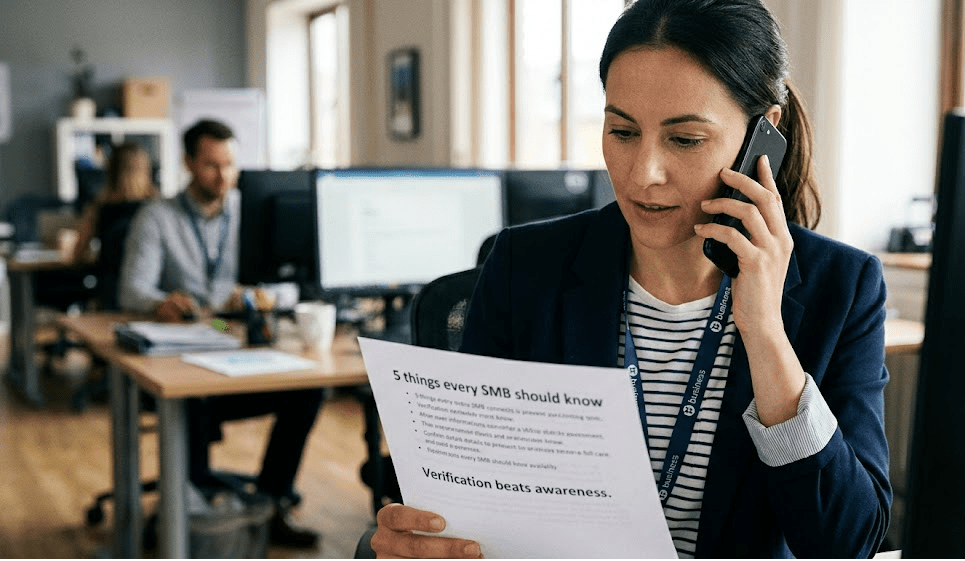
- Verification beats awareness. Implementing out-of-band verification in your vector security email strategy ensures that risky requests are confirmed before any actions occur, improving protection beyond standard awareness training.
We work with operations leads and IT managers who already run training and already pay for a filter. The gap is almost never effort. It is the assumption that one layer is enough.
How the email security threat vector still beats modern defenses
The email security threat vector beats modern defenses because it targets the one part of the system that updates the slowest, which is human judgment under time pressure. An attacker does not need to break encryption or find a zero-day. They need a believable reason for someone to click, scan, or call. The CISA guidance on social engineering describes this clearly: phishing works because it borrows the trust people already extend to email. That trust is the exploit.
What makes email so hard to secure?
Email is hard to secure because it was designed to be open, and openness is the feature attackers abuse. The protocol accepts mail from anyone, lets a sender claim almost any display name, and delivers content the recipient is expected to act on quickly. On one side, that openness is what makes email useful, since a vendor, a client, or a new hire can reach you without setup. On the other side, the same openness means a filter has to guess intent from content that looks identical to legitimate mail. Neither side is wrong. Email is both the most productive tool in the office and the widest entry point in the building, and any honest plan has to treat it as both at once. The practical takeaway is that no single product closes the gap, because the gap is structural.
Why has the threat vector changed in 2026?
The threat vector changed in 2026 because attackers shifted from text tricks to channels that bypass text analysis entirely. Microsoft’s security team reported a sharp rise in QR-code phishing and a resurgence of callback phishing through early 2026, both designed to move the victim off the scannable surface of an email. A QR code is an image, so a link scanner sees a picture, not a malicious URL. A callback lure includes no link at all, just a phone number and a fake invoice, so the victim dials in and gets talked through the rest. Some argue these tactics are niche and that classic credential phishing still dominates, which is fair. The honest position is that both are live at once. Classic phishing has not gone away, and the newer image and voice routes have widened the door rather than replacing the old one.
Are AI-authored phishing emails really more dangerous?
AI-authored phishing emails are more dangerous mainly because they remove the tells employees were trained to catch. The old advice was to watch for broken English, odd formatting, and generic greetings. A model that drafts the lure produces clean copy, correct branding tone, and a believable reference to a real project or invoice. One view holds that this is overstated, since the underlying request is still suspicious if you slow down and verify. That view has merit. The counterpoint is that volume and polish together raise the hit rate, because more messages now clear the gut-check that used to stop people. Both things are true. The fix is not better typo detection. It is a process that does not rely on the message looking wrong in the first place.
How SMBs actually stop email attacks
SMBs stop email attacks by layering technical controls underneath a verification habit, so that no single failure becomes a breach. A filter will miss things. A person will have a bad morning. The point of layering is that the QR code that slips past the scanner still meets an employee who knows to verify, and the convincing wire request that fools the employee still meets a finance step that confirms out of band. Our team builds this as a stack, not a silver bullet, through managed security services that assume any one layer can fail.
What technical controls matter most?
The technical controls that matter most are email authentication, multi-factor authentication, and active monitoring, in that order of foundation. Configuring DMARC, SPF, and DKIM is a foundational step in vector security email management, preventing domain spoofing and minimizing phishing risks. Next, enforce multi-factor authentication on every mailbox, ideally with phishing-resistant methods like FIDO2 keys rather than SMS codes, since SMS can be intercepted. Then add detection. Microsoft documents anti-phishing controls in Defender for Office 365 that flag impersonation and unusual sender behavior, and continuous network security monitoring catches the follow-on activity when a credential is already compromised. One caution: controls without tuning create alert fatigue, and an ignored alert is the same as no alert. The goal is fewer, sharper signals, not more noise.
How important is the human layer now?
Employees trained to follow vector security email procedures can act as a verification checkpoint, stopping fraudulent requests that automated filters might miss. The old model asked employees to be a filter, scanning each message for signs of fraud. That model is failing because the signs are gone. The better model asks employees to be a checkpoint on action: before anyone moves money, changes a bank detail, or enters credentials from an email link, they confirm through a second channel they already trust, such as a known phone number or an internal chat. Some leaders argue training is a waste once attacks look perfect. We disagree, but only partly. Training to spot fakes has limited value now. Training to run a verification step has more value than ever. Well-run security awareness training in 2026 teaches the pause and the callback, not the typo hunt.
What does a layered email defense look like in practice?
A layered email defense in practice is a short, written sequence that every employee can follow without judgment calls. It starts with the technical floor, authentication and MFA on every account, so spoofing and stolen passwords alone do not win. It adds detection that watches both the inbox and the network, so a missed message still leaves a trail. It ends with a human checkpoint: any request to move money, change payment details, share credentials, or scan an unexpected QR code triggers an out-of-band confirmation before action. The case for keeping it simple is real, since a process nobody remembers is a process nobody uses. The case for documenting it is just as real, because under pressure people default to the written step, not the clever instinct. A regular cyber security audit keeps the sequence honest by testing whether it actually holds when someone tries to break it.
Frequently Asked Questions
Why is email considered the number one threat vector?
Email is the number one threat vector because it reaches every employee, carries requests people are expected to act on, and costs almost nothing to send at scale. Most reported breaches trace back to a message rather than a direct network attack. That makes the inbox the single most valuable entry point for an attacker, and the first place a defense plan should focus.
Can email filters stop phishing on their own?
Email filters cannot stop phishing on their own, because the newest attacks are built to pass content analysis. QR-code lures hide the link inside an image, and callback phishing includes no link at all. A filter is a necessary layer, but it has to sit underneath authentication, MFA, and a human verification step to be effective.
Does multi-factor authentication protect against email attacks?
Multi-factor authentication protects against many email attacks by blocking logins even after a password is stolen, which defeats most credential phishing. It is not complete on its own. Attackers use MFA fatigue and real-time relay to get around weaker methods, so phishing-resistant options like FIDO2 keys give stronger protection than SMS codes.
How do I protect my business from AI-authored phishing?
You protect your business from AI-authored phishing by shifting from spotting fakes to verifying actions, because clean AI copy removes the usual warning signs. Pair email authentication and MFA with a written rule that any money movement, bank-detail change, or credential entry from an email gets confirmed through a second trusted channel first.
What is the fastest first step an SMB can take?
The fastest first step an SMB can take is enforcing MFA on every mailbox and adding one out-of-band verification rule for financial requests. Those two changes close the most common loss paths within days, not months, and they buy time to build out authentication, monitoring, and training as the next layers.
Book a free strategy call to harden your email defenses
Email is still the number one threat vector because it targets people and trust, not just technology, and the 2026 shift to QR codes, callback lures, and AI-authored messages has made the old detection habits unreliable. Successful SMBs integrate vector security email into a layered defense, combining authentication, monitoring, and verification habits to ensure no single point of failure leads to compromise. None of this requires an enterprise budget. It requires a plan that treats the inbox as the front door it actually is. Our team helps SMBs build and test that exact stack, then keeps it tuned as the threats change. If you want a clear read on where your email defenses stand and what to fix first, book a free strategy call and we will walk through it with you.
Email Threat Vector Defense and Cybersecurity Strategy Expertise from Matt Rosenthal
Matt Rosenthal, CEO of Mindcore Technologies, has over 30 years of experience helping SMBs build layered email defenses that account for the full 2026 threat landscape, including AI-authored phishing, QR-code lures, callback attacks, and business email compromise that bypass every control designed for the attacks of five years ago. He has seen firsthand how firms investing in filters and annual training still suffer breaches because no verification habit exists at the moment a risky request demands action. Matt leads a team that builds email security as a connected stack, combining authentication, MFA, active monitoring, and a written verification process, so a failure at any one layer does not become a breach.

